CFCF on Being Online, the 2010s, Avoiding Trends, and Art for Adults
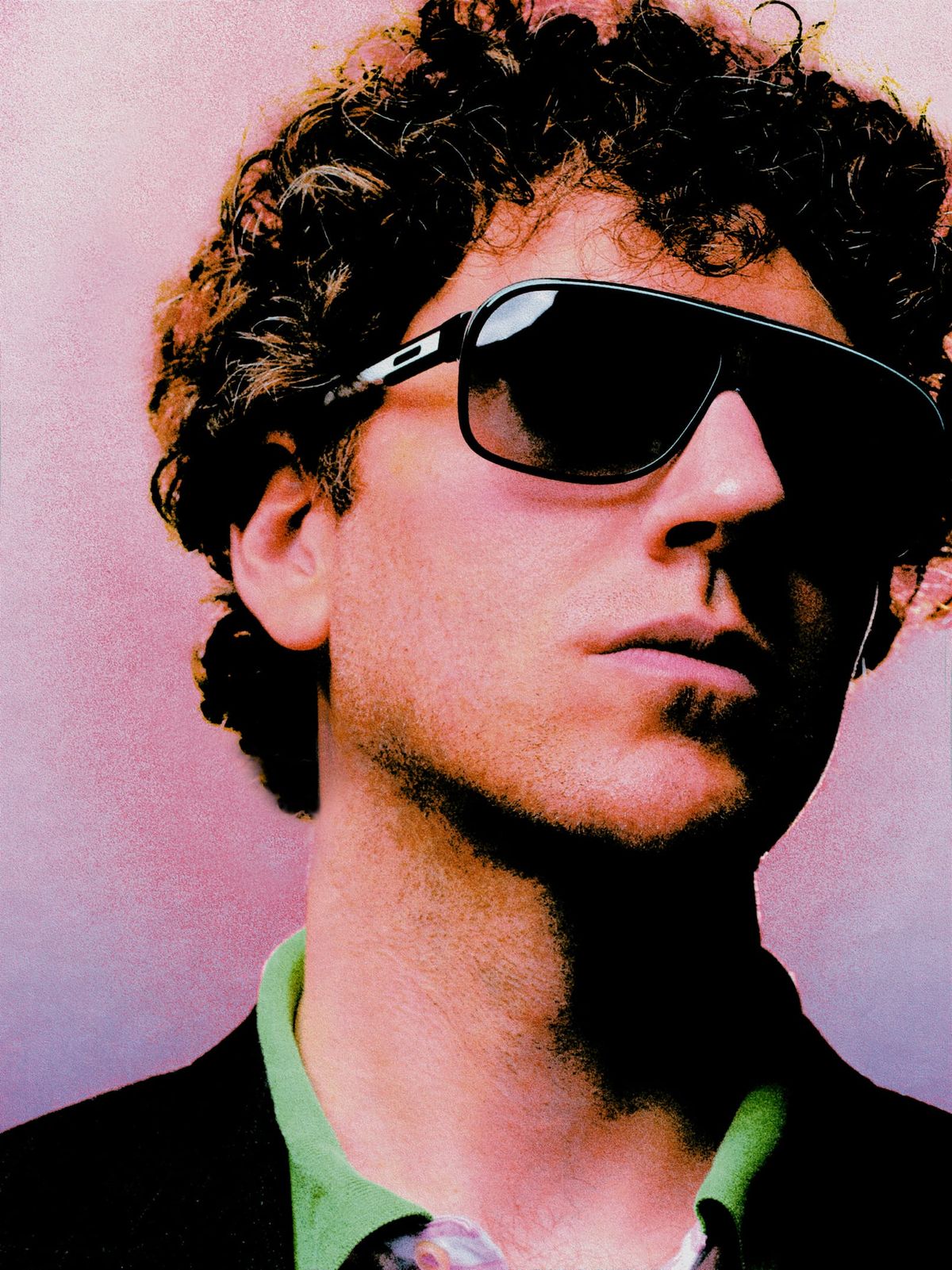
This is a free post from Larry Fitzmaurice's Last Donut of the Night newsletter. Paid subscribers get one or two email-only Baker's Dozens every week featuring music I've been listening to and some critical observations around it. Subscriptions currently run $3/month or $30/year, hit one of those little pink buttons on the right side of your screen to tap in, you won't regret it.
Today's installment: Last Friday, Mike Silver—the L.A.-via-Montreal musical journeyman who's been making music as CFCF for more than 15 years now—released his latest bit of heat L.U.V., which follows 2021's excellent Memoryland. Sharp, tangy, and full of pleasing left-turns, I think L.U.V. is one of the best albums of the year full stop, the rare record that sounds in conversation with modern life even as it sounds conceived totally separate from various cultural trends. It's crazy that it took me this long to interview Mike—he's been on my list as someone to have on here for years—but we linked up last month for an hour-long chat that was at turns hilarious and highly insightful. I think you'll love reading this one, check it out:
This one's coming five years after Memoryland, which was a bit of a breakthrough as well. Walk me through how this new album came together.
After Memoryland came out, it was still kind of the pandemic, which was a weird time to put out a record because some of the touring opportunities that would normally be there weren't. I was only able to do little one-off shows here and there, and I was still living in Montreal at the time, so it was a little DJ gig here in Montreal, a little live show in New York, and one or two things in L.A. I'd long been thinking about moving to LA, and it was one of those things where my friends who live here would tease me and bully me like, "You just got to get it together, man. Stop procrastinating." But it's a huge undertaking. Because the Memoryland cycle ended a little bit early, I'd come here to play a show, and I was like, "You know what? I'm going to start looking at places to get the ball rolling." So I moved here, and to be honest, that undertaking took a lot of my time and energy.
At the same time, I was working on this film score for You Can Live Forever. I'd still been working on a new record, but it wasn't this record. I was working on a different record that was going to be more of like twee-pop—bits of Air, Broadcast, Stereolab-y stuff, To Rococo Rot post-rock electronic stuff, a lot of O'Rourke-era Sonic Youth influence. Because Memoryland opened up like so many different avenues, there were a lot of different directions that I could go in—and want to go in still. I still want to finish that record, but there's still so much to do—track drums, get more creative and free-spirited with it.
My listening started to shift after the pandemic—back towards fun, clubby stuff. I started working on this record in 2023, and similar to how Memoryland came together, where "Life Is Perfecto" was the genesis of the project, the working approach to "Kiss Me" was the genesis of this project: Here's a really bright, poppy sound that I can maybe try to explore across a whole record. It's inspired by music that I was obsessed with as I was getting CFCF together when I was a teenager—getting into Pitchfork and Hipinion, listening to Junior Boys and finding out about Morgan Geist and cool Scandinavian pop like Annie. It's baked into the sound of how pop music is supposed to be now, but it represented an exciting moment for me to go back and hone in on the fine details of those sounds to see how can you re-update them for today.
In the press release, you referred to this record as "Music for an adult lifestyle." I'd love to hear you unpack that.
Obviously, it's a little cheeky.There's an element of it that carries on the narrative of Memoryland, which was very much about being an adolescent into a young adult—early steps into self-realization, moving from having almost no perception of yourself to trials and growth. It was a protagonist who's a wide-eyed optimist, moving to a city, finding their place, and getting a little lost in a lifestyle that's a little bit like a mirage of this thing that looks real but is actually just surface-level. By the end of it, there's some growth and maturation.
Rather than following that with a nice domestic thing, I thought it'd be more interesting to go full sexy mode. This is adult music, in the sense that I'm trying to move music away from the sense that it all has to be specifically made for young audiences. There's like a tendency to think that everyone is infantilized. I thought it would be fun to try to make a record explicitly attempting to reflect a bygone idea of adulthood.
It's interesting, because when I hear a record like this, I'm like, "This is what I grew up enjoying, and it's still very much my shit." But there's also this false-memory situation going on with younger people where they're like, "This must've been how it was like everywhere 20 years ago," and I"m like, "Whoa whoa whoa." But I do feel like this record merges the past and present in a really unique way.
With the artwork—and even in a song like "Cosmo"—we're trying to collapse all these different decades together. This is essentially how pop music has worked. With Madonna's Confessions of a Dancefloor with Stuart Price, there's the '80s, '90s, and '70s stuff all collapsing together.
Like you said, there's almost an ahistorical approach to...I don't know what the word would be, to be honest, because it's like rewriting history. I don't expect kids to find like contemporary reviews of records from the time. It's very difficult to portray a broad sense of where things actually stood in culture, and how they really were—but there is an attempt here, and it's the same thing I was trying to do in Memoryland. The canon gets shuffled up a bit because of the lack of context that we have, now that everything is flattened and people have thinks like Rate Your Music. Stuff that wasn't really known at all is now the defining element of some eras. If this record is supposed to be influenced by pop music from the 2000s, then this is what it was for me. It wasn't all Crystal Castles and what have you. I'm trying to get at some of the finer details of what my memory was.
I had Jasamine from No Joy on the newsletter last year, and we were talking about how it feels very weird to be told by all these younger people that Duster was this huge band.
That's a perfect example.
The notion of "indie sleaze" is another example. I've seen people refer to Sufjan Stevens as indie sleaze, and I'm like, "What the fuck is going on?" I do feel like Charli XCX doing Brat stopped the indie sleaze stuff dead in its tracks. I think this younger generation just needed an excuse to party. Now that they have somebody contemporary who's like giving them what they need, it's like, "Okay, we don't need to romanticize Studio B anymore."
Yeah, that's a more healthy version of it, rather than trying to re-live some old Flickr photos. At the same time, if you're Charli and whoever she's working with on her records, they're in the studio having this conversation, so it is there in the music. But the marketing is smart. They don't lean too hard into it, so it becomes its own thing that, in 20 years, we'll look back and be like, "Yeah, that was a record that was pretty defining for its time." And then Gen Z will be the people who have to explain that it was actually Charli who was big, not this other undersung record.
We're gonna have 20-year-olds in 2040 insisting that Frost Children were the biggest band of the 2020s. But jumping off that, with Memoryland, you were anticipating something that, to me, has been taking greater hold in certain quarters of underground electronic music. I talked to Patrick and Francis from Jump Source about this when I had them on the newsletter last month ago as well—revisiting this meeting point of rock and electronic music. Ben Bondy has been doing it too, the Car Culture record is another real good example of this. Electronic is too neat to describe all this stuff. I'm curious to hear you talk about how often do you find yourself intentionally blocking out what's going on around you, trend-wise. You came up in the 2010s, and there was a problem with internet-native artists at that time where they were constantly borrowing from what's in front of them. You've been avoiding that, which I find impressive.
It's not entirely conscious in the sense that I don't go out of my way to not listen to new music. My instinct is to find old music that I haven't heard yet. It doesn't matter whether it's obscure or not. I was on a plane recently, and I was listening to the last New Order album, Music Complete, and I was like, "This is amazing. No one ever talks about how good this record is." It's their best record since—for me, probably since Republic. I've seen other people say Technique, but I love Republic.
I love finding deep Lou Reed album cuts from the mid-'80s or early '90s, or exploring little genres from the 2000s —getting super into Barbara Morgenstern, or going deep into Vladislav Delay's side projects. That's the most fun part of music conception for me: Finding these little nooks and crannies that are interesting to me and, through the collection of them, create an internal logic that I can use as this mental raw material to form the shape of a record. For L.U.V., I started listening to Zoot Woman and these old electroclash comps that are almost all covers of punk songs or '80s hits—and then, adding into that, Kylie hits. The big, the high, the low, any old thing that fits into this. One track I was really into was that Kelly Osbourne song from the 2000s, "One Word," that rips off Visage's "Fade to Grey." Some of this stuff lives somewhere in my memory and subconscious.
It's about figuring out a way to digest that and make it into something new. It's not really an attempt to avoid new music, but I do feel like it helps me to not fall into some vocal or melodic habits that I do hear across a lot of new music—certain cadences and ways of singing. When I'm in sessions, whether it's with other artists or just alone, I'm always trying to avoid doing anything that's overly reliant on current melodic ideas. If it sounds like I'm a 38-year-old trying to sound like 2hollis, it's just going to come out sounding ridiculous, you know? I'd rather use, as my personal template, music that personally matters to me or that I have a deep connection with—because then it's going to come out sounding uniquely me, in the sense that my artistic identity is a collection of all the music that I love.
Speaking of Vladislav Delay, have you heard those new Luomo tracks?
Yeah, they're great.
It's crazy. He's always doing incredible stuff—you just have to keep up with what he's up to—but I'm almost stunned at how he's just picking up where he left off with that project, very casually.
Artists are very good at knowing when the time is right for a thing to come back. I remember that era, listening to so much stuff like Ellen Allien that was its own atmosphere, and there's definitely a lot of space for that now. It's a great moment in music right now, I think, because you can have so much coexist. There's a general sense of baseline knowledge, at least—even if it's incorrect, at the very least people are very open to hearing these sounds.
I don't sense as much resistance as when I was making Memoryland, and people would hear "Punksong" and they'd be like, "Why are you putting this on the record?" It's not to say that I was ahead of any sort of curve, but I don't think it was really known in conventional electronic circles to approach rock music. It was still this forbidden thing, and with L.U.V., the era that I'm really inspired by right now was all about doing that. I was listening to these Armin van Helden DJ mixes, old DJ Hell, T.Raumschmiere—a lot of European, and some American, electronic music that was heavily inspired by glam and punk rock. There's something really liberating about that sound now, because it's so unexpected.
I think about these things in terms of trends in fashion. You're never really going to be like fashionable if you're chasing trends. You really have to exist outside of fashion in order to be fashionable. Fashion is almost like a moving target, and if you're on-target, you're kind of off. The target has to be chasing you, not the other way around.
What you're getting at is what kind of irked me a lot about some of the Resident Advisor-esque taste sample set in the 2010s. It was so consumed with a very specific type of electronic music, a lot of which was very good—but, nothing too garish, nothing too out of place, often quite serious. Those attempts to build a canon, you often got a very narrow view of music, which was always kind of a shame to me.
Absolutely. There's an orthodoxy that, amongst quote-unquote serious listeners, expels any sort of excitement. I'd imagine at that time, if you were working at RA, that was because they were supposed to be the serious people of dance music. I think that some of that has fallen away post-pandemic, and there's this sense that we maybe have a better context of dance music history overall. If you're going to want to accept fun club edits, ghettotech, and all the new, insane high-BPM sounds, you're gonna need to let go of some of that prejudice towards less quote-unquote serious, tasteful dance music. But the lack of overall acceptance of sounds, it ends up shaping, unintentionally, the rearview mirror in terms of what that era actually was. It does end up making the 2010s look rather bland.
Talking more about the 2010s, that was when your career really started to take off. As somebody who was very much a part of the apparatus at that point, visibility was very plentiful, and it also came with a lot of perils and limitations. What a very specifically strange time that was—especially compared to now. Talk to me a little bit about how you see that time for you in the rearview.
I don't know that my career has progressed in the same way as some others. It's been this slow and steady growth through the various directions that I've taken. When I think back on those early years, I didn't know how anything worked, and I was getting helped along into the world of putting out records. Every now and then, I'll see some old email of mine while looking for a zip—some correspondence between me and a label, or me and a journalist—and I was surprisingly self-assured. There was no insecurity in terms of where this was gonna go. I wasn't worrying so much about my future, my career, or the sustainability of it all. I was taking it from project to project.
It was very organic, and I don't think there was anyone leaning on me to not just do exactly what I wanted. I'd send my manager or the label the new projects, and a lot of them were made in a week. I wasn't laboring on them the way that I do now. The fact that I was able to just make these records based off of one concept and then execute them in a week or two—I'm thinking of Music for Objects, where that concept came to me and I worked on eight songs with not too much post-editing, just allowing myself to be easygoing with the composition.
What's really changed for me is that each project has a lot more weight—and more people know my music. I don't mean that to say I'm huge or anything, but living in Canada for for most of my life, until four years ago I didn't get recognized anywhere—but it does happen more in L.A. than it ever did, which is bizarre to me. But a lot of the time, it's younger kids and music obsessives, who track the artists that they like. I'm not any much more quote-unquote like big than I was then. The industry has changed in so many ways, where I think we have more music obsessives now than we did maybe five years ago.
I agree with that.
There are so many more kids who treat it like it's their whole world than there were five or ten years ago, when there was this sense of existing amongst your peers and sharing like a mutual level of excitement and jadedness at the same time. As I've gotten older, there's a whole other audience younger than me where there's no jadedness. They make their jokes or whatever online, but it's because it's their entire world.
Yeah, I'm sure you've seen the new and younger generation of writers and listeners online losing their shit about how mid they think Boards of Canada is. It's really funny, because as somebody who loves Boards of Canada, I'm like, "I don't know, whatever you guys say." But it does come from a place of passion, and it hurts nobody.
Yeah, it's all just discourse. It's annoying to read it, and I'm entertained by the tackiness of a lot of the comments, but ultimately, it's great. The enthusiasm is awesome. I was a huge Boards of Canada fan when I was a kid. I didn't really like Campfire Headphase and Tomorrow's Harvest, and the new record is much better than those records so for me. It's the best thing since Geogaddi. But even just talking about it is a huge shift. It used to be you'd have to to try and find some of this stuff. I saw the track got used in that Trump video, and I was seeing all these tech-world, right-wing chuds being like, "The new Boards of Canada is incredible"—exploring the mythology and getting really conspiracy-brained about it. And you know what? That's probably what it was designed for.
Speaking of online, you said online the other day that nobody is funny online anymore—which, you follow me online. I'm taking that as a personal insult.
I'm saying this on the record: Larry Fitzmaurice is funny online. You're one of the rare ones.
There you go! I got my pullquote. But you did mention Hipinion earlier, and obviously we're two people who more or less have spent most—if not all—of our adult life living online. We also seem to, strangely, enjoy it! Honestly, I've always felt like a lot of my former music writer peers who have since hung it up or became really wack—they never could never really hang online.
That's a perfect way to put it.
From somebody who can hang to another, I'm really curious to hear what being online is like for you these days.
It's a mixed bag. I started getting online when I was probably 10 or 11, and my first messageboard was the Astralwerks messageboard. I got kicked off, because one day I made a thread about Serge Gainsbourg's Histoire de Melody Nelson and was like, "Have you guys heard this? It's amazing." It wasn't because of any of the record's content, which is obviously controversial. They thought I was being holier than thou, trying to talk about a record that was outside of their purview. I wasn't talking about BT or someone like that.
I found the Pitchfork messageboard gradually, and that was kind of where I cut my teeth in terms of learning how to hang online and having a thick skin—to be able to be kind of funny and not, for lack of a better term,what we would call "cringe." Also, you'd just get relentlessly bullied by the resident bullies of whatever messageboard you're on. I remember taking some of this principle to some other messageboards. I was on a Montreal messageboard for a while called Still Post, and I was one of the few people on there who lknew how to post because everyone else was just so like so wack. I was 19 years old, and I was probably a huge asshole. But it does mean that, when I get these notifications on my phone from Facebook being like, "You have a new memory to look back on from 2012," I'm like, "Shit, I still had it." These old posts still hold up because of aclarity of vision.
I also got run off of several messageboards as a kid—especially the Oink message board.
Of course.
When I was 15, I was like, "Here's my working definition of emo," and they were all like." Fuck you. get off of here immediately. We're so sick of your shit, man."
When you're a kid, you're like, "I want to speak with authority on something," which is exciting—and it has consequences.
I bought one of the Demonlover shirts you made, and I wear it all the time. On that note, let's talk movies.
If I was going to bring it back to the record itself, I'd say Fassbinder was a big thing for tracks like "Cosmo" and "My Friend Fox." Visually, he was in my brain in terms of like the sumptuous, colorful photography of Berlin in the '70s and '80s. I watched Lola recently, which is amazing—one of my absolute favorites of his that I've seen. I did all of Berlin Alexanderplatz last fall, which was quite an undertaking, but I had time on my hands. "Cosmo" is also vaguely inspired by The Killing of a Chinese Bookie in terms of the character Cosmo Vitelli, as well as the French electronic artist Cosmo Vitelli. The sounds on that song specifically are meant to evoke '70s Hollywood: sleazy, but kind of lovable. You watch those movies, and they're in these disgusting, smoky rooms, drinking insane amounts of alcohol—but there's a warmth and love to it as well.
I watched Smithereens recently. I'd never seen it, and I loved it. It's a great portrait, as someone on Twitter might say, of a woman who sucks—a hanger-on who just wants to be famous and is using people left and right to get there, but failing at every turn. There's something exciting about it, because you don't often see like movies from that late New York punk era about a desperate woman who wants badly to be seen, with absolutely no moral sense of how to accomplish that.
I watch a lot of trash also—MacGruber, The Devil Wears Prada. You know who I love? Alan Rudolph. I watched this movie of his called Remember My Name.
As soon as you said Alan Rudolph, I thought, "Is he about to bring up Remember My Name?" It's insanely good.
Yeah, it's crazy. It blew my mind—the temporal elements, where you really have no idea what's happening. There's this filmmaker that inspired some of the stuff on Memoryland, Angela Schanelec. She had this cool editing temporality, where big blocks of time are suddenly missing from the narrative, and it's up to the audience to fill in all this emotional space from one scene to the next. It creates a really interesting dynamic between the filmmaker and the viewer, but the intellectual work you have to do to connect with the character creates an even stronger bond. That's how I felt with Remember My Name. Choose Me is also perfect and so on-point with the post-Altman American '70s thing. They just don't they don't make them like that no more.
It's insanely adult, and when I say "music for adults," I'm talking about the version of adulthood that was more commonplace in the '70s and '80s—this sensual, sexual nightclub vibe, people circling around each other and flirting and talking. There's something really inspiring about about it, and it's a world that is just completely gone. We'll never have that ever again, this unapologetic adulthood.
I saw somebody say this online and it's been stuck in my head ever since, the notion that—and I say this as somebody who watches and loves a lot of horror—genre has broadly become a vessel for delivering adult-oriented films now.
Yeah, I love horror movies, Cronenberg is my number one goat—there's a Canadian pride element to it. But when I watch his movies, I feel all of the intended effects. It's not just horror. Even in his true horror days, there was a lot more going on underneath the surface. It's not to say that I don't think horror can do those things—it absolutely can. But I'd like to see other tones being explored, and less goal-oriented cinema. Horror has a specific purview in that its goal is to frighten or unsettle the viewer, and you can do a lot of other things with that. But if we're going to talk about, say, Demonlover, that movie frightens and upsets the viewer, but its goal isn't to frighten and upset the viewer. Its goal is to be thought-provoking.
Even something like The Shrouds, which I honestly think is Cronenberg's best 21st century film, is not a funny horror movie. It's a sad movie about losing your wife. It's very adult!
Definitely. I saw it in the theater the week it came out, and similar to Crimes of the Future, the audience in the theaters watching these movies, because of his specific tone—and this goes back to Cosmopolis and even Maps of the Stars—the air is sucked out of every room. The conversational flow is unnatural, everything is a little bit odd—and I love his framing, too. People complain about things being center-framed, but there's shots in Maps of the Stars that are the coolest thing I've ever seen. But with The Shrouds, watching that in a theater is such a hilarious experience. If you have the context of having watched his movies from the past 20 years, then you know what you're getting—but the average cinemagoer is gonna be completely lost about what kind of movie they're even watching.