VINSON on Getting Shot, Marching Bands, and the Perils of L.A. Driving
This is a free post from Larry Fitzmaurice's Last Donut of the Night newsletter. Paid subscribers get one or two email-only Baker's Dozens every week featuring music I've been listening to and some critical observations around it. Subscriptions currently run $3/month or $30/year, hit one of those little pink buttons on the right side of your screen to tap in, you won't regret it.
And the spring subscription sale is something you need to tap into if you're interested in supporting this largely very free publication. 26% off monthly and annual subscriptions, that's $2.22 a month for the first six months, or $22.20 for an entire year. All in all, it's cheap and it's nourishing. You can grab the monthly sale here, and the annual sale here.
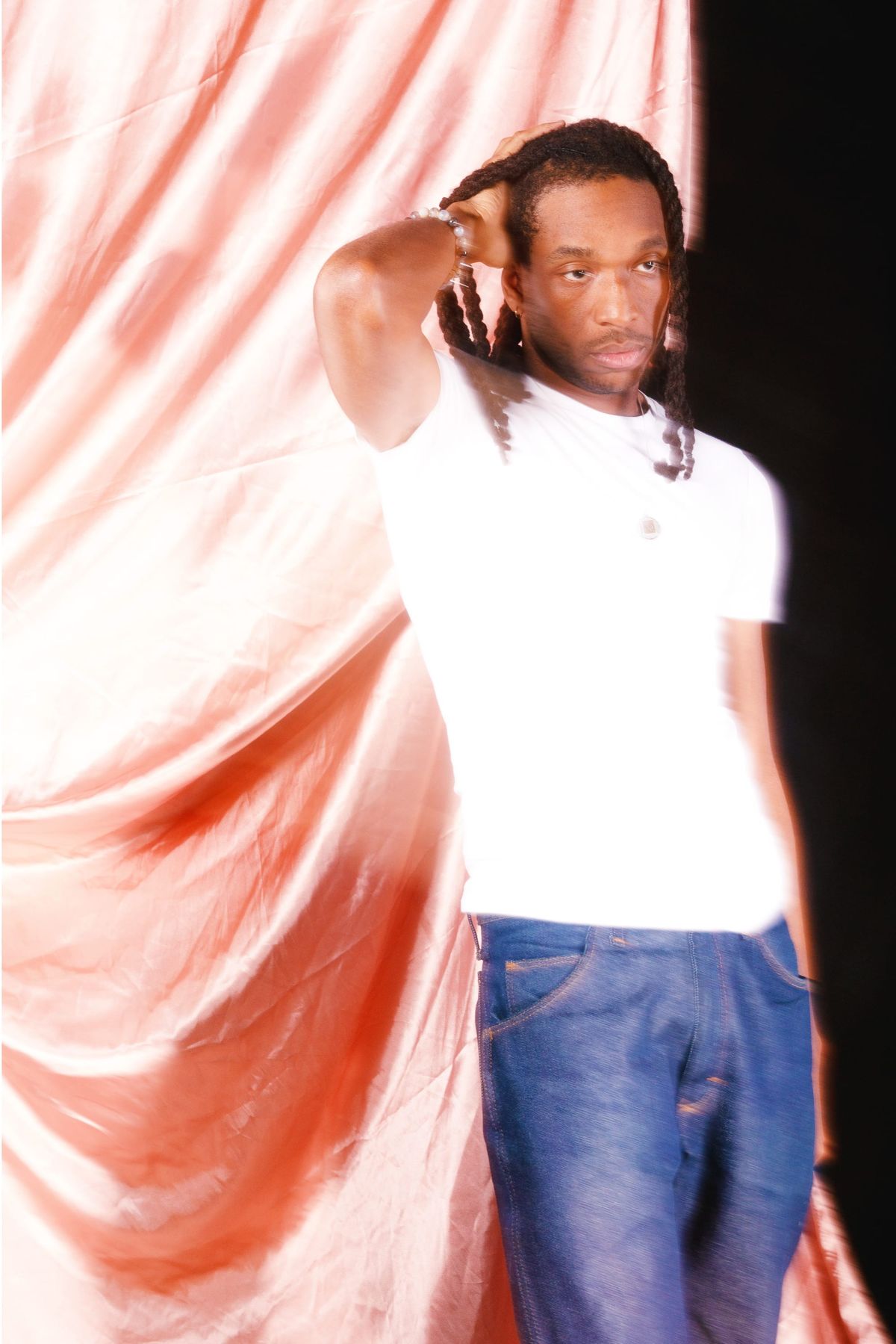
OK here's what's going on today: I recently featured L.A.-via-Detroit guy VINSON on the Baker's Dozen (get that subscription sale!) because I loved his 2023 record SoftSweetRadical, and he's got a great new one out today called Raw Honey (which was also mixed and mastered by Jake Viator of Stones Throw fame). I had a great time hopping on a call with him to talk about his life story and what brought him to this point, check it out:
Let's get into it when it comes to your musical background.
I started to think about being an artist late in high school. I was in marching band through high school, so that was my introduction to formal music—I played trumpet—but I never was super into it because of the formal structure. I always did it because I did love music. After that, I started to rap. I cypher'ed with my friends every day for a good minute. The Detroit scene, that's what I was into as a super fan and student of hip-hop. It was super-accessible. All my favorite underground rappers were around. It was the Black Milk, Guilty Simpson era, and early Danny Brown and Bruiser Brigade. I started to record, and I was around these people a lot, even in the sense of passing through and being in the same studios. I did a lot of shows with the first iteration of the Bruiser Brigade crew. Doing random stuff around the Detroit scene helped me get my feet wet.
So, around the time I graduated college, something honestly crazy happened to me. I was playing a show at a house, and the party got shot up. I got hit, but I was fine, you know what I mean? Like, it wasn't crazy. I wasn't about to die—but I did get shot, so that was crazy. But that made me look outside the city for stuff, because I obviously could've almost died. Also, there was a limit to the respect I could get for the type of artist I was. As much as I love the stuff that I just mentioned, it wasn't necessarily a place for me in the classic scenes that I was into—not just hip-hop, but dance and electronic music. Around that time, my homie John FM was starting to be in that world as a DJ and producer, [playing] those parties in the city with Jay Daniel and Kyle Hall [as part of] the younger people bridging the gap with the OGs. Those elements definitely shaped me.
I started playing shows in Toronto, because I did one and people were fucking with it, so I went back and built relationships there. People were nice and great, and that led to me getting my first show at South by Southwest around 2015. That's when I started to take it more seriously. I was like, "How do I figure out the industry?" The whole time, I was recording music. Ever since I was 19 or 20, I've never stopped recording. I didn't put out a lot of music, but I've always made stuff.
I met my first good L.A. homie at a SXSW show in line to see Moodymann, of all people. That started the move of me trying to figure out the industry. Obviously, it changes every day. I still don't know what's going on. But I got in that process of making stuff and building relationships in Los Angeles—going to studios out here, getting stuff mixed and mastered—and eventually I decided to move out here in 2019.
I did marching band a little bit in high school, and it was something that actually killed my interest in making music.
No, facts.
It was so regimented that it ended up being quite dismaying. I'm curious to hear you talk about what you took away from that experience.
Formal music teaching helped me be able to appreciate and understand practice, rehearsal, and hearing the same note over and over again. That's probably the biggest takeaway—because obviously, in a pop or rap setting, as an artist it comes easy. But once you start to do it for a while, it gets to a point where it doesn't come easy, and if you want to improve, having that baseline musical knowledge—whether I hate it or love it, that's the number one lesson I got from being in formal music education.
On the other hand, I went to high school in the suburbs of Detroit, and it was two Black kids in marching band all the way until senior year. It's just regular racism in everyday America, you get treated different than everybody else. But I was always good without practicing, so no one could really say anything to me because I was good. But they also never gave me any leadership positions that would help me think about getting better at this.
Getting shot sounds intense, to say the least. I'm curious to hear you talk about the physical and mental aftereffects of an experience like that.
Physically, I'm just blessed, to be honest. It's the middle of winter, I'm wearing a bunch of shit—probably three or four layers. I didn't get too much damage, but I still have a mark to this day. I was just lucky. It was pain for a couple weeks, and that's a blessing, all things considered. Luckily, the gun wasn't too crazy. But I still got the bullet in my belongings back in Detroit. When I went to the hospital, once I found out I wasn't bleeding out heavy, I was able to calm down a lot.
But even mentally, I was like, "OK, I could've died here, so I'm going to live my life doing what I want to do and doing it to the fullest." I was able to put it in terms of understanding the conditions of where I was, what I wanted to do, and what else was grabbing me. Finishing college, it was nothing that really inspired me. The things that I'm good at, what I like, what I majored in, I wasn't gonna make no money anyway. So I might as well just go for it, you know? Considering my personal life and backstory, I don't have much holding me back.
Talk to me a little bit about your upbringing, especially within the context of Detroit's musical history.
I was always around music, from what my uncle's accomplished specifically and my grandmother playing me the music and telling me those stories. My great uncle, Levi Stubbs, was in the Four Tops. That's hella hits. I've met him a handful of times throughout my childhood, he was always cool and super nice. But he's a legend, even though that's your family. My other uncle, Joe Stubbs, I was actually around him more. He was in the Contours and the Falcons, and I have unlimited funny experiences with him as a kid. The last time I was really talking to my grandmother at length, she was telling me a story about my uncle Joe confronting James Brown about a woman he was abusing, and rescuing her. I'm hearing stories about the Temptations, Smokey Robinson, and the Supremes, and my granny being around them. So I'm getting that history.
With my mom, my uncles, and my family in general, music is always around. My uncle played bass and guitar for fun, and he was always into alternative music, rock, and funk. I got a lot of context and lessons that, sometimes, when you're a kid, you roll your eyes. But you low-key like hearing the music over time. That's how it goes. With Detroit, too, the average person in the culture really cares about music. People are connoisseurs. It's a heads culture. All of that combined really set the table for me.
What was it like moving to Los Angeles?
I got a year in before COVID. I love L.A., though. I'm happy I'm here. I've been here seven years now, so I view it as a second home. A lot of people come here only to accomplish their dreams, and they don't see the actual realities of the city that's around them—or they find a way to ignore them, which I think is crazy. But that's a lot of places in America. Here, it's just in your face. I don't know how you can ignore it. It took time to really understand where I'm at to get settled as a person. Obviously, it's more expensive than Detroit, and it's so many more people. Detroit is 750,000 people on a good day. The energetic shift of being around four or five million people, and 10 million people in greater L.A. county, was the biggest shift that I had to get used to. On the music side, it took time to settle in. I don't want to come a place and just extract. I want to get to know the place, understand it, and find alignment.
When I started VINSON in 2020. I didn't put out too much music. Being away from home also led to a good amount of personal discovery, because you're away from those initial perceptions of being a child—growing up, and what people believe you to be. The fact that I'm around where no one knows me—not to say I became a new person, that's definitely not true, but without those eyes on you, of people that have known you as a child or teenager, you can just be, and account for personal growth.
I have a very specific question for you when it comes to L.A. versus Detroit. I want to know about the caliber of the drivers between the two cities. Do you find yourself doing more defensive driving out there?
You're always on defense out here. You drive like you can die at any moment, for real. That's how you got to drive out here. You have to drive everywhere, unfortunately, but I'm used to that because of Detroit. Obviously, it's a lot of political reasons why the public transit system in Detroit was never developed. But in L.A., the metro and the bus, it does work, and it will show up—but the city's too spread out to use it consistently. The thing that's the funniest to me is that it's always traffic—but when it's not traffic, people drive the craziest. That's the deepest cut of it. It'll be 9:25 at night, and if you have to switch lanes, be prepared. Whoever is in that next lane is going fast as fuck. That's all I'm saying. Be prepared! You can't relax, ever, even when it's not traffic, because that means people are so happy it's not traffic that they're driving crazy. They're driving fast.
Jake Viator from Stones Throw did some engineering on this new record. Obviously, they're a label with a considerable legacy of artistic stewardship at this point. Let's talk about that.
It's been cool and welcoming. The people I know out that building. especially Jake, that's just been the homie since I started working with them. It's a great hang and a great work session. They're open, and they understand the lane and know the places where I came from. They some just cool-ass dudes to do sessions with. We just like chopping it and being silly, and it makes the work a lot easier when you know you can be yourself in a session fully with no weird energy and a good exchange with your engineers. They understand what you're trying to do. Jake is the first engineer that really could mix my vocal right as far as what I wanted. Now that I've been able to work with him, I can understand what I need to say to other folks if I do work with other people.
In terms of this new record, I hear some shifts in terms of how your music has evolved over these last couple releases. Talk to me about how you perceive the evolution of your style.
SoftSweetRadical was really where it clicked for me—when I understood who I wanted to be, what I was as an artist consistently, and where I was going to go forward. That was the foundation and the base. This record is the expansion of those skills. When people ask, "What type of music do you make?" I always say, "I'm a rapper-turned-singer." That's the actual genesis of me. The joke is that it's a T-Pain album, too—but SoftSweetRadical was the beginning of that process, and with Raw Honey, I'm here, officially. I'm stamping it.
The first song on SoftSweetRadical was one of my last moments of going the traditional hip-hop route. Shifting more into songwriting and genre synthesis, I don't really believe in genre in a super specific way. But transitioning out of that world completely for myself is completing that maturation as an artist, which is more all-encompassing of Black music, not just soul music. Soul music, for me, means it comes from the soul—so that's what I wanted to transition to. No matter what sounds I'm using and what could be the the genre descriptor, Raw Honey is me getting into that mode and taking that more serious—putting in the work as a singer and working on my technique.
You have Bruiser Wolf on this record, who's on a bit of a generational run over the last few years. Give me your POV in terms of what makes him special.
It's just the candor—that ability to rhyme really well in a technical sense while being funny and having a lot of like swag to it. That's in the lineage of Detroit MCs. They all are funny, low-key. His sound, his inflections, it's really gonna grab you. Dope Game Stupid, that's definitely that's one of my favorite records for sure. Great record.
You mentioned a sense of humor being key to Detroit. What's funny to you?
It's a crazy mix for me. I'm a pretty dry and sarcastic person, but I also can balance that out by being mad silly, because I've been in a lot of different environments. I've never been firmly in one social group, so I can understand a lot of different things. Detroit is a roasting culture. That's how we get along with each other. That's always a part of it, and it comes through in the music. For me, it runs the gamut from Curb Your Enthusiasm to Trailer Park Boys, as well as dry memes and silly stuff too. There's always an element of humor in my stuff too. I always try to do like sketches and skits. There's always a little something in there.
You watch a lot of movies?
I'm not a movie person, which is crazy. It's ADHD. I watch stuff that I feel like is important, or that enough people recommend to me. I don't watch a lot of them, because I'm never gonna really watch a movie by myself at home.
What's something you watched recently that you really like?
My favorite movie in the last five years, off the top of my head, is Neptune Frost by Saul Williams. It's an incredible film. Tár, Cate Blanchett, I love that film. Obviously, it's a music film, and she wore great suits the whole movie. I was really into the fashion. I watched the new Frankenstein, that was pretty good for an OG story. The costuming and design was incredible, too. I'm always noticing little stuff like that in films. Soundtrack to a Coup d'Etat, That one's fire. Everybody should watch that.
I want to hear you talk a little bit about putting on the Good Company shows you do. I'm always interested to hear artists talk about bringing other artists together and the ways in which musical communities are formed.
It's been great. I try to make it quarterly, but things come up. Putting on a show every three months is still a lot to do in the midst of life. I started it as a way to make a place for Black alternative artists—and everybody that's booked is not Black at all times, but that was the genesis of it. There's so many great alternative artists here. The L.A. music scene is really incredible, and it's sprawling and vast with a lot of different pockets. There's probably 30 different scenes out here, because everyone's trying to do something creative. I probably go to at least five to ten different scene shows pretty consistently, because it's a lot of talent there.
With Black artists and Black alternative music, sometimes people don't put those things together and understand that it's all connected. So I took Good Company as an opportunity to make something genreless. For my last show, I had [Tida Norasingh], who throws her own show Jiji's Jazz Club, which is really huge and always popping. The title of it says you're going to be in some good company. It's going to be like chill artists—people that I respect and are doing something that is, at the very least, interesting and cool.