Gia Margaret on Recovering Her Voice, Going Viral, and Walking Amongst the Trees
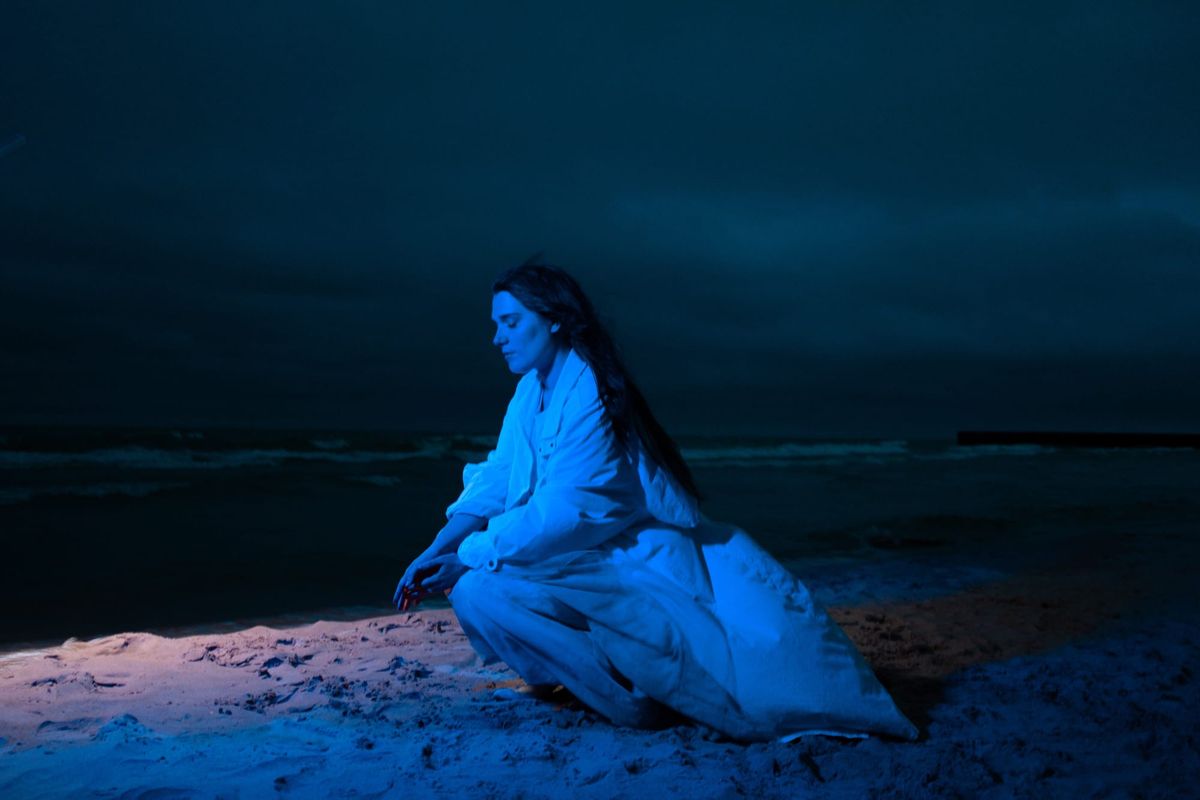
This is a free post from Larry Fitzmaurice's Last Donut of the Night newsletter. Paid subscribers get one or two email-only Baker's Dozens every week featuring music I've been listening to and some critical observations around it. Subscriptions currently run $3/month or $30/year, hit one of those little pink buttons on the right side of your screen to tap in, you won't regret it.
And the spring subscription sale is something you need to tap into if you're interested in supporting this largely very free publication. 26% off monthly and annual subscriptions, that's $2.22 a month for the first six months, or $22.20 for an entire year. All in all, it's cheap and it's nourishing. You can grab the monthly sale here, and the annual sale here.
Here's what is cooking today: Gia Margaret's got a great new album out this Friday called Singing, and it's named as such because it marks her return to vocal-based music after two excellent instrumental-focused records that resulted from her losing her singing voice due to an illness. If you've been on TikTok at all in the last few years, you likely encountered one of those instrumentals, "Hinoki Wood" from 2023's Romantic Piano—and the uncertain perils of virality was just one of a few topics we explored during our jaunty chat. Check it out:
Tell me what it was like getting used to singing again.
How much time do you have? I'm just kidding. It felt like a slow evolution, because I was making instrumental music, but the plan was to always come back to [singing]. For a while, I just didn't know when that would be. I started to build up this internal pressure to come back strong, and I wanted my voice to be what it was—but I'm also in my thirties, when your voice changes. There were a lot of variables, and I had this delayed experience where I didn't sing for a few years while my voice was changing a little bit—and then I'm starting to use it, and I'm noticing those changes. So it was very strange um to come back to, but I started slow.
The first few songs that I recorded didn't have a ton of lyrics. They were rooted in the instrumental aspect, and I was just peppering in my vocals. As the process went on, the songs got longer and more wordy. The last song that I wrote for the record was "Emotion," which that's the longest song. I felt like I was learning to walk again, and eventually I was doing a light jog at the end. It's hard to verbalize what that process was, but there were tools that I discovered to help me ease up. All the vocal processing helped me get out of my head about my voice, which was an internal obstacle that I had. But I was able to sing into a vocoder and treat the voice like an instrument instead of, "Oh my gosh, it's my voice, what does it sound like?" I feel like I had vocal dysmorphia, almost, because I had to get reacquainted with my voice.
Talk to me about the process of recovering from a vocal injury. I also talked to Ian from Militarie Gun about this a while back.
I had to step away from vocal training, because when you have a vocal injury, they send you to vocal therapy, and I was doing all these exercises every day and massaging my throat and doing all these crazy vocal warm-ups, which is important to warm up your voice before you use it. But I was starting to lose my instincts, so I decided that the only way I was going to use my voice is again is if I did it naturally by listening to my body and knowing that I'm not gonna push myself to sing this very high note if I can't do it today, when in the past I've just done it anyway. That's what hurt me. So I was using it in any way that I could, like when you start working out or doing anything physical. You have to start slow, but you have to do it. You can't avoid it.
Talk to me about writing vocal-based music after a spell of making instrumental work.
There's only one song, "Good Friend," that I wrote a little bit after I made my first record. I stepped away from writing lyrics shortly after, because I couldn't sing a few months after I wrote that song. "Phone Screen," I wrote early in the pandemic when I was still really struggling. I have the demo of that, and I could barely sing, but I did it anyway. Now that I think about it, they were all slowly written over the course of my past three records. One I wrote over the course of making Mia Gargaret, and three or four I wrote over the course of making Romantic Piano while squirreling them away because I was saving them for my vocal record. The other ones happened as I was recording those first few songs. I had a bunch of other songs that I thought would go on this record, but I decided that they didn't make sense anymore. Lyrically, I wanted to write in the voice of where I'm at now. So I sprinkled in some older-ish songs, but a lot of them are more recent songs.
Talk to me about writing lyrics for this record and that aspect of expressing yourself.
Lyrically, this one feels different than the first, because for the first time I was writing to myself. I was writing lyrics that I needed to hear. Obviously, I'm older, so the lyrics are more grounded and hopeful—not in a glass-half-full way, but in that the older we get, we're truly just like making the most of it. It's rooted in that realization you start to have as you get older, where you're like, "Okay, I'm alive, not everything is perfect, but we keep waking up and we keep going." There's a tinge of positivity, but through lived experience.
Let's talk about your general outlook when it comes to being alive these days. For many, it feels tough these days for various reasons. What helps?
For me, the most helpful thing I can do on the worst days—the days when you turn on the news and you just can't believe it and are like, "Wow, I did not know things could get this bad," because I think that's where we're at—when I'm thinking that, I make my world as small as I could make it, because a lot of these things are out of our control. Turning my phone off, or naming things that I see in the room that I'm in and realizing, "Okay, I'm just a small person in a room. Maybe I need to read, stare at my cat for a while, or go for a walk." I need to totally disconnect from the things that i can't control—call a friend up, have a conversation, cling to the things that are real. Stare at the trees! It sounds so cheesy, but sometimes that's so helpful.
In those moments, you realize how beautiful living is. There's a lot of things to appreciate, amidst all the terror that we face every day. That's the only way I've ever been able to get through anything, is just to realize how temporary existing is, and that there's good around, too. There's room for both. There has to be.
What's your relationship like with social media at this point?
It's strange. I think it's too stimulating for me. The way that I use it is, probably, pretty healthy. I just follow the accounts that lighten, because you can't get away from the news. I'm up on the news, I read it in the morning, but I'm trying to filter out the stuff I'm not asking for—and not in an ignorant way. Sometimes, some things are just uninvited, and you're like, "Okay, I opened this app and this person's talking about the end of the world. I can't do this right now."
I'd like to detach more from it. The more social media advances, I'm wondering if a person like me can handle it—a lot of other people should [wonder that]. We have one precious life, and we're scrolling it away. I don't think that's the way that we're meant to be experiencing life yeah. I need it, I enjoy sharing things on there and seeing what other artists are doing, and I enjoy some of the art that's shared on social media. But I was looking into dumb phones the other day, because I'm carrying this computer with me all the time, basically. That's not how we grew up. Remember just being outside all day until the street lights went on? I do miss it.
I feel very lucky that we got to have a sense of adolescence without this stuff. When I look at what younger people have to deal with today being online, I'm like, "Jesus Christ." As soon as I could get online when I was younger, I was like, yeah, "Give this to me." That's not a good instinct to have, but that was me, and even pre-social media, I can't imagine how all of us did that.
It was exciting and new. Napster was the start of the demise of music, but just going online and finding music was so exciting. As a 13-year-old, being able to turn on a computer and have access to that information that we didn't have before...but our relationship to it was so different. Your whole day didn't revolve around it.
Let's talk about the song "Emotion," which is definitely a standout on the record. Walk me through putting that one together.
That one was weird. The record was almost finished, and I wrote this song that was the weirdest, structurally. I was like, "I can't figure this out, it feels new." It felt like the end of the process, because I was reaching this thing that I want to be doing. It felt easy to write that song, but I was unsure if it belonged, so I was like, "Okay, I'm gonna put it at the end as a little surprise." I didn't write it with all the vocoding on it, but I'd prepared for a tour while using this crazy vocal pedal, and I was like, "Whoa, this sounds really cool."
So I called up my friend Blake and I asked him if I could come into his studio. I was like, "I have this song, I don't know what to do with it, but let's just get in and record it and see if anything sticks." I was in his studio three days later, and he loved it. We spent a day recording it, and he added that loud part at the end. He was like, "What if we made the song explode?" So he had added drums to the end and that changed everything. Mood-wise, it was such an unexpected turn that I didn't think that I'd make.
Then, I shared it with my friend Deb Talan along with this other song to sing on, and she was like, "I like that song, but I want to sing on ["Emotion"]." She came out the next week, and it all happened pretty quickly. I really liked the combination of my super-processed vocal with her singing, because she has a natural AutoTune to her voice. I'd recorded her in the past, and I compared it to playing a video game. I was able to do whatever I wanted with her voice. It was really fun, because I'd never seen that side of her. The song welcomes you to show the sides of yourself that you're afraid to show. Lyrically, that's the whole point as well. It scratched a nice itch for me.
Do you play video games in general?
I don't, but over the pandemic I played a few.
What'd you play?
What Remains of Edith Finch. I like the games where you're trying to figure out a mystery. I don't like the video games where you're shooting people. I really liked Unpacking. I played that for a whole week. That was the disassociation portion of pandemic portion, where I just needed to like get through the day.
You worked with quite a few people on this record, including Guy Sigsworth. Let's talk about the role collaboration played here.
The collaborative part was really important, because it forced me out of the house. I'd been feeling like a shut-in, just making instrumental records on my own. I chose Guy Sigsworth because I always knew I wanted to to make music with him. We had plans to make my second record together, but then everything happened and that got delayed—so when I was finally ready to do this album, I called him. We really hit it off artistically. Communicating my ideas was easy, because he was open and able to communicate my ideas even further through the music.
It felt really pivotal for me, as a producer, to work with a producer. I mean, the guy has worked with Björk. He's the pro of the pros, and he approaches music in such an open way that's necessary if you're doing it for a long time. I don't think he works on anything that doesn't bring him joy, so I felt really lucky that he wanted to work on my music and that he made that really easy for me, and not intimidating. It was a family operation. His son was our engineer, and we recorded in his house. I felt really comfortable, which is always helpful. Everything that he touches just sounds so good. The songs that we worked on sound better than I had imagined in my head—like, I had no idea how good they would sound. I love the way he mixes and produces.
The other collaborations were a result of friendships that I'd formed over the past couple of years. They're all people that I respect deeply, And somehow they became my friends. How? I don't know. Sean Carey, I'd been listening to him for a very long time, and it was a dream to work with him.
We talked about your relationship with social media. Obviously, you had a very viral moment on TikTok a few years ago with "Hinoki Wood." The incidence of viarlity is something that people can find random, unnderving, and strange. What did you take away from that?
Initially. it was very strange. I truly just didn't know what was going on, because I'm not really active on TikTok—it's too stimulating for me. I've posted a few things on there, but I don't really know how to make a video. There are too many steps that I don't understand. So when the song was starting to become viral, people were sending it to me, and then it just blew up over the course of, like, three weeks. It had gotten so big that it was charting on Billboard—and it was this song that I almost didn't even put on my album, because it was so short.
I went from confusion to frustration, because I was really worried that it was gonna be what I'm known for now—viral meme music. This wasn't my decision, it just happened. Then, I realized how cool it is that it introduced my music to young people. I have so many friends with children, and they all know that song. To think that my music is reaching a younger audience—simplistic piano music—is pretty awesome. So my ultimate attitude towards it is that it's pretty cool that it exposed my music to more people. Do I think it'll happen again? Probably not. Do I want it to happen again? Probably not. I live a quiet life. Even as a profession, I never thought that would be the way that it is. I try to treat most things with a surprised attitude.