Jake Muir on Leaving Berlin, Meshuggah, and Pushing the Conceptual Envelope
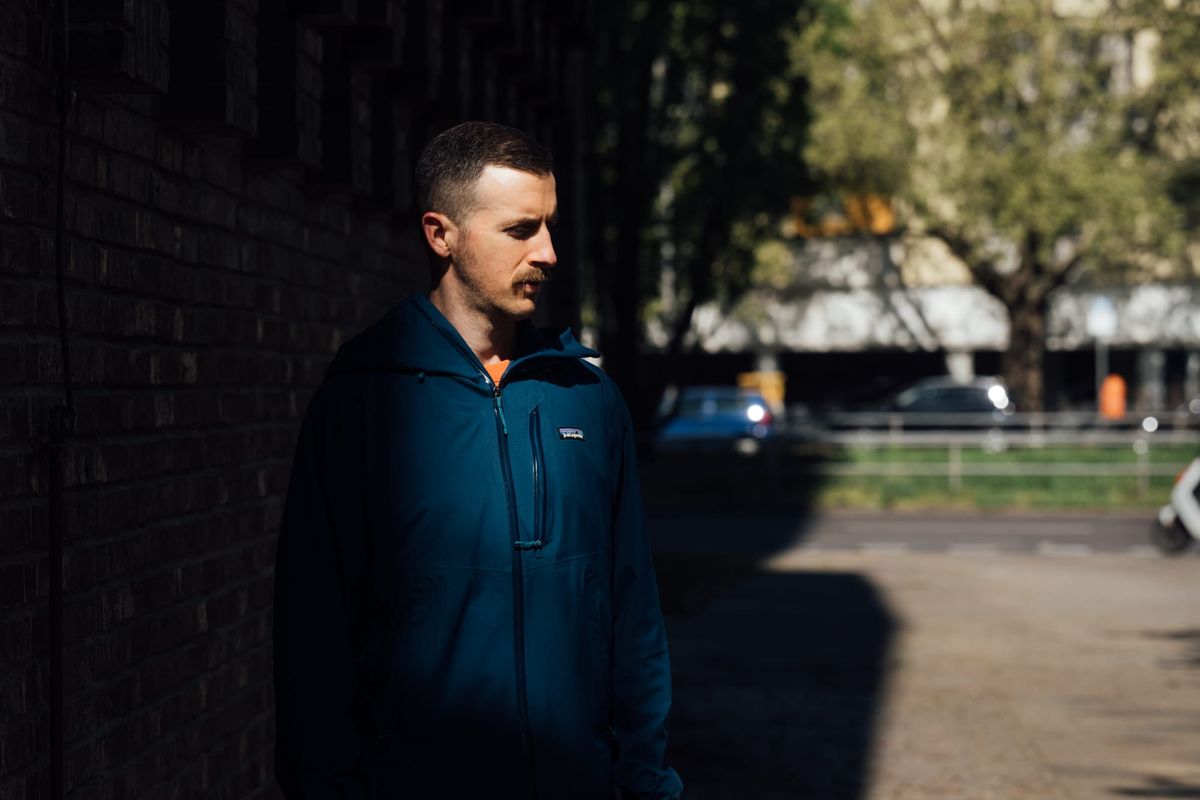
This is a free post from Larry Fitzmaurice's Last Donut of the Night newsletter. Paid subscribers get one or two email-only Baker's Dozens every week featuring music I've been listening to and some critical observations around it. Subscriptions currently run $3/month or $30/year, hit one of those little pink buttons on the right side of your screen to tap in, you won't regret it.
Today's newsletter: I've been a fan of Jake Muir since being bowled over by Bathhouse Blues, the gorgeous slab of smeared-lens collage-pop that he released in 2024. His latest, Pareidolia, is a massive flurry of death-and-black metal samples that feels awesome to experience; I might go as far to say he's increasingly one of the most interesting electronic artists working today. It was a real pleasure to get Jake on the horn in late May to talk about his career, his artistic approach, and his ever-evolving relationship to metal, check it out:
Where am I talking to you from today?
I recently moved back to Los Angeles a month ago from Berlin.
How long did you live in Berlin for?
Six and a half years.
How was living in Berlin?
It was fun. Obviously, there's a lot going on with music and art, and the nightlife is great, but it wasn't really heading anywhere. I was on an artist visa, and whatever I'm doing with music did not capture the interest of mainland Europe, so I wasn't getting much over there. Gay life there is kind of complicated, in a way, so ultimately I needed to go back home.
Walk me through how Pareidolia came together.
It was kind of by accident. It was the fall of 2022, and Evan Caminiti and I had just released Talisman on Evan's label. It caught the ears of the Meakusma guys, and one of them hit me up on Instagram wanting to book both of us for a night they were doing in Berlin. Evan also lives in L.A., and I said, "This can't happen, because it'd be way too expensive." As a way to bridge the gap, I made a live set sampling all the ambients section from black and death metal records—which, historically, I wasn't really that into until Evan got me into that stuff. I put it to the side to work on Bathhouse Blues, and then I had Campana Sonans sitting around since the end of 2021, which was part of a final project for school. I finished that up and hammered out what ended up being Pareidolia between the end of 2024
into February of '25, with some final touches last year.
Talk to me about your relationship with heavy music and how it's evolved.
I've flirted with metal since high school. One of my best friends, Billy, was in a death metal band then, and his favorite metal band has always been Meshuggah. They finally grabbed me in 2008, when obZen came out. We both liked Devin Townsend's music, which is fairly camp for metal—but I appreciated the honesty of a sillier take on the genre. As I've gotten older, I have more of an appreciation for intense music. I've gotten into some noise artists over the years, but I still don't really like wall-blast sheet-metal stuff. I've never liked Merzbow, but I quite like Yellow Swans and tape-noise stuff like Maurizio Bianchi—the textural, weirdo side of noise,
I've always had an interest in the aesthetics of psychedelic music, and i feel that like death metal carries some of those traits, with the flange guitars and spatial effects. It's interesting for metal, because it's not a very trippy genre. But that particular subgenre has more interesting aesthetic choices, which is what drew me to it.
It's funny you mention Meshuggah. I heard them recently—not for the first time, but with new ears—and I was like, "Oh, I like this a lot."
What they do is really interesting. From what I've heard from the metal camp, they were almost the first band to really incorporate groove into the genre. Some people might think they're "pretentious" because of their time signature usage, but it's not done in a way that's annoyingly proggy, like Dream Theater. It just knocks, and it's done smartly. The music does have quite a strong groove element, whereas metal can be kind of rigid on the whole.
Talk to me about the process of extracting all the sounds for this record.
I spent a while going through loads of records. For the plucking process, the sections that I took typically were intros, outros, bridges, in-between moments—no riffs or heavier sections. There's some samples of guitar chords, and not all the samples were super-abstracted. Some parts were basically one-shots. On "Oblivion," there's a bass part where the repeated note is just a strum that I kept—a combination of synthesizer, guitar, a bit of vocals, percussion, and sound effects, all of which mostly came from the black metal records.
Were there any challenges you faced while putting it all together?
Not really. Once I went back to the project, it took a different direction. I only kept maybe one or two of the initial tracks I'd used for that live set, and it became more cerebral. It was interesting going through all these records and seeing which bands got really wavy with it. It was also a good way to continue learning about this music that I didn't have too much of a history with before working with Evan. It was almost like doing a bit of homework.
You've done a few records now that are organized around conceptual bents. The first record of yours that really blew me away was one of those—Bathhouse Blues. Talk to me about how you arrive in which mode you work in.
Bathhouse, some people really appreciated it, but then I looked at the numbers on Bandcamp, and it's actually my worst-performing album.
Really?
Yeah, maybe it was a bit too edgy. But I'm drawn to concept records on two levels. It's a way for me to focus on things more easily. I don't really jam, so it removes superfluous material or processes. I can sit there and be like, "This is what I'm working with, and that's it." I'll hear from other people that they have trouble finishing projects, and part of that could be having too many options with DAWs. Just having samples and a fixed idea, you're given a limited paintbrush—and that potentially could be maddening, but it's ended up working for me.
Also, so much music has been made, and music technology has stopped escalating on a regular level since, like, the early aughts. I don't know if it's stagnant, per se, but from an artist perspective, I look at it as, "Okay, what am I bringing to the table, and what can I do that hasn't been done?" I can't really rewrite the rule book, so within the general sector of abstract music, I try to consider ideas that I like and that I haven't really heard. Each of my records have had source material that seemingly no one else has pursued, whether it's gay porn or Beach Boys samples. The only one I'll give a a pass to is this artist Khan, who released an album in 1997 called Orgian I-IV. His is more of a dub take on the idea and less of a narrative.
Talk to me about your creative relationship with Evan on Talisman and what made it work.
I'd always liked Evan's music, especially the guitar stuff. I think we started to talk around 2021, when I did a mix for my friend Jesse, who runs Motion Ward. It was loosely inspired by California deserts, and I included one of Evan's guitar tracks from Night Dust. He listened to it and reached out like, "Hey, what do you think about doing a record together?" I was like, "Hell yeah." He sent me some projects he had sitting around, and I had everything I needed. We met at his apartment in L.A. and hammered new tracks over the course of three days as well. It was mostly Evan on guitar and me handling production. I steered it in a darker direction, because one or two of his projects were lighter, and I was like, "If this is going to be a cohesive thing, we have to pivot to one or the other."
We were both listening to some of the same things, and being guys from Southern California with an appreciation for the desert, that naturally came forth in the vibe. Aesthetically, we were like 10 years late on the heyday of Root Strata and that sound. If it had come out back then, it would've performed much better—but the music is strong regardless. That's all that matters in the end.
You also do quite a bit of photography.
I've dabbled in it since 2009. Jon Wozencroft—one of the Touch bosses—was an early inspiration. He made really mundane images seem interesting, and I've had a thing for close-up shots of objects. In a similar way to sampling, I like trying to mask original sources. The Lady's Mantle cover, a lot of people didn't seem to realize that it's just rocks. They were like, "Is this digitally made?" It's just a straight-up photo with some editing and color-correction. The only records of mine that haven't used my photography are Bathhouse and Muara, which Chloe Harris did the art for.
Even Pareidolia, the front cover came from just outside of Portland. The back image is from one of the weird geothermal pool spots in Yellowstone. We've chosen three different images for the inserts in the record. One is a frozen waterfall from Banff, another is this black metal-style evergreen tree photo from Germany, and the third one's another geothermal shot from Yellowstone. I've never done any exhibitions or photo books yet, but maybe one day.
Are you making music full-time? If not, what's your current day job?
I don't have a day job. I actually have to figure out work, now that I'm in L.A. In Germany, I was skating by on what I needed to make over there, and I was fortunate enough to have super cheap rent. We sold my car and other things, so I was living a wavy artist lifestyle for a bit, and I started to dip into savings. Now, I have to wise up and figure something out.
Frankly, I want more of a job-job, because—if I'm completely honest—I don't love playing live. I find it very stressful. I'm willing to do it if the money and opportunity is right, but I also don't want to have to depend on that for work. I prefer doing studio work on the whole. The satisfaction from music has more to do with just creating work. I'd actually much rather DJ than perform. We'll see what I figure out here, whether it's part-or-full-time, because otherwise I've historically had bad luck applying for grants and residencies. I've only had one commission, where I did some recording and made some music for a German friend's project. Otherwise, no one's really taken much of an interest with those things, so the music income, for me, is pretty limited. I definitely can't be doing it full-time yet.
What movies have you watched recently?
Last year, I signed up for the Criterion Channel again, and I started going through Werner Herzog's filmography more seriously. He's really the GOAT. I saw the one about the Austrian ski jumper, the one about the pilgrimage to the Indian holy site, which was great, and the one about the destruction of the oil fields in Kuwait. I like his general interest in the crazier side of mankind.
I recently re-watched Wong Kar-Wai's Chungking Express with a friend. My old roommate in Berlin gave me some rips of films that hadn't been released yet to watch on the plane, but I saw Magellan.
Yeah, I've seen Magellan twice. I love it, it's great.
It's beautifully filmed. I just saw Wong Kar-Wai's TV show, Blossoms Shanghai, and I thought that was great. It was pretty entertaining—a lot of drama, some twists and turns. I hadn't expected that it's, like, 30 episodes.