Friko on Olive Garden, Working with John Congleton, and Bucking the Indie Rock Canon
This is a free post from Larry Fitzmaurice's Last Donut of the Night newsletter. Paid subscribers get one or two email-only Baker's Dozens every week featuring music I've been listening to and some critical observations around it. Subscriptions currently run $3/month or $30/year, hit one of those little pink buttons on the right side of your screen to tap in, you won't regret it.
And the spring subscription sale is something you need to tap into if you're interested in supporting this largely very free publication. 26% off monthly and annual subscriptions, that's $2.22 a month for the first six months, or $22.20 for an entire year. All in all, it's cheap and it's nourishing. You can grab the monthly sale here, and the annual sale here.
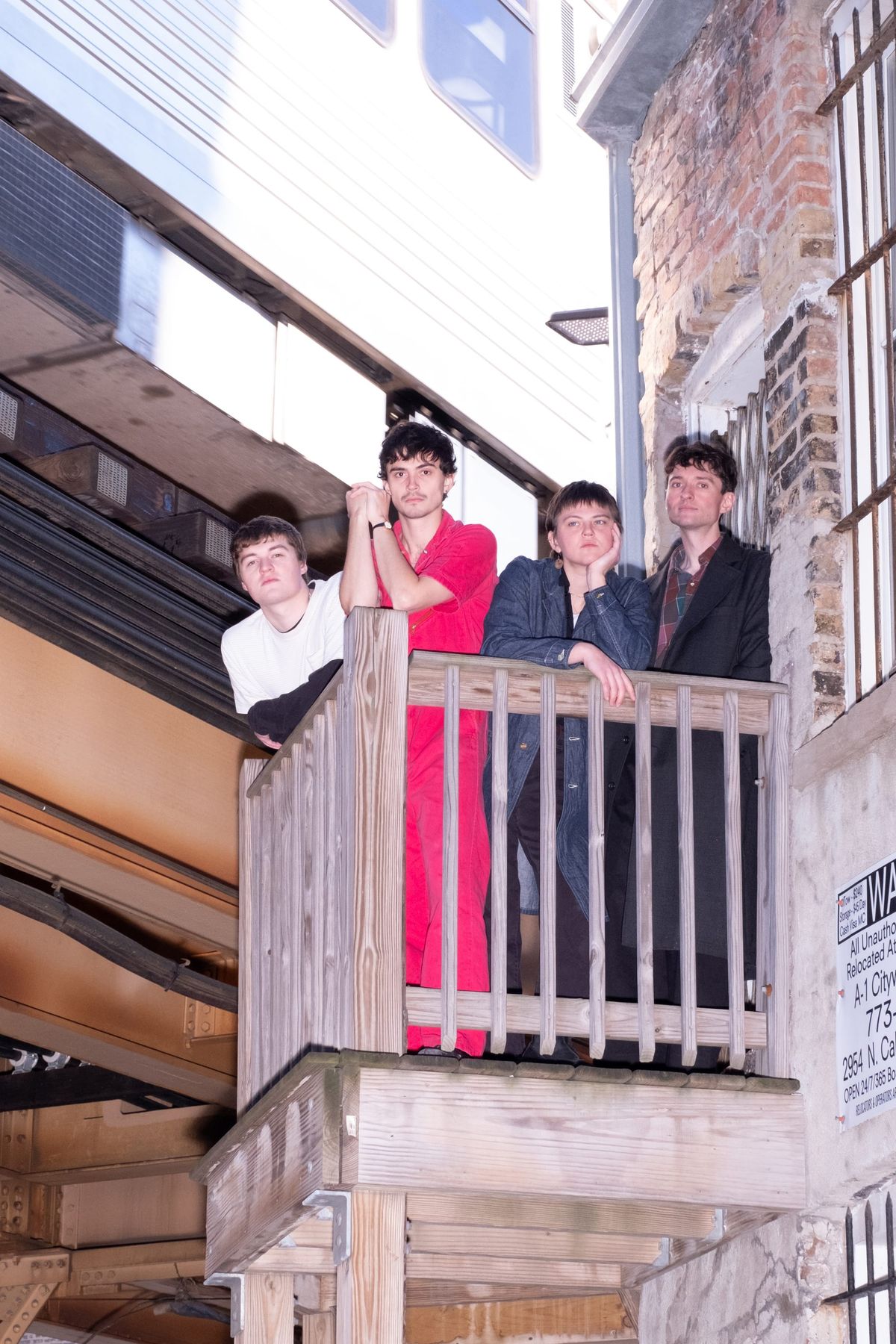
OK, here's what is up at bat today: Unless your ear is extremely to the ground, Chicago kids Friko seemingly came out of nowhere with 2024's sensational Where we've been, Where we go from here. Next week they return with an extremely excellent follow-up Something Worth Waiting For, which as it turns out is something that is indeed worth waiting for! I hopped on a call earlier this winter with all four of 'em—vocalist/guitarist Niko Kapetan, drummer Bailey Minzenberger, bassist David Fuller, and guitarist Korgan Robb—to chat about this particular point in their careers, and I had a fun time chatting it up with the quartet. Check it out:
Walk me through how this new record came together.
Niko: We were on tour pretty much the whole time almost making it, which was the exact opposite of the first record, where we were making it so we could tour it. This one was about keeping up with it all and making it at the same time, which is why a lot of movement and transportation played into this one.
I was actually kind of surprised to see this kind of come together so quickly after the last one. If you guys had taken a couple more years, I wouldn't have blamed you—but it doesn't sound like you necessarily needed it.
Niko: It was kind of insane, touring a lot. But we're all super grateful, what it gave us, and it has felt very steady. Even with the first few months of the first record being out, there was never—and still hasn't been—a huge explosion.
Bailey: Those in-between times of working on new music and making the plan to record last June—it did feel natural to do that. It didn't feel forced or rushed. It just naturally came about that way. Of course, we put a lot of time and energy into it, but it didn't feel like we were pushing too hard on anything.
This is also the first record that you guys have made under the current lineup.
Korgan: I was learning the first record and how to play guitar with Nico playing guitar. On tour, we learned how to have two guitars in this band, and as that happened it was really natural to write parts and arrange new songs at the same time. It felt very natural, and an extension of rehearsals arranging the first record's songs, to have a four piece making new songs as well. It was very natural, and nothing felt forced on my end.
David: One thing that helped Korgan and I a lot is that we started playing with the band six months before that first record came out. We got the opportunity to get to know each other and understand how we approach songwriting, our own instruments, things like that. When we started really sitting down and writing this record, having more of an intimate knowledge of each other—what we like to do, how we like to play—made it that much easier. I mean, writing a song is never going to be like an easy thing, necessarily, but we did have the luxury of getting to know how we all approach music in general. It felt very natural.
This is also the the second record on ATO, which is a label that has the power and capacity to elevate bands. Functionally, it's almost a major. I'm really curious to hear you guys talk about the business end of it all, and what ATO means to you guys.
Niko: There was a point, when it was just me and Bailey, that we were able to meet the whole team, and it seemed like they really cared. They've honestly been really supportive for us and have helped us make this into the beginnings of a living. They had a lot of this prior-generation stuff, but I know [president Jon Salter] and the whole label are trying to make the jump to a younger generation—or, as they say, the "next generation" of the label. So we've been the embodiment of that, but they've treated us very well.
David: I would also say that it's great that they have so much experience working with—I'll use the term "veteran acts," acts that have been around much longer than us. Because they do truly engage us like professionals, even though we're a younger band. It's clear that they take what we do seriously, and even though they have suggestions—because they've been doing this for decades at this point, which is super helpful for us, because we get to learn a lot— they still give us enough room where we can be ourselves. They've done a really good job at helping us develop a career out of this, which is ultimately what we want.
Let's talk about the financial situation as far as this band is concerned.
Niko: We've been running off the money from the shows from this album cycle, and we're about to reach the end of it—but luckily it all starts right back up again with our release show in April. Shows and merch, in the term of being an indie band—we're signed to a label, we're not technically an indie band in that sense—but, you know, making indie rock, it's how we make the money, and we've made enough at this point so that we're all paying rent on it. But we're actually like right at the end of that though, so it's good we're starting up again.
Bailey: A good amount of it can feel like you're just staying afloat.
Are all of you guys doing this full-time now?
Bailey: Everybody works in some capacity. David and I both have W9-type jobs.
Walk me through what your guys' jobs and side hustles are.
David: I work a tech job, which is what I've been doing prior to joining Friko. The ultimate goal is to sustain yourself off of what really sustains your soul, spirit, and heart. I'm very confident we will get there, but it's work to get to that point. But a great thing about this type of thing is that like your job doesn't have to be your identity. It's just a way to make ends meet, and I think that that's an important distinction to look at too. But obviously, being an artist, that's a huge part of your identity because it's how you express yourself. That's who you truly are—your second language.
Bailey: The distinction between those two things can be interesting sometimes—when your art can become your job. Obviously, we still work other jobs, but when you spend so much time touring, in a lot of functional ways, it is a job, and that can be layered layered sometimes. I'm just trying to find a balance within that.
Talk to me about working with John Congleton on this record.
Niko: It was incredibly eye-opening to work with a professional who was so confident in what he did. He's also an absurd, hilarious guy. We love Bill Callahan, so he told us some very nice, fun stories. He was unlike anyone I've ever met, and he gave us tools to work with that we're going to use probably for the rest of our lives being a band.
Bailey: He was fun to be around, but he also knew when to interject and when to give us space to figure stuff out.
David: It was the first time that a lot of us were in that—we've been in studio environments all of our lives, but this felt more, I don't want to use the term "real," but that's the only thing I can really use in this regard. He literally said to us, "Welcome to the big leagues," which was clearly a joke, but he did a really good job at making sure everybody felt comfortable. We're recording a record that we're really hoping will make our lives different, and we're working with somebody that we met for the very first time. It's a very vulnerable experience, and I can confidently speak for everybody that he gave us the freedom to be ourselves—and I can't think of anything more essential in the creative experience of being a musician. It's very clear to me that's a huge reason why people seek him out.
Tell me about tips and tricks you picked up from working with John.
Niko: The biggest one is something we've incorporated almost all the time now in practice. When we were working on a song that we were trying to refine in the studio, he was listening in the control room to us, and at some point he stopped and was like, "You guys need to shut up and work on an idea. You're spitting out a thousand ideas, and you don't have to actually try them to their full potential."
Bailey: That was one thing that we were getting a a feel for and figuring out—writing as a four-piece. You have four people working on something, and we're all trying to hear out each others' ideas, try everything, and have it be an open space. That can lead to a lot of discussion, which is ultimately a good thing, but John pointing out, "Maybe y'all are talking a little bit too much, maybe you should just play," it was funny to have an objective observer in that dynamic.
Jherek Bischoff also worked with you on this record. When I saw his name in the press materials, I thought, "It's been a minute since I've seen him pop up on one of these!"
Niko: He's the type of guy where, when he walked in the room, he brings a presence just by how he dresses—and he's, like, 6'4". We had massive respect from out of the gate just knowing who he's worked with, but for "Certainty," we wanted to do a big arrangement, and Congleton brought Jherek on and he did a MIDI arrangement of what you hear on the record in, like, a day and a half—and he did it on the plane. We had one round of notes, and then he came in and we did it. It was so magical, he's a genius.
Korgan: Yeah, it was really cool to watch when the strings came in to record. We'd be like, "Can you actually change this and make it feel this way?" And, on the spot, he'd think of something and tell them what to do. It was amazing to watch someone with that caliber of mind—how he could bring what we were saying to life, it was really powerful.
Let's go back to touring. You guys have obviously done a lot of it in the last couple years—headline tours, as well as support for some pretty big names. Talk to me about your experiences on the road as they currently stand.
Niko: We all accept the hard parts of touring and have found a way to work with each other on a human level. We all have those heavy conversations. You're talking to somebody once a day about an issue you guys had in the gas station where someone said something offhand. We've all found a way to work together, and these three are amazing people to work with. We run a tight team, and we've been all over the world now, and if there's anything that builds up, it's not gonna work unless you're a huge band that has buses where you never have to see each other.
Bailey; One thing that I feel really grateful for is that we all love each other and get along so well—and that translates into what David was saying earlier about arranging and writing together. The level of trust, respect, and love for each other makes the hard stuff easy. David, you said that songwriting is never easy, and I do agree with that, but it certainly makes it easier when you enjoy who you're writing with.
The same thing applies with touring, of course. There's a lot of parts of it that are really hard. We've slept in our van a number of times. It's definitely taxing on your body—but it's also so fun, and you get to meet so many new people, hear so much new music, see new cities, and get to spend so much time with each other, which is incredibly valuable. Korgan, David, we got to know each other through touring, essentially. There's few things that I've experienced that can bring you closer, because you're spending every waking moment with each other and you see parts of somebody's schedule that you wouldn't normally get to see. I know what your toiletries bags look like! It's the little things of knowing somebody that you wouldn't even really think about. I have the the pleasure of knowing all these small facts about you guys, and it just makes me love you more.
David: My experience with touring is kind of like any sort of training in general. It's way harder when you start out. The first tours for me were infinitely the most challenging. It's a lifestyle change, and I don't want to get too deep into it, but touring for me was really hard at first because I have OCD, specifically like on the contamination side. Sleeping somewhere that's not my bedroom, I don't love doing it, so that was an interesting thing to figure out in real time. But as those things got easier for me and I constantly started to expose myself to it, it honestly made everything else for me significantly easier.
When you're in a van with the same people for four weeks straight, all of a sudden you do like start to really enjoy it. I can't really think of anywhere else, or any other people, I'd really rather be with right now. It's hard to get there without experiencing those hardships and challenges. Is it hard? Of course. Do I understand why people have mixed feelings toward it? Of course. But when the highest of highs on tour are going to change your life, it's going to make being home better. It's going to be your relationships at home better. The hard parts, I would take on every day because the good is amazing and incredible.
Bailey: It makes me think going to bed at three in the morning, waking up at six in the morning, driving for six hours, and then blowing a tire and staying on the side of the highway for five hours.
Niko: And missing the show because of that! In the town where Percy Jackson was found!
Bailey: Something like that, when I think back on it, it makes me laugh. We were all just hanging out and waiting for the tire thing to get figured out, trading on-and-off who was taking naps, playing games and chatting. Being on tour throws you through the ringer a lot, and it teaches you to be patient—and it allows you to practice that together, because it's a situation that could definitely cause people to lose it a little bit. You learn how to take things in stride when you're pushed up against the clock constantly.
What do you guys like to do in terms of blowing off steam when you're on the road?
Niko: Hit each other. [Laughs]
Bailey; We do like to play a lot of games. We play Uno. There's a couple of car games that we can play, so the person who's driving can also participate—brain games. A lot of talking, a lot of listening to music, taking walks together, going to Olive Garden. I might be at the end of my rope with that one—we did that twice in less than four days. I was like, "I can't do this."
David: Look, all I'll say is, when you eat Jimmy John's five days in a row, and then all of a sudden eggplant parmesan on the menu...things change.
Korban: Infinite breadsticks.
Bailey: I think that's the problem.
Niko: Yeah, Bailey likes finite breadsticks.
You guys make a very specific type of indie rock that, to someone my age, triggers the "I don't really hear too many bands making straight-up indie rock like this anymore. The way I've felt about these two records you guys have made is similar to how I felt about the first Yuck record. I'm really curious to hear you guys talk about your relationship, as listeners, with the indie rock canon in general.
Niko: We all love the first Yuck record. If it comes off as more straight-up indie rock, that's definitely unintentional, because we're definitely all very eclectic. Speaking for myself, when I started playing in a band, what inspired me was when I first heard Is This It or the first Pavement record. That was the stuff that inspired me. But we all write from different points.
David: What resonates with me changes all the time. You can ask these guys—when I play [music] in the van, it's a gamble. It's different every day. When I started liking, I'll use the very broad term "guitar music," I listened to the whole gamut. At this point, the only thing that I'm really concerned with is making things that, in that moment, I love. I don't know if I necessarily have a blueprint a lot of the time, because it's really hard to pin down. But music with personality in general is always going to inspire me in some capacity.
A lot of us really love Broken Social Scene, and they don't really have one sound. They'll go anywhere. They might make this beautiful electronic song, a beautiful ambient record, or the best rock song you've ever heard in your life. That type of thing inspires me. While there is an indie rock canon, so to speak, not looking at it in a walled-in way and [looking towards] whatever is exciting you that day is something worth pursuing.