Daniel Gill on NYC in the 2000s, Being Ariel Pink's Publicist, and the Changing Nature of Buzz
This is a free post from Larry Fitzmaurice's Last Donut of the Night newsletter. Paid subscribers get one or two email-only Baker's Dozens every week featuring music I've been listening to and some critical observations around it. Subscriptions currently run $3/month or $30/year, hit one of those little pink buttons on the right side of your screen to tap in, you won't regret it.
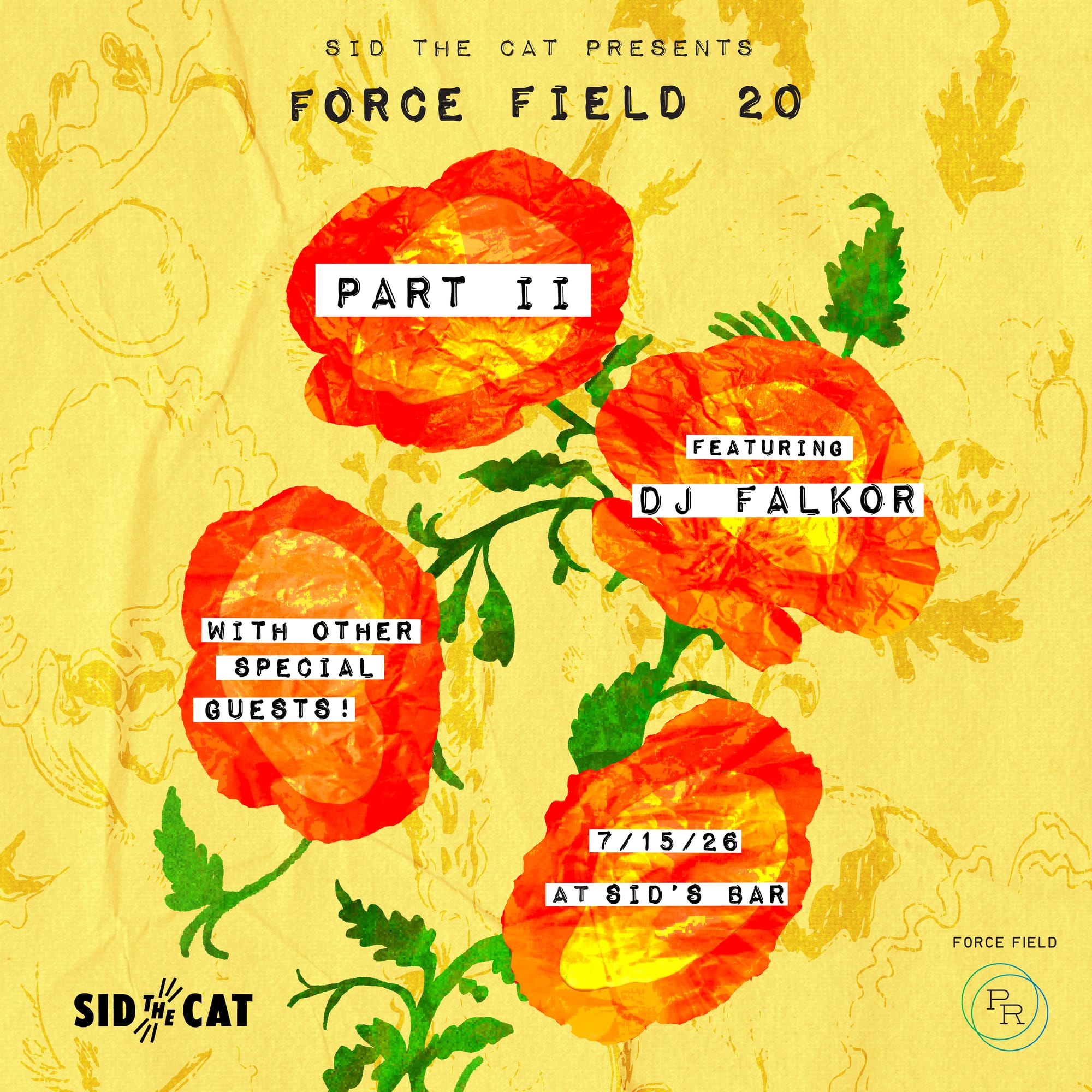
Today's installment: I've known Daniel Gill from my inbox basically since I started doing this as a career nearly 20 years ago, he's the don dadda of Force Field PR who have repped a wide range of artists in the indie sphere over the last 20 years, from Panda Bear and Ariel Pink to Toro Y Moi and the Slumberland and Woodsist rosters. Daniel recently hipped me to the fact that Force Field rings in its big 2-0 this year (and he's playing a DJ set to commemorate the occasion tonight at Sid's bar in South Pasadena), so we hopped on the horn to talk about his journey in the music industry as well as how he's witnessed things change. It was a fascinating conversation and will undoubtedly be edifying to anyone interested in the changing tides of the last 20 years, check it out:
Give me your origin story as a publicist.
I didn't grow up knowing anyone who was in the music industry. It was the pre- internet era, so I didn't have a lot of exposure to what jobs were out there. I didn't know that a publicist was even a job until I was volunteering at my college radio station, WVFS Tallahassee. What really got me going was being the music director at a different college radio station when I transferred back to Florida to finish school. I was getting pitched by all these independent promoters. Interscope, Geffen, and Matador were calling us, and I was like, "There's these people who have these jobs pitching music, and some of them have really good music." It opened the door to a career path I hadn't even thought of.
I got a radio promo job right out of college at Fanatic, which at the time was in Colorado. I wanted to get out of Florida, so I worked there for a year. 9/11 happened, and then we moved the company to New York City in 2002 when I switched from radio promo to press. It was when all the Meet Me in the Bathroom stuff was happening, so it was pretty good timing to be there right then. I saw a lot of those early shows that are in the documentary, and I also met Sufjan Stevens, which changed my trajectory. Right around that time, he hadn't really started getting popular yet—he was pre-fame Sufjan. We started representing him at Fanatic, and we did Michigan, Seven Swans, and Illinois, which is a pretty amazing run.
After Illinois came out, I was wavering about what I should do, because I wasn't really vibing with Fanatic anymore. I moved to L.A. in 2004, and as I was hanging out with Sufjan, we were talking about what I should do moving forward. He said, "If you start your own thing, I'll come with you and be your first client." That was all I really needed to hear. So I basically pulled a Jerry Maguire, and I took my three main people that I cared about—Sufjan, Panda Bear, and Ariel Pink—as my first three clients for Force Field.
You mentioned what's become known as "The Meet Me in the Bathroom thing." My opinion about that book is that it's a lot of heavy romanticization from people who were there at the time, and the romanticization has resulted in it becoming an aspirational blueprint for younger people in terms of what they wish they could be a part of. I'm always curious to hear from people about what that era was really like—the memories people have shared versus the actual reality of it all.
You were in college in New York at that time?
I started college in 2005, yeah.
Well, I mean, unfortunately, I kind of feel like you missed the best era.
Sure, I don't doubt it.
Around 2004 or 2005, a lot of people were looking around like, "Oh, it's over." But 2002, 2003, 2004, those were pretty crazy years. I was living on the Lower East Side about a block away from what's now known as Beastie Boys Square, and I was going out every single night. There was always something happening. I'd look out my window and be like, "There's TV on the Radio walking down the street with all their gear from one show to the next." That would happen frequently. All the bands from that era were playing out so much, it was insane. TV on the Radio were probably the hardest-working band in New York, because I saw them so many times and they played anywhere they could get a show. They played in coffee houses. They played at taco shops. They took the South by Southwest mentality of "anything can be a venue" quite literally. I saw Tunde and Kip play a duo show at Knitting Factory—and it wasn't that good, but they were playing as often as they could, even if the whole band couldn't make it. I think everyone agrees on this now, but they're the most underrated of all those bands—probably one of the best, even though I saw them play some hit-or-miss live shows.
Well, they were also probably the ones who took what they were doing the most seriously.
They were very serious about it, yeah. You could tell.
Anyway, the scene overall and what you hear about it—a lot of it actually does live up to the hype, getting to see Interpol at the Luna Lounge or the Strokes at Bowery Ballroom, or going out any night to hang out at a bar and the DJs would be James Murphy, Carlos D from Interpol, Julian Casablancas, Karen O, Nick Zinner. Those guys would just be out every night. We were all out every night. It's not exaggerating to say that it was a party that was happening every night of the week. It was fun, and a lot of people had this feeling of, "Something important is happening right now."
But, also, 9/11 just happened. If you wanted to, you could go down to Ground Zero, and it was still smoking. They hadn't cleaned it up, so you were living in the shadow of that. Lizzy Goodman talks about that in a really accurate way in her book, but the movie doesn't really deal with that side of it. Everyone was like, "Let's just get drunk every night and go out, because what else is happening?"
The other thing that you have to remember is that electroclash and freak folk were also happening at the same time. There's three amazing scenes all happening simultaneously in New York. I ended up being more entrenched in the freak folk world more than anything else, because of my connection to Sufjan as well as Panda Bear and bands like Wooden Wand and the Vanishing Voice, Animal Collective, and Black Dice. Most cities are lucky to have one vital scene, but to have three happening simultaneously was crazy. I don't think there's been another example of that since then.
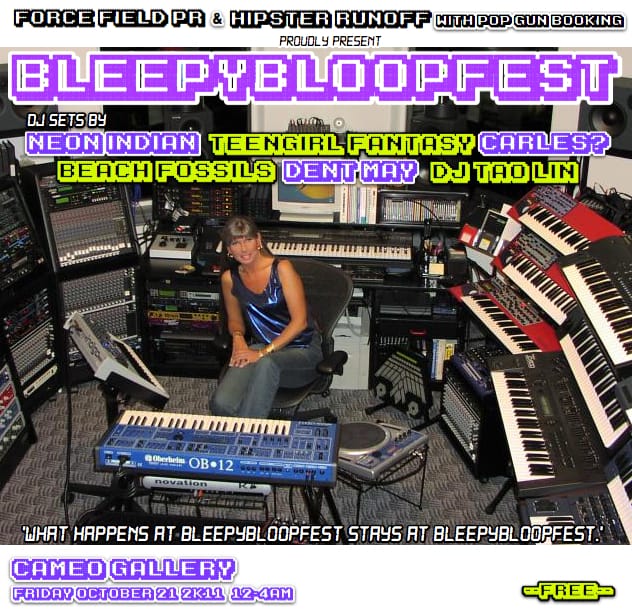
Between Sufjan, Ariel, and Noah, you had three clients who were fairly zeitgeist-y for quite a while—and, in some cases, they weren't necessarily the most press-friendly artists in a specific sense. Talk to me about that experience.
They each came with their own set of challenges. With Sufjan, I started working Illinois when I started Force Field, and then we did The Avalanche. It was peak Sufjan, because it was Album of the Year on Pitchfork and he sold out a five-night run at the Bowery Ballroom. The Letterman people were begging me to book him on the show, and he was telling me, "No, I don't want to play on late night TV." He did end up playing Fallon for The Age of Adz, after we stopped working together.
With Ariel Pink, he was like, "I've got to play on TV"—and he actually did play on Fallon as well. Sufjan didn't want to get too big too fast, and I was like, "Well it's a little too late for that." I believe his words were something like, "I feel like playing late night television is a crass commercialist move that I don't want to be a part of." Could you imagine Ariel saying something like that?
No.
It was a delicate balance.
Noah would pass on a lot of opportunities as well. He was like, "I let the records speak for themselves"—and the records in question were Person Pitch and Tomboy, so it wasn't hard to get people to like those records. They're very likable records, and Pitchfork was doing most of the heavy lifting for us by just talking about him as often as possible.
Obviously, you witnessed the peak point of inflection when it came to, music blogs and publications having an active influence on taste. I think the influence started falling off around 2015, personally. Let's talk about what that time was like before it all started going away.
What year did Vampire Weekend break out?
2008.
Was it 2008? It feels earlier in my mind.
I saw their first Bowery show in '08, the one Paris Hilton was at. That's when that went down.
Yeah, I was there too. Anyways, around '08—maybe even a little bit earlier—it got to the point where, if I had a band that people were already talking about, all it really took was sending out the email to the 30-to-50 most important blogs, and within 30 minutes, it would be everywhere. That just does not happen anymore. That feverish desire to break a new artist, that's dissipated. It's still there in some corners of the internet, but it's not like what it was. It felt pretty good to take a band no one had ever heard of before...Beach House is a great example, they were Force Field clients. Being able to take them from Cake Shop to the waterfront show Jay-Z and Beyoncé came out to see them, that was the trajectory within a three-year period, which was wild. The only modern comparison would be the Geese story. They're trying to replicate the way bands were breaking back then by skipping some of the stages that you'd normally have to go through—but now they're doing it with bot farms instead of the blog economy.
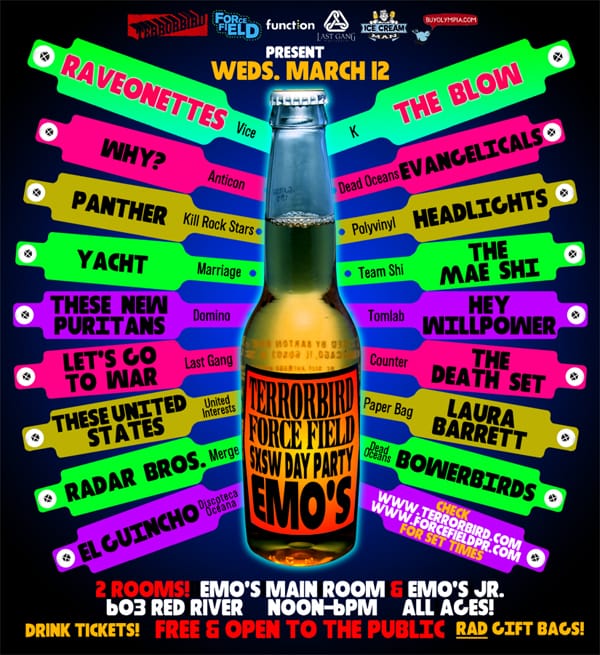
Do you remember an exact moment where you were like, "Oh, the things that used to work aren't really working as much anymore"?
What year did you stop doing the Tracks column for Pitchfork?
The beginning of 2014.
That was the moment, right at the time when it stopped being a thing that was updated throughout the day. Then, other people started telling the publicists, "Hey, we're not doing premieres anymore." Some of the larger blogs just hung it up and stopped publishing. I had this theory that, if you broke before 2013, you could establish a career and maybe quit your day job. After that period, that was no longer a career path open to anyone.
The Pains of Being Pure at Heart, when Belong came out, they wanted to be the Smashing Pumpkins. They wanted to be bigger than an indie blog darling band. They were trying to go for broke, and that was maybe still open to you at that time— but, past 2013, it no longer was. I mean, it didn't really work for them—but now they're back, and you can see the feverish nature of their fanbase, which is great. You see it all the time now, these bands coming back after being gone for 10 or 15 years and doing the reunion tour.
Force Field is having its 20-year anniversary, which is quite a long time to do anything as a career. I'm curious to hear you talk about whether there were any moments where you felt like it might be the end of doing this for a living.
I mean, COVID was hard on everyone in the music industry. That's the hardest thing that's hit any of us. During COVID, I was trying to reassess and maybe diversify. I'd started working on music documentaries as part of our roster, which started with the Big Star doc. It's really satisfying work, and also I'm addicted to music documentaries in my personal time. I try to watch every one that comes out.
Everyone during COVID was like, "Can we even keep doing what we do for a living? Is this going to continue to be a valid form of employment?" A lot of my friends who were booking agents were really hurting, and the live music shutting down for that long was really tough. I had records that I was supposed to promote in throughout 2020 and 2021 that got either canceled or pushed back until the band could tour behind it. A giant question mark was, "Am I going to have this work or not?"
But, you know, I didn't feel like complaining too much, because people were dying all around you. My wife ended up with long COVID, so I'm still reminded of COVID every day. Having some money trouble because the world is in chaos—I wasn't in that mindset. I didn't want to whine about it too much, so I dug deep and tried to come up with a plan of getting through it. I also decided to get back into managing artists. I've been managing Peel Dream Magazine, Papercuts, and 22º Halo, and I just picked up Color Green. I'm still mostly doing traditional music press, but whenever I can get a good music doc project, that becomes a big element of what I do now.
During COVID, everyone around me was also like, "What do we do?" We had a lot of online conversations and socially distanced hangouts, and everyone was throwing their hands up. There wasn't one easy solution. But at least the live music element is fully back—even though it maybe shouldn't be, because I still feel like some of the larger events are probably super-spreaders. But, for better or worse, the live thing is back.
How's your wife doing, by the way? Is she still dealing with long COVID?
Yeah, she's still dealing with it.
I'm sorry to hear that. That's really rough.
She has POTS-like symptoms, where you're just exhausted. You can only walk across the house or down the block—half a block maybe, if you're lucky—and then you just crash out. It's tough. We caught COVID in 2020 before the vaccine was even available, so we got the original, really strong strain of it. We had a really bad case. We weren't hospitalized, but afterwards it just hung around.
What I've learned about long COVID is that it's still in my wife's body, so now we're trying all kinds of different drugs. There was good news out of Japan yesterday that they maybe came up with a breakthrough drug where, if one person in the house catches COVID, there's a pill that you could take where no one else in the house would catch it—even if you were all unknowingly in the same room together, unmasked. There's some advancements happening, but she's still dealing with it. When we go out and do anything, she has to be in a wheelchair because she just can't walk very far at all. But she's running a Substack about murder mysteries and another one about long COVID, and she's working on a book as well. She's doing what she can while working from the couch, basically.
Since you've been doing this for a long time, you've probably picked up a few survival methods over the years. What's some of them that you would tell to someone starting out today?
Don't read your own press. Most people do not fully listen to that advice, and I see how it affects them, and it is never good. Also, since the live show is the most important thing of actually doing this for a living, work on the live show and play as often as possible. I'd point to Angine de Portrine as an example of how it's still possible to break a new artist off of like something silly like one video.
There's ways that you can do it without the Geese model—which, I'm sorry to keep talking about the Geese thing, but I think it's an important part of the conversation right now. The model they use, it's not something that would work for every artist—and I know this, because many other bands that you and I know of have hired the same Chaotic Good people, but it hasn't worked for other people the way it worked for Geese. Part of that is the live show. Obviously, anyone who's seen them, would say that it's true. Without that element, it wouldn't have worked the way it did for them. Also, they weren't an overnight success story—they were on their third album.
People are always hungry for new music. I see little bright spots. I haven't been to it yet, but Kilby Block Party has the feel to me of Pitchfork Festival, where bands at any other festival might not work, but they work there because the audience that goes there is very online. So I don't think all is lost. The gloom and doom attitude is not accurate. Every single day, some kid starts a YouTube channel to try to be the next Anthony Fantano. Substack is very lively right now. So there are still ways to break. It is a lot of work, and you have to be undeniably good. I go back to the Geese conversation, because that Cameron Winter record, it is as good as everyone says it is. I go back and forth between a Geese hater and a Geese supporter, because I do think the music is actually good. I don't think that they should be dismissed forever as a psyop.