The Rapture's Luke Jenner on Being a Life Coach and Why the Rapture Has a New Lineup
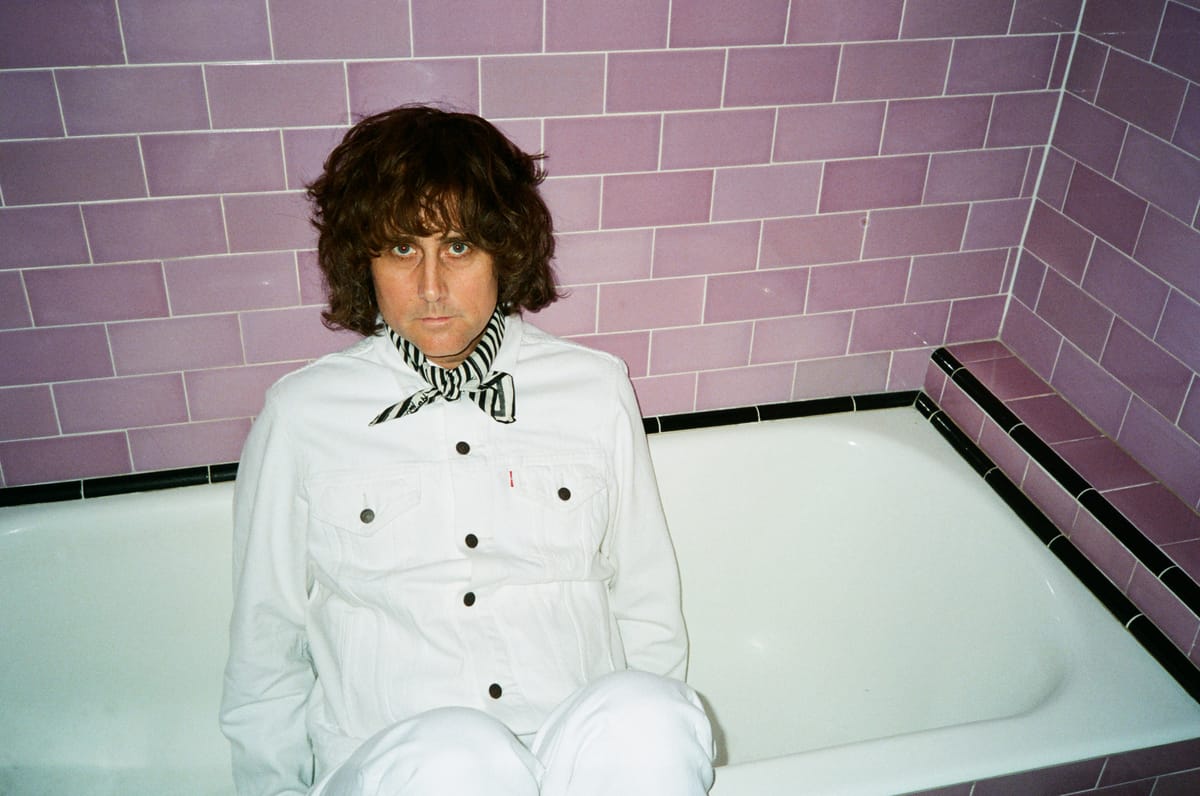
This is a free post from Larry Fitzmaurice's Last Donut of the Night newsletter. Paid subscribers get one or two email-only Baker's Dozens every week featuring music I've been listening to and some critical observations around it.
Aaaaaand we're at the halfway point through the holiday subscription sale, which will play out right up through New Years Day. It's 50% off monthly and annual subscriptions, as good of a deal as any. You can grab the monthly sale here, and the annual sale here. It's a great way to support a 100% independent publication.
Let's get into it: When the opportunity to interview the Rapture's Luke Jenner emerged, I seized at it immediately. Echoes went quad-platinum in my Discman back in the day, and there have been some echoes (har har har) of the on-again-off-again NYC dance-punk band's whole deal when it comes to the general energy around "indie sleaze" conversations that took place before Brat effectively stopped "indie sleaze" in its tracks. They just completed their first U.S. tour in a minute, and they're booked to play Coachella next year as well. It does seem like the Rapture is, indeed, back.
But in what form, exactly, is the Rapture back? Earlier this summer—right around the time that the Rapture were hitting the road—former band member Mattie Safer wrote a post on Substack pointing out that the current iteration of the band was largely new members, with Luke as the only OG Rapture-r throwing in. He didn't spare any words, describing the Rapture circa 2025 as "the Mike Love Beach Boys. A familiar name. A bunch of (presumably) competent players recreating songs from a catalog that means a lot to people, but without the original chemistry that made it matter."
Strong words, obviously—so I was naturally very interested to speak to Luke about who the Rapture is today and why, as well as a host of other subjects. He was extremely forthcoming and candid about where his head is at in general, and I think it made for a very interesting conversation. Check it out:
Walk me through your last five years in general—what went down from the 2020 dates being canceled to this latest iteration of the band popping up.
Obviously, we all went through COVID, so that was super weird. It actually turned out to be the best five years of my life. My wife is always asking me, "Why are you bringing this music thing back in. It's just chaotic. We've had such a wonderful time." I also started coaching people. I have 30 clients and work 10 or 15 hours a week talking to people. I do marriage counseling, and I counsel bands and people in family systems. I really love doing that, it's like a vocation for me. For a while, I was really super into competitive softball in Brooklyn, and also in Central Park. My first love was baseball, so in a way it's a return to that.
I think COVID caused a big reckoning for a lot of people. My reckoning started many years before. My mom killed herself, and I went through a bunch of addiction recovery. When COVID hit after the last Rapture shows in 2020, I was like, "I know exactly what to do," but most people were really stunned or caught off-guard. "I can't do this, normal programming is not happening." But I really accelerated into that. I tend to do best in situations where nobody else knows what to do.
Also, my son goes to Oberlin now. He's, like, a genius or whatever—he's way smarter than me, but my dad's smarter than me, too. He's an intellectual, and my kid's an intellectual. I just hated school—but my kid doesn't hate school. He hangs out in the library for 10 hours a day and reads really difficult philosophy and stuff. But he was home during the pandemic, and that was when I got to really put the cherry on top of my emotional work with my kid and my family.
I got sober 17 years ago, and the first few years I had to kind of ignore my kid and my wife, because I needed to go to meetings every day and dig into a lot of emotional work. I was in all kinds of different therapeutic communities. Each 12 steps community has a lot of artists and interesting people in New York and Brooklyn. Most artists go to therapy in Brooklyn, which was something I noticed when I moved here—everybody who was in a band also went to therapy. I thought that was super interesting.
So I really got to hang out with my kid. I was super available, and he was home in the beginning of the pandemic because he was in junior high at the time. I got to complete this father project fantasy thing. Me and my dad are good now, but for a lot of years, I really hated my dad. I was involved in a house of jealous lovers with my family. All the dynamics were crazy, and people loved each other, but they didn't know how to express love. During the last five years, I've really dialed into being safe during the holidays and being able to express love.
I got really into grocery shopping. I got my kid to really let his guard down by buying him all the food he wanted to eat every day. When he started going to school again, I'd text him every day like, "Hey, I bought you this pasta sauce you like," or, "I got you this brownie." If somebody has a resentment towards you and you just feed them everything they want to eat for every meal for years, then they have to like you at some point. It's a foolproof method to get somebody to let their guard down.
Tell me about the process of becoming a life coach. What goes into that when it comes to accreditation?
Well, I wasn't even considering being a life coach because of the issue of accreditation. In the U.S., if you want to be a therapist, you gotta go get a master's in social work, or a PhD or something—which, I was never going to do that, because I don't like school.
I was in band therapy with my mentor, Kathi Elster. She wrote a book called Working With You is Killing Me and she has a podcast. She's a wonderful lady, and I've known her a really long time. She's not a therapist, she's a coach. She doesn't have accreditation, and she's done a lot of different jobs—she was a schoolteacher, she worked in fashion, and she's married to a pretty well-known classical music composer. I went through this process with Kathy and the band, and she eventually said, "Hey, you should come work with me individually." I did that, and then during the pandemic, she was like, "What are you gonna do?" I was like, "I don't know—I can't play these shows that we'd planned." She said, "Well, you should start coaching people, you'd have a lot to offer."
In 12 steps, I'd done steps, and I just went completely crazy into 12 steps. I did steps in 12 different programs and had, like, 17 sponsors—and then I also sponsored, like, 100 people. I set up retreats, I wrote literature, and I was on the board of trustees of this nonprofit that helps sexual abuse survivors. I flew around the country and did a lot of formal work with people lfor a lot of years. So Kathi was like, "Just try to get three clients. If you do well with them, then other people will want to see you." And that's how it worked. I got three clients. One guy I got from softball.
Someone else was actually another life coach. They were like, "I want to be your coach. And I was like, "Cool. What can you teach me?" They were like, "Well, I can teach you this, this, and this." And I'm like, "I already know how to do all of those things. What do you want to learn?" They were like, "Well, I want to learn how to be in a healthy relationship." And I was like, "I know how to do all those things. I should coach you." And they were like, "Okay."
Another client, I got through the music industry. I'd helped somebody with their mentally ill sister many years prior, and they were like, "Oh hey, I heard you're starting a little coaching lemonade stand practice. Can I send you a friend of mine?" I was like, "Yeah, of course." So that was my first three clients. From there, I was successful, and I made a difference in their life enough to where they felt comfortable recommending me to somebody else that they knew who also needed help.
It very naturally happened. I didn't actually really have some big ambition. It definitely wasn't what I wanted to do with my life. It feels like a vocation, in the sense that music chose me. I didn't start playing music to make a living. I started playing music because I was hearing all of these frequencies. John Lennon talks about that, being young and seeing all these colors. It wasn't that psychedelic for me. But sometimes people ask me "Did you quit music?" I was like, "I can't quit music—I am music." Music follows me around. Music chose me—and I did it for free for a really long time.
Eventually, people started paying me to play music, and the same thing happened with the coaching practice. I always coached people. My mom was a suicidal art terrorist, but she was also an art therapist. She wasn't formally trained—well, she didn't go to university—and I was a philosophy major in college. But, essentially, yeah, this thing found me, I'm really good at it, I love doing it, I get to help people. And I do it for free anyway, so it was more a formalization of something that I did for most of my life, the same way music was. It reached this point where it was like, "Okay, the next level is this."
I do have a mentor, and I check in with Kathi. She's been guiding me for the last eight years, and I have other people I go to—clinicians, friends that are therapists or coaches—and I check in with them. It's very much like music, where I have other musician friends who make a living playing music, and sometimes I'll call them and be like, "What do you do when this comes up in your band? How do you deal with this record producer? What happens with your manager?" You share information with people and you have a community. I have a mental health community and a music community, and for me, they're very connected and essentially seeking the same thing, which is balance.
Something I'm observing while hearing you talk—while you mention getting int0 competitive softball, attending 12 12-step groups, even with regards to grocery shopping—is that it seems like you seemingly go all-in when it comes to fixations. A very long time ago, I interviewed Omar from the Mars Volta, who's also been sober for quite a long time. He was telling me about how after he got sober, the frequency of which he was making music almost became a replacement for him in his sobriety, where he was he was like, "I'll make like an album a day instead of using." I'm wondering if that's what you have going on too.
I mean, I did that, but that was miserable. That's, like, white-knuckling it. There's this term in recovery communities for musical addictions, and that's why I did steps. The ills of man—food, drugs, codependency, sex, childhood trauma—there's a million different ways you can just check out.
The big thing for me is that I learned how to feel without music. The only safe places for me were music and baseball. The first safe place for me was a baseball field, and the second was on tour. Now, I'm safe anywhere. I'm safe in my house. I had a therapist once called Hugh who I was doing couples counseling with my wife. The second time I went, he was like, "Do you feel safe in your house? No one had ever asked me that, and I realized that, no, I did not. He was like, "Okay, well, put everything else aside and figure out how to feel safe in your house without softball, music, drugs and alcohol,." That's the goal of recovery, for me. Music is no longer encumbered by addiction anymore.
Also, my relationship with my wife—I used to feel like I needed her, or else I was gonna die. That's how my mom related to me. So I'm doing my trauma with music, and a big intention of going back into music—and part of why it's been so uncomfortable to go back in—is because every other part of my life is pretty sorted out. My childhood, me and my dad, are on good terms. My mom's dead, but we're on good terms. Everything—my relationship with myself, my family, my sobriety, my kid, everything's cool.
But this music thing is still nasty. This music industry is nasty. There's a lot of hiding that. It's a very chaotic environment. It's really beautiful, but the upsides and downsides are stratospheric. So it's a real test of balance to go back into a chaotic environment. Also, the music industry is like a disease, and a sinking ship. It's the arts in general, and you can make an argument that the world—the country, whatever—is gnarly right now. It's chaotic. Why would you leave your house? Why wouldn't you just stay home and eat cozy food with your wife who loves you?
But I left my 30-year-old self on the side of the road a long time ago, and for me it's about getting in touch with that part of my life. 18 to 33, that's unresolved for me as of now—but it's getting resolved, and all the other years are fine.
Talk to me more about the struggle in terms of getting back into the groove with music again. There was a reunion tour that was starting to take place, and then COVID stomped that out. Five years later here, the band is back, but you're the only original member that's playing under the name at this point. Walk me through that a little bit.
What exactly do you want to know?
Well, I'm curious to hear you kind of talk about the difficulties of getting back into music, which you mentioned earlier.
I didn't really have financial stability until I became a coach. I was like, "I don't ever have to play music again. I can just do that." Before that, in 2020, I needed to play those shows for my financial well-being. My wife makes money, but she doesn't want to take care of me indefinitely. So coming back into it now, I don't have to do this. I'm doing this because I want to do it, so it's on a lot of different terms, as well as the intention of no drama.
You know, these tours have been totally sober. There's no drinking backstage or on the bus. It's about wanting to—or needing to try to—have healthy relationships with whoever wants to do that with me. That's the main intention. Also, a huge part of getting back into music is to be available for people that are struggling. When I was in my 20s, I was looking for somebody to really be there for me or explain some things about families, children, or having a healthy relationship to your artistic practice—and I found absolutely zero people.
Being back in this, the difficulty of it—physically, it's very challenging. To really get in shape to sing and play music, it takes maybe a year and a half. I'm in a really good spot, but the intention is no drama. Christmas used to be a really chaotic time when I was a kid in my family, and the Rapture in particular was always drama. When I came back from this tour, my wife said to me, "You're not broken," and that's the goal for me. I'm not interested in fame or accolades—I already got too much of that stuff. I'm interested in not getting injured. When my finances were tied to music, it didn't matter if I got injured. I played hurt, but I don't really play hurt anymore. I don't need to, so why would I?
My intention isn't to just be on tour all the time. I'd like to tour sometimes, but music has already given me more than I could've ever asked for, by a ridiculous amount. I'm here to take care of myself and make it a demilitarized zone for me and the people that I work with, and to get over connection to trauma. I'm from San Diego, and when I used to go to San Diego, and it would be really chaotic and it felt really bad. Over thee years of going back there and changing the way I related to people in San Diego—the places I went, the things I did—it became a safe place for me. So my intention is to make music a safe place.
The main way I can tell is if my stomach's hurting. In 2020, I was throwing up all the time, and it was because I was channeling so much trauma. That's not happening anymore. I'm in a very different place. It's still difficult, but it's not difficult like that.
Talk to me about who's been playing with you in these shows.
There was supposed to be four people. A friend of mine that I played with for years was supposed to come on the last tour, and he just able to come at the last minute so we ended up being a three-piece, which was really interesting, and it also made the set list change a lot. What you can play as three people is less, obviously. [Bassist Conor Kenahan], I've been playing with for a few years. He's really young. At a Brooklyn show, someone was like, "Oh, that's Luke's son," but he's not, actually.
[Drummer Sam Bey] has been friends with my manager Buck for forever. In a way, the Rapture has always been a sort of music school. I've always had a particular way to hear music—a way that other people don't hear music. DFA is very much like that. LCD Soundsystem is like James' music school. His production style, the whole of DFA, is a very boutique idea of how to play music and what's important rhythmically. I'm a frustrated drummer, but Sam's a really good drummer. He listens really well, and he's very open. We basically play drums together, because the way I play guitar is very rhythmic.
James Murphy, when he was producing us years ago, used to call the Rapture "the big maraca." It's this interlaced way of dealing with rhythm in the way that downtown New York composers like Steve Reich or Philip Glass [do], repeating polyrhythmic patterns— or Talking Heads, or African music. It's more compositional, and the idea is to be one unit. I had a pretty formative experience in the [William Onyeabor] band, and for a few years I traveled around and played African music with professional African musicians, David Byrne, and other people.
That didn't teach me a lot, but it did allow me to step out of being the frontman, because I was performing with David Byrne. No one cared about me, and that was really wonderful. It was a very pleasant touring experience—the first time I'd been on tour where everybody got along. There were times in the Rapture where that happened, but there was also times where it was chaotic or whatever.
Sam and Conor are the latest iteration of this musical idea that I've been tinkering with my whole life. It's really important, too, to be on stage with people that you feel open and free with. Sometimes, you'll see bands reunite, and they're just stiff. They're not feeling together. This iteration of the band is feeling together, and I think that's what people ultimately want to see. They want to hear the songs, but they also want to be in an atmosphere where there's a feeling of openness and it's not tense—it's just free and easy.
While I was doing research for this interview, I saw Mattie Safer's Substack post about his feelings regarding this version of the Rapture. I assume you saw it at this point.
Yeah, I mean, it's hard to ignore those kind of things.
Given what he said, what goes into the decision to reunite the band with a new lineup, and where do those relationships with the previous members, if they still exist, stand? Was there ever a notion of continuing on with them before deciding to go in this new direction?
Well, Mattie left the band a long time ago—before we made In the Grace of Your Love. He left because he wanted to leave. We actually asked him to stay, and he said "No." Vito's my oldest childhood friend, and Gabe's a university professor working on a PhD program, I think, and he moved to D.C. So, for me, there's no "bad." We're on good terms. But it's not the right time for me and Vito to play music together. Gabe, I don't know.
With Mattie, it was hurtful to read all of those things. I didn't really feel like there was a lot to say about it other than that Mattie left the band a long time ago. Before writing that, he didn't reach out to me and say, "Hey, I want to play music with you." It just felt hurtful, so I've stayed pretty quiet on that. It doesn't feel like there's like a whole lot to dig into there. I know Mattie and Vito play together, and I'd love to play with Vito again in the future, but it's not up to me.
When's the last time you spoke to Mattie?
It must've been years ago at this point. There was a time when Vito wanted us to get together and play some shows. Mattie came over to my house and I had to talk with him. It didn't really feel very good at the time so, I didn't feel like there was a lot that could happen, potentially. Also, when we made In the Grace of Your Love, it was just me, Vito, and Gabe—and that went really well. It was actually the best that the band had ever felt to that point. We were able to move on from a lot of the issues from when Mattie was in the band, which felt really good. So going back into this previous era of things being uncomfortable didn't seem super attractive.
Given all of this, how have you felt about the live shows with the new lineup so far? You're booked to play Coachella with this lineup as well, at a point in which you're kind of resetting what the band is, so to speak.
The shows have been super great. It's euphoric to be onstage and interact with an audience that loves the songs that we're playing. I mean, the show's the easy part. I never didn't like playing shows. The interpersonal relationships, the record label manager stuff—that's the annoying part. It's fine now, but I never took a break from music because I didn't want to play shows. I needed to be home with my kid. I mean, I walked away [from music] several times. One time, my marriage was really wrecked, and my kid was unhappy and struggling in school, and I knew I wasn't going to fix that from playing shows. So I chose my son—and, ultimately, myself—over the band, which caused a lot of rifts.
Part of the disgruntled nature of the band was that I was getting sober, taking control over who I was as a person, and differentiating myself from the idea of the band as a concept. The band itself, as an energy, is a separate thing, and it's bigger than me or anybody else involved in it. That's how I choose to look at it.
What are the future plans beyond Coachella? Are you thinking of making new music under the name? What's going on there?
Financially, there's some stuff that needs to get handled. Then I'd need to get a record deal and talk about working with a producer. I wouldn't want to do this by myself, so there's some things that have to line up. But I'd love to make new music and express myself in that way. Realistically, it's pretty simple. My kid is more important than the band, and my kid has been in college now, he's really happy and doesn't need me as much. I can turn to my original kid, which is music, and this ongoing relationship with the Rapture, or whatever the Rapture means—which is obviously different than it was when I was 20, 30, 40. I mean, I'm 50 years old now, so the Rapture has been changing.
The original Rapture recordings were made by me, by myself, in 1997, at my friend's house who had a four-track. We started making stuff and put together a band, we went from there, and now this thing is here. In a lot of ways, I'd love to retire the Rapture, but it just feels unhealed or unfinished. As an entity, it feels somewhat diseased and needs some love and attention, the same way that my inner kid did, or my family. I've taken care of everything else besides this, so to come full-circle is to allow this to have a chance.
If it doesn't work out and I don't get to play more shows or make more music—which I'd like to—but if all that happens and it comes to pass, it's okay. The shows that we've already done were really magical and super fulfilling for me, and I'd love to do that indefinitely. But if that's taken from me, or if I'm not allowed to do that for whatever reasons, then I'll be okay with that, because I'm just giving my best effort, taking whatever chances I can, and leaving it all out there.
A lot of music from the 2000s, including yours, has been a bit more in the air recently. Beyond the lasting appeal of it, I do feel like the book Meet Me in the Bathroom had something to do with it. I believe you gave quotes for the book,
Yeah. Me and Vito were in there.
I'm really curious to hear you talk about your experience, giving quotes for that book, and how you feel about the resulting product. Quite honestly, I've heard through second-hand sources that not everyone feels fondly about the entire endeavor in the rearview.
No, I had the time of my life. I mean, that's probably the most successful music book in the last 20 years. You go anywhere, and they have a copy of that book. It's wonderful. I don't really give a crap about historical accuracy. This is all myth, anyway—a giant fantasy. Even reality is fantasy. What are we talking about? I moved to New York because I read Please Kill Me, which is the precedent for Meet Me in the Bathroom—and a full-circle moment for me was giving those interviews and being involved in that. That was the culmination of my music dream—the book coming out and being in bookstores, and kids reading that and moving to New York the same way that I read Please Kill Me and moved to New York.
There's been several moments in my life where, musically, I just felt like I did it. One of them was meeting David Bowie and him being like, "Yeah, I like your music, and I listen to it while I'm doing my laundry and driving my car around. I'm excited to see you play." I went on tour with the Cure—my favorite band—and Robert Smith was like, "I love your music." I spent all day talking to him for a month, eating pizza and stuff. I don't need like more validation than—you know, we went on tour with Daft Punk for the Pyramid tour. At some point, it just gets cartoonish and ridiculous, and I can see people quibbling over that.
I know some of the people in the DFA camp are not that excited [about the book's reputation], but all of this stuff will get redrawn—or it won't. I don't really care. I don't deserve any of this stuff. I just got super lucky. I was a kid in suburban San Diego listening to Pavement, dreaming about being on tour in Europe, watching Don't Look Back, and just dreaming of doing all this stuff—and I actually did all of that stuff. I'm part of New York history, in whatever way.
One of the nasty things about the music industry that I've been completely detached from for a really long time—and I've gotten hit in the face really hard with it in the last six months—is how catty and petty it is, how much people are fighting for their legacy and perception. Because that's what makes you money, right? I haven't been around, so no one's been defending the Rapture for a long time. We got album of the year in Pitchfork in 2004 or whatever, and sometimes that album isn't even listed in the greatest hundred records of the decade, because no one's been defending this legacy.
You have to fight for your art. It's not enough to put out your art—you have to fight for it. You have to go on tour. You have to do interviews. But I just think that's so fucking boring, to constantly be saying me, me, me, me, me. It's a really unhealthy way to live. To be like, "I'm more important than this"—just fucking kill me now. I understand why art is a war, and The Devil Wears Prada is a real thing—why the color blue is important, or whatever happens in The Devil Wears Prada.
To wrap up this whole thing, I learned how to live my life outside of the culture—the war of art and the sinking ship of perception. I'm back in and ready, whatever that means. No one's going to remember us in 200 years time, and even if they do, they're not going to know me as a person. One of the gratifying things about being a coach is that my clients actually know who I am. When I meet somebody outside a venue who wants my autograph, that's a really sweet interaction—and I've been that person. So I do sign autographs, and I'll take a picture with you and I'll talk to you for five or 10 minutes, but you don't actually know who I am, and I don't know who my heroes are. I've worked really hard to take the mask off and get outside of that with my peers—with the people I work with—with my family, with whoever. I know that there's only a certain distance that I can get.
I mean, I do want to say this. I think, for a long time, I didn't want to do the Rapture because I felt like that's what everybody wanted for me. I sold them this lie about who I was—this construct. It's like Bruce Springsteen on Broadway, where he's like, "I'm lying to you. I didn't drive hot rods, and I didn't work in a factory. That's about my dad." I felt like that for a lot of years. I didn't even want to be playing "House of Jealous Lovers" or "How Deep Is Your Love"—whatever these things were that people associated with me—because there was no way that they could know who I was as a person. I think I held that against people, and I was like, "Well, if you're not going to actually know me for who I really am, then I don't want to do this little tap dance that you want me to do—to be this creature that you want me to be."
I feel like I've gotten to the point part of the healing where anybody can take whatever they want from this, from any angle. I'm totally fine with it. Whether it's a misrepresentation or not—if somebody says something that blatantly misrepresents me or somebody I care about, I'll say something. It's not like I'm immune. The Mattie thing that he wrote—it was hurtful. It hurt. But also, there's limits to that. People can have whatever perception they want like, and they're entitled to that. I'm not going to try to argue with them or take it away. You think I'm an asshole? Okay. You think I'm doing this for the wrong reasons? That's okay. I'm not doing it for you anyway.
I'm finally at the point where my music can be unencumbered of financial, perception, or historical strain. People got all tweaked about Meet Me in the Bathroom because they were like, "I'm trying to defend my legacy," and it's just like, enough already. I'm 50. My three best friends are dead. I don't control any of that. I'm still alive. I can play shows for now. I can still sing and play guitar, and I want to sing and play guitar. I want to play in front of an audience that wants to hear what I'm doing, and that's enough for me. Everything else is outside of my control, and I'm finally willing to let go. Whatever it is, that's what it's going to be.
But I got to give it this shot. I have to circle back, close up all this trauma, move on, and be free from whatever the haunting of the past is. I want to be able to go to San Diego and be comfortable. When I was in San Diego, I had lunch with my dad, and it was really nice. I didn't feel any resentment towards him whatsoever. It was really beautiful, and that's how I want to feel with the Rapture. Whatever opportunities I get to do that, I want to take them.