The Napa Boys' Nick Corirossi and Armen Weitzman on Making One of the Year's Funniest Movies
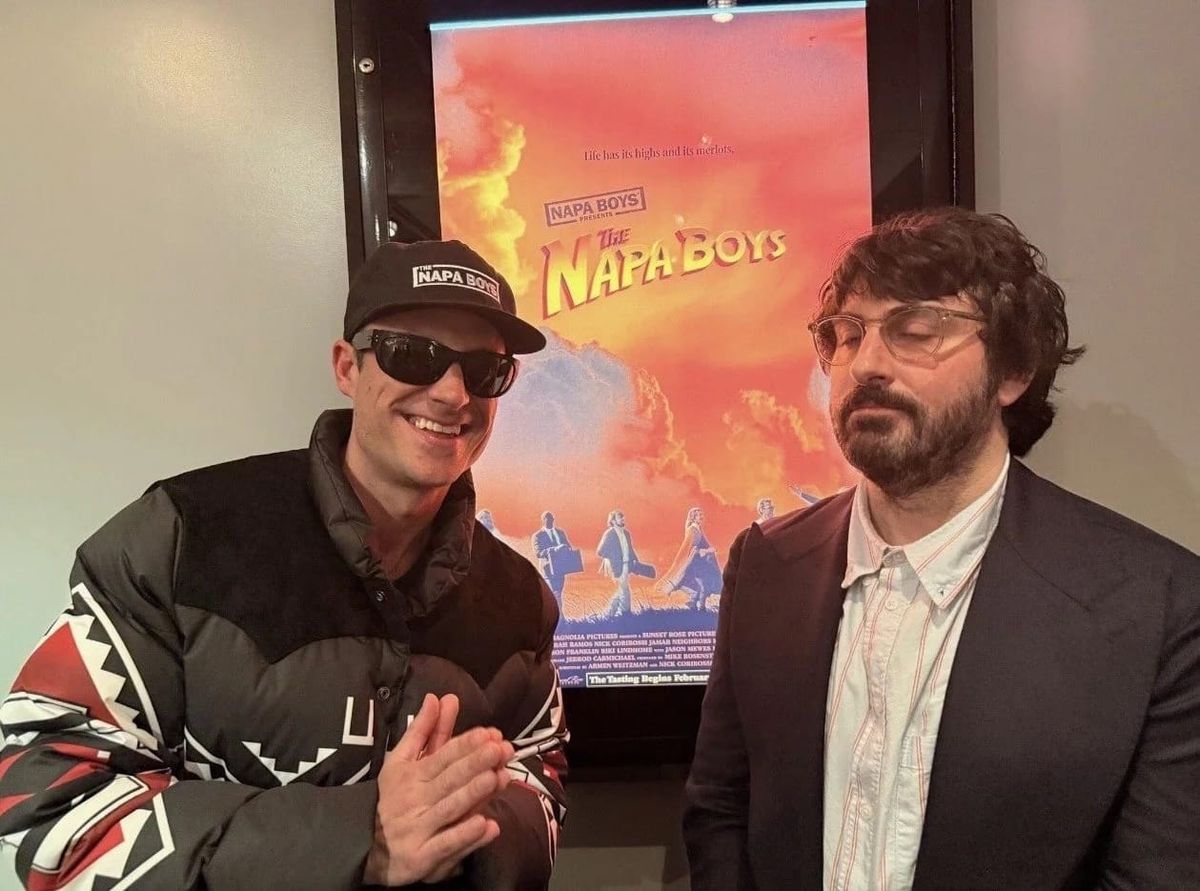
This is a free post from Larry Fitzmaurice's Last Donut of the Night newsletter. Paid subscribers get one or two email-only Baker's Dozens every week featuring music I've been listening to and some critical observations around it, along with a Screen Memories column every one or two weeks where I write about stuff I watched lately.
And there's about two weeks left for the "birthday layoff" sale I'm running (because it was recently my birthday, and I was recently laid off). We're talking 39% off the first six months of a monthly subscription, or the same discount off of a year of the annual subscription. You can grab the monthly sale ($1.83/month) here, and the annual sale ($18.30) here. You won't regret it, and you'll be keeping this 100% independent publication alive and well, too.
Here's what is on today's docket: The Napa Boys is, to me, one of the funniest movies released this year—and, as I recently noted in my Screen Memories column, it's already been an uncommonly strong year for comedy films in general. Co-writers Nick Corirossi (who also directed the film) and Armen Weitzman have made something that's at once insanely specific and sublimely stupid; it's the kind of movie that's practically tailor-made for throwing on in the wee hours of the night, which is why it's so perfect that it arrives on Tubi to stream starting today. (As someone who saw it in theaters during its initial run, I would highly recommend seeking out the Blu-Ray as well, which has one of those ever-elusive commentary tracks we're always in constant mourning about.)
What can I say, there's something I like about those Napa Boys...and that's why I was very happy to have Nick and Armen on the newsletter to talk about their surprise cult hit and what went into making it. I don't consider myself an honorable Napa Boy after this, but perhaps that's because I haven't spoken to "the Sommelier" yet. OK, I'll stop joking about the movie, just read the interview. Check it out:
Talk to me about how you feel regarding the reception the film's received so far.
Nick: "Cult film" is thrown around so much these days, and people calculate it into their movie and then you're like, "Oh, is it really?" So it's insanely beyond our expectations that this film has somehow achieved a little bit of that actual status it in a very short timeline. It's unbelievable to some people that it got a theatrical release from Magnolia release. You said earlier that you've seen it four times—and we did calculate into the movie that it does get better every time, simply because there's so many different things that you could miss. We were like, "Remember when you used to buy a DVD and you'd watch the movie more than once?" Now, if you told me I had to watch any movie that came out more than once, that would be a nightmare to me. I'd be like, "Oh God, imagine having to watch that twice."
In Napa, when we showed it, people showed up dressed as Puck and Jack Jr. We have a screening at the Americana coming up, and they basically said, "You guys bring people here to the screening. We could show it whenever you want." It's starting to get like The Room or Rocky Horror, where a theater can play it over and over and people will show up. It's been really positive and awesome for us.
Armen: Yes, I would like to add that I do think I am shocked a little that people think it's so...I think part of us, or me, thought this was a little bit of a crowd pleaser, speaking to the current moment—and maybe we're sort of being told it was "weird," quote-unquote. The love and the hate, it's part of the legend, and we're of the people...you understand.
The first time I saw this movie, I was like, "This is very funny, but there's an element here that's just out of reach for me in terms of overall understanding." You guys did a Q&A afterwards, and I was like, "Right, yup, I get it now." Let's get into the conceptual aspect here. In terms of cult movies that catch fire, this one is a little more complicated, conceptually, than Wet Hot American Summer—which this is also very much spiritually indebted to.
Armen: Part of me was feeling that—I want to say the children, but people who are younger than us—they do all this homework for Stranger Things and Marvel, and some of this movie feels less unrealistic. If you watch Minecraft, you might see this is actually very similarly structured, with characters just coming in and standing there, and how we're older, but we're all saying The Goonies or whatever. This was an independent film doing a corporate movie instead of the reverse.
Nick: I'd actually push back a little bit on it being "complicated." There obviously are a lot of complex elements, but an '80s movie about camp, it's a genre—and when I saw Wet Hot, I wasn't an expert in those movies. I just accepted it. Similarly, our starting point was simply these 2000s comedies that were similar to the ones in the '80s, with all of these sequels that would come out, like American Pie Presents: The Book of Love. We tried to conflate the sequelitis of that with the sequelitis of the current-day legacyquel where you bring in some new members that modernize it a bit. It is, technically, more complex—but I wouldn't say it's more complex by so far a degree.
Armen: I think we were following the rules maybe too much, because besides the initial humorous concept, if you do happen to watch Sideways or any of these things, it actually enriches the experience—but, it's not necessary.
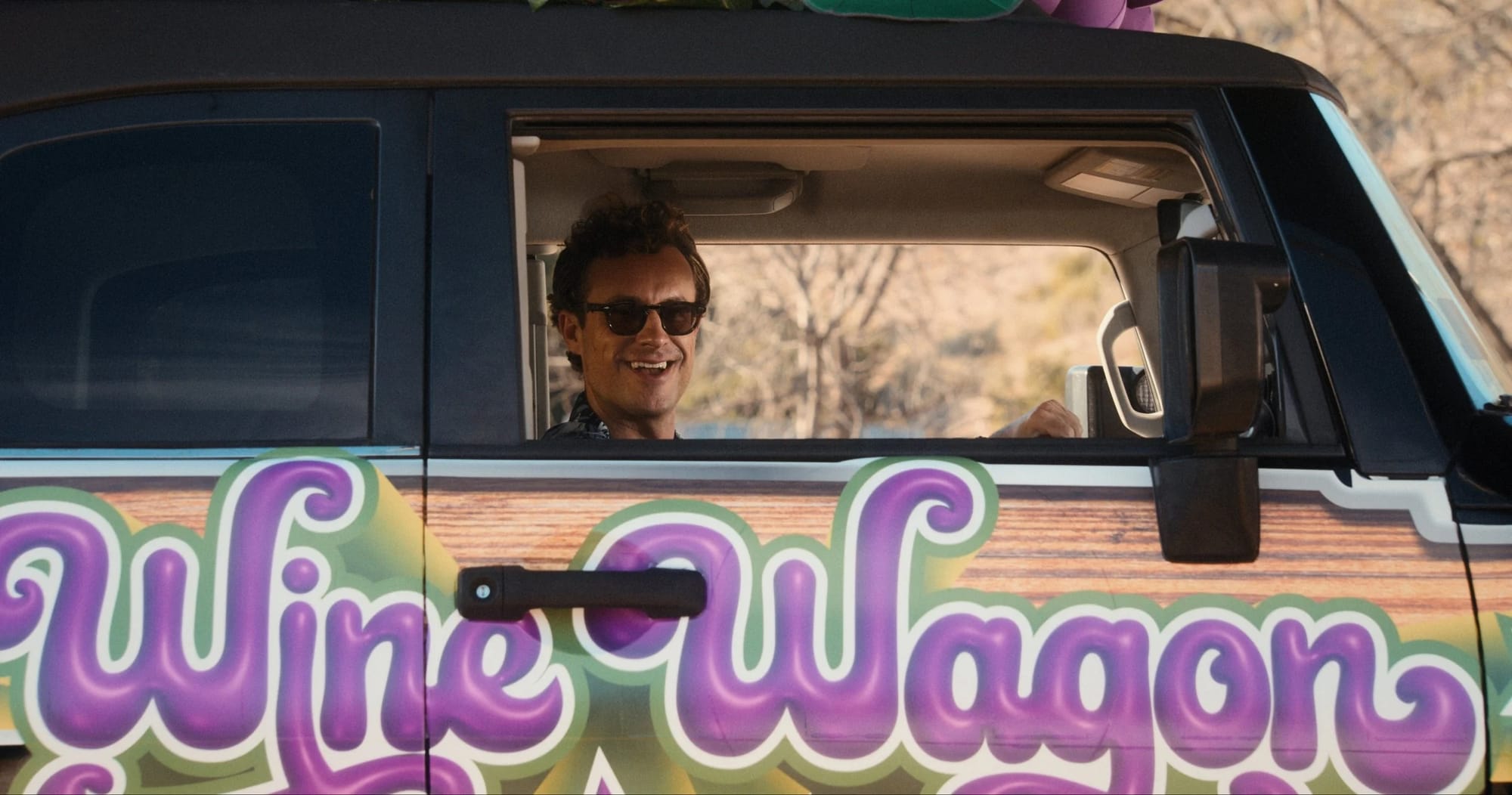
This one's now on Tubi, which is lousy with the exact sort of sequel-heavy teenage sex comedies from the 2000s that this movie is referencing. Nick, you mentioned The Book of Love—let's talk about any other specific reference points that you guys pulled from here.
Armen: We watched The Book of Love and The Naked Mile, as well as Dumb and Dumber and Wayne's World.
Nick: We noticed that these movies used to have things that we loved that they don't do anymore, and we tried to have those in this movie alongside poking fun at the current-day sequel—like when The Fast and the Furious became Fast and Furious and they brought all the people back, or in the Avengers movies when they're fitting so many people in that, half the time, they're just standing there and referring to things that you have no idea about. But from the starting point of 2000s and '90s comedies, we were also pulling from the tenets of going, "Hey, you know, they used to have a special car"—the Mirthmobile, the Dumb and Dumber shaggy dog car. There'd be a bad guy that would show up a few times at a certain point, like in Pee Wee. There are certain things that comedies, and movies at large, have left to the side that we're like, "We used to love those things."
And so much of it was coming from love. The only part that was coming from any critical thing was the endless sequelitis of now. Even in the last Stranger Things last season, like Armin was talking about, you're framing a shot with 13 people in it, and you can't possibly give lines and credence to all of them, but they have to be there—and now they're all older, and there's new ones too.
Armen: Also, we tried to take it a step further. Puck was a Top Gun: Maverick thing where, yeah, of course, we already all have women in the military. We're all together fighting the enemy. She loves them, and she's the leader, because that's just how it is now.
Nick: Obviously, The Force Awakens was the Patient Zero of stinky legacyquels. Even the Muppets legacyquel was like, "Now, in order to tell the new generation, that they're important, a character will be the audience, and they're already the biggest fan of them—and that's how we'll reintroduce this new audience to everything."
Armen: I remember Todd Phillips said—that sounds crazy [Laughs] but when they did Starsky and Hutch, he was like, "The kids have never seen Starsky and hutch, but they could tell those are the guys at the end, standing there when they say hi to Ben Stiller and Owen Wilson." That stuck with me, and that's what this movie does—only, the franchise never existed.
Maybe it's because I've seen it several times, but the Napa Boys franchise now feels like it does exist, which is kind of weird.
Nick: Well, not to toot our own horns, but that was sort of the goal in marrying the things that you forgot that people did—the things that ring true in your head. We coupled that with literally playing the game—like, "This is the fourth movie."
That's part of the very overwhelmingly positive cult status of it—people are catching on. I like to say that we laundered the Napa Boys into existence. It was always on your shelf. You've always known the Napa Boys. And by beating it over your head, they are now as real as all these other characters and people that we've seen.
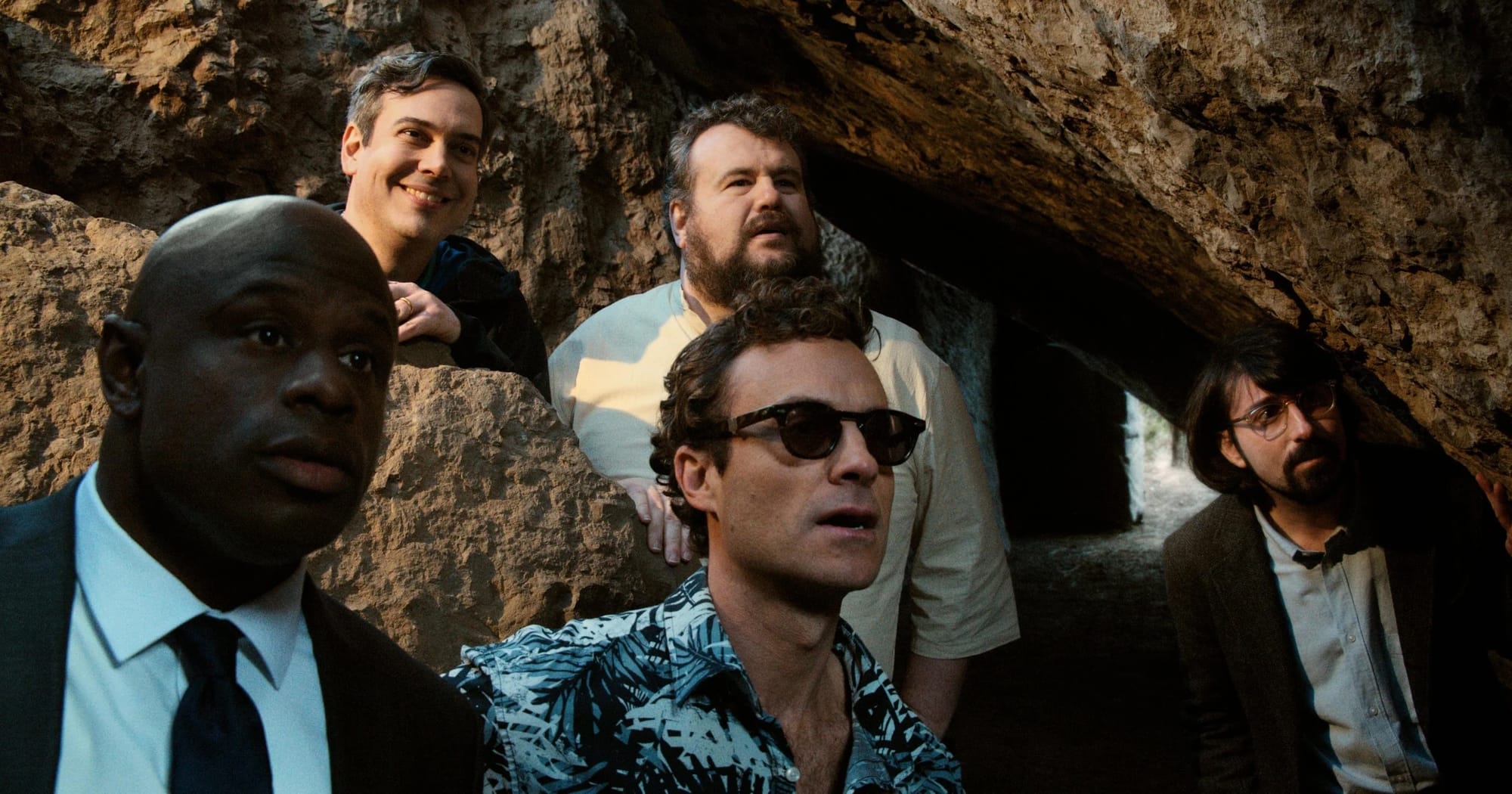
The Kevin Smith cameo stuck out to me in a similar way as his cameo on the original run of Nirvanna the Band the Show. In both cases, it's a bit of a meta appearance, with him imparting a level of wisdom from the perspective of someone who's spent their entire career hustling in the world of independent filmmaking. Talk to me about what Kevin Smith means to you two, as comedians and filmmakers.
Armen: That's a great point, because they are actually the heroes who laundered themselves—they're Abbott and Costello, for real. They were just in the store, they invented talking about Star Wars, they had Stan Lee. David Klein, that guy who [did cinematography for] The Mandalorian and Grogu, was the cinematographer for Clerks. I think he's actually an unsung hero of film history, a little bit.
Nick: 100%., Them appearing as Jay and Silent Bob—which, they do not appear in character—truly, we have brought them back. They famously appear in Scream 3, so that means the Napa Boys exist within the Scream-iverse. Them lending their characters to us and saying "Napa Boys" so many times as they do is part of them laundering us, by way of them, into existence. And how lucky, because those guys really gave us such a great performance. They weren't trying to be too wink-y, or just phoning in. That's something you can't count on.
Armen: I think there was an element where we, they felt respected because we do respect them, but meaning that it wasn't like we were just saying their names, sure, like over and over. Like it was, they were characters and it was just, uh, not really making fun of them, was making fun of the fact that they would know us. We're just not even excited to see that.
I mentioned the Q&A that I saw you guys do at the Angelika. Obviously, I live in NYC, I go to a lot of movies, and have seen a lot of Q&As. But I was really bewildered by this one, because I've never seen so many audience members try and do comedic bits towards the subjects of the Q&A I'll be honest, I found it a little disconcerting. It's like showing up to a restaurant and trying to cook after you've already been served a meal. As much as I know it comes from a place of love, as somebody in the audience, I was like, "What's going on?"
Armen: We are not famous. That's one part of it. The friend-itis—they feel like we made it look easy, like it's just your friends. Maybe everyone thinks we're just goofing around out here improvising, but it was quite the opposite.
Nick: I welcome all of it, even though I'd agree that was an unusual amount. But I'd say it's also part of playing the game. The game of the film does bleed into the audience, in the very fact that we're saying it's the fourth movie. If they're buying into that, it opens them up to going, "Hey, in Napa Boys 2, I noticed this." We're having fun, and it opened up the game.
The first IMAX screening that we had at TIFF, where people were walking out during the shitting and cumming in the barrel—and then some people being mad that it was even in an IMAX theater, how we besmirched the great name of Nolan's IMAX—that part of that engagement and divisiveness is actually helping the film, and is part of the cult status. It draws a line completely in the sand, because we give permission to love the film and to combat the film a little bit as well—and that's all part of the game.
From what I've seen on the Doughboys subreddit, it seems like the two of you are quite divisive with their audience in regards to your appearances on the show. I'm curious to hear you guys talk about that. For me, whenever I see anybody doing something that causes strong opinions in others, I'm like, "Well, they're doing something right."
Armen: I'm scared to answer, but that's part of the feeling where I'm confused. You should support your buddy Mitch if you love that show so much. They would prefer him to have three lines in some studio thing that's not good, right? As opposed to seeing him shine and be a legend?
Nick: I have a slightly different approach, where I completely welcome it. It's the kayfabe of the whole thing. It causes the engagement, and you're getting the tickets. You love to hate them. Those are the kinds of movies—characters, Jack Jr.'s—where people are like, "I hate this fucking thing." That, to me, is a great success. You're establishing your own rules and ecosystem beyond that of which people are used to, so you're ruffling feathers, and it draws a line for the people that come out of it. "I didn't like that they showed that shot for that long." "But I thought that was the point. He was trolling you, dude."
Armen: I'll just say, though, it is a thing where I've seen other movies this year that have people drinking pee, eating his wife's ass, or things like that. This movie actually has very little raunch, right? Nudity, it has none, and yet we're sort of labeled as the bad boys—the raunchiest, naughtiest thing. That's just something to think about. Plato's cave, or whatever—something's up.
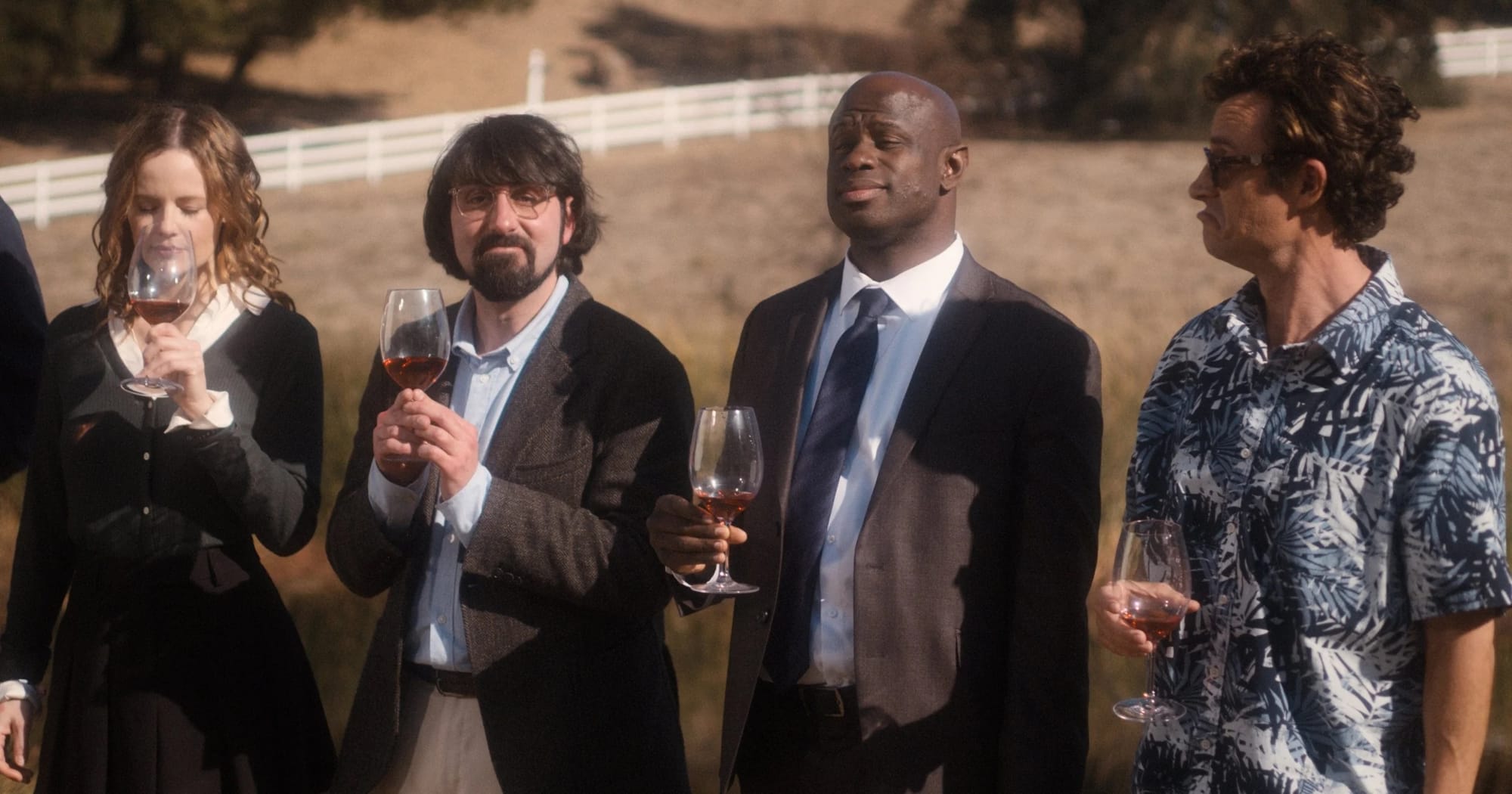
This was shot very quickly on a pretty small budget. I'm curious to hear you guys talk about putting this movie together. It was a nine-day shoot, right?
Armen: Well, yeah. I always want to clarify, although it doesn't matter—and, of course, the real answer is we don't know—but there were also fires towards us. It was not a plan. Even though it was always going to be short, I just think there's something...it feels like, in my mind, inviting a joking atmosphere, when I actually think we became men and brothers through it.
Nick: What Armen's alluding to is that this was always going to be a movie about the actors, the concept, all of this. Getting them all together, it was going to be an indie film that was shot in 13, 14 days. Right in the middle of it, the wildfires happened, which could've derailed the whole thing. It was a very high likelihood that the whole thing would have not been able to be shot. But what we reminded ourselves of, in both joking and sincere ways, is that all great films have some giant disaster that happens during the movie. Star Wars, Jaws, we're part of that legacy.
Indie films probably fall apart if the vibe's not right. What happened with this one is everyone believed in it. So it galvanized everyone, and in that nine days, I actually think it turned up the heat, and people really knew to bring it because we ended up doing a lot of first or second takes. Also, we wrote these parts for these people and to their strengths. But it wasn't a thing where we're rolling, rolling, rolling, getting all sorts of footage.
Samuel L. Jackson said in an interview that the difference between digital filmmaking and film is that film is so precious. Everyone has a subtextual understanding that there can't be that many takes for a budget reason, especially on smaller films. With digital, it opened it up to all this improv where you can keep the camera rolling—but that dilutes living in the moment. A lot of all these crazy lines that people attribute to improv are actually just crazy lines that we wrote in the thing specifically for them. When this disastrous thing happened and it turned into less days and more succinct takes, it gave it this play aspect, where people knew they had to show up—and, in some ways, I think it became an even stronger film.
What's funny to you guys at this point in your lives?
Armen: My answer would be that it's always on your shelf, and maybe we all don't realize it—gut we all have noticed what's going on.
Nick: In contemporary comedy, it's a little bit tougher. But some of those tenets we were drawing from—from the very genre that some people claim, "Oh, it's from hate"—it's from the love of really well done mechanics, like setups and payoffs. We set up the moose, and that only paid off, like, 80 minutes later.
Sometimes, the funniest things to me are comments underneath a post—and those comments come from anonymity and free reign. Sometimes, the chaos and danger of comedy is lost in a corporate environment that's funding comedy—and the unhinged aspects of this film are what people are being drawn to. There's not a lot of unhinged moments in studio comedies—things that feel like, "How many levels did that have to go through?" In our case, it wasn't as many levels, and that's how it ended up there.