Sofia Kourtesis on Grief, Burning Man, and the Art of DJ'ing
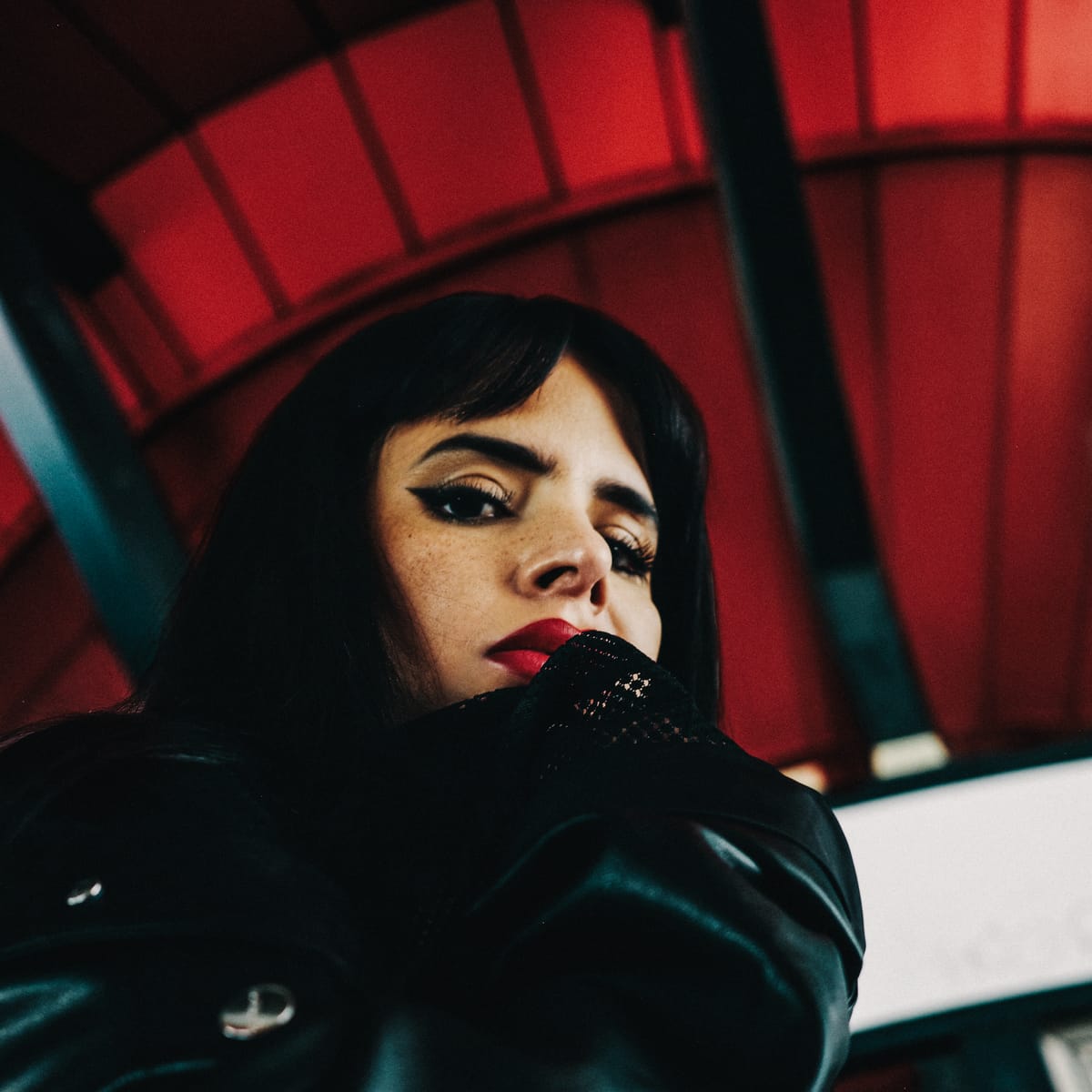
This is a free post from Larry Fitzmaurice's Last Donut of the Night newsletter. Paid subscribers get one or two email-only Baker's Dozens every week featuring music I've been listening to and some critical observations around it. Subscriptions currently run $3/month or $30/year, hit one of those little pink buttons on the right side of your screen to tap in, you won't regret it.
And it's about that time again—I'm talking about a seasonal subscription sale, 26% off monthly and annual subscriptions, that's $2.22 a month for the first six months. or $22.20 for an entire year. What a deal! You can grab the monthly sale here, and the annual sale here.
OK, let's get down to business: Sofia Kourtesis is easily one of my favorite working musicians and DJs right now, and last Friday she released her fantastic DJ-Kicks mix that immediately stands out as a remarkable entry in the long-running series. I got Sofia on the horn early last month to talk about putting this one together and the personal hardships she worked through while doing so; talking to Sofia was a delight and I'm very happy to present this interview to y'all today. Check it out:
How are you doing today?
Good, good. I'm just a little bit dizzy, but I'm good. Sometimes I'm very sensitive with the time zones, and because I'm back from Peru, I'm getting into being in Berlin again. It's a little bit jet lag, but also, when I come from the summer and then go a little bit to the winter, my body feels it somehow. Right now, in Berlin, it's still wintertime, but when I was in Peru it was summertime all the time, so that was beautiful.
What are the pluses and minuses of living in Berlin for you these days?
I guess it's that I need to get used to being lonely again. When you're in Peru, all the time you're seeing your family and friends, and having all these projects in mind that actually are not so active as when I am in Berlin. So the pro is that I have more time to concentrate on the ideas and finish the new album. The con could be sometimes that you really start to enjoy the loneliness, which is sometimes not so good. It's good to have loneliness, but sometimes it's not good to be too deep into it, because you need a little bit of la vida in your life. If you're all the time in a mood where you're very melancholic, you forget the drive of la vida—of un poquito de sazon. I can only say it in Spanish: Le falta sazon a Berlín un poquito.
I love this new DJ-Kicks mix. It sounds great.
Thank you so much. It was very hard at that moment because, I don't know if I can say it like this—if you can say something like I will dare to say—but, somehow, I don't know why, everything that I release has beauty, but also [tragedy] involved. Every album I released, somebody that I really loved left this world. When I was doing the DJ-Kicks compilation, my mama died. It was very hard, but she was creating it with me. She was the one that wanted Jon Hopkins to open the compilation. So it was very beautiful, but also very hard—but it's the way life works. Sometimes we stay in life for a time, sometimes we go faster, or we stay longer—but it's the way that life moves. The song from Jon Hopkins was, for me, the melancholy of the fragility that life has, and I wanted to start with something very fragile. From there, I tried to make a compilation that dealt with all the things I had to say. It was very challenging to pick just a few artists from so many talented persons out there that I really love. It was more challenging than making an album.
Madres was also influenced by your mother's illness, and you're someone who's always been very good at communicating a strong emotive streak through electronic music. Talk to me about what the challenges and rewards are when it comes to working in that vein.
It's very hard sometimes. I just came back from being in Peru with Susana Baca, and when I was recording with her she said something very truthful. She said that when you write, even if it's a melody or a text, you have to say something that comes from inside—something very particular and unique. You have to be very true with yourself. I feel like I'm evolving every time, and when I write albums now, I try to write more lyrics—to be more like a poet and try to make more points.
Sometimes, I have some problems with ADHD. I see the song before I write it, and then I try to write very fast and keep the emotion of the moment. Now, I'm trying to keep the emotion of the moment while thinking about it and putting more of the story in it. I'm not making short films anymore—I'm creating movies, trilogies. It's the way that I see my music. I always say, I'm a frustrated filmmaker. It's something that evolves with time, the wisdom of how to create music.
I was very lucky that Susana taught me how to be a better writer—to not only concentrate and write a good melody, but that the melody has to reach a point that is very valuable for the people that I'm making the music for, or with. I don't know how to explain it in English, sometimes it's a little bit difficult for me—but, for example, "Los poemas no siempre riman," it's the beauty of the sound, the message, and the energy of the melody. It was so authentic, and we really worked hard on creating that.
Now, I feel like I work even harder—not to be more perfectionist, because I'm the most imperfect person. I'm a chaotic person. But I'm more going into details and, if I write something with Afro-Peruvian musicians, trying to represent their ethnicity so good that the song is powered and strong enough and is also good enough for the community. In the past, it was only me hiding in my bedroom or in my studio, me and myself and my mom. That was my world. Now I'm trying to engage with more humans, with more cultures. This is how I process grief in this compilation as well, and that gives me the energy to find my new way how to create music.
Talk to me more about how the act of creating rubs against dealing with grief and heavy emotions. What do you find yourself working through, and how does it feel deep within?
It feels much harder, because in the past, my muse was always my mom. Now, it's hard, to find a new way to see life with another perspective. I feel that I'm in a much more vulnerable place right now, but I let myself be helped. I'm more confident going into the studio with well-known musicians, and having the confidence to tell them how to write my songs and represent them, and listen to what they think and if they like it or not. I'm more vulnerable, but also more self-confident to say, "This is how I want the song to be written. This is my idea. Let's work together in the moment, in the same space."
Sometimes, a collaboration can be just sending files to other musicians. But what I find very helpful—like when you're drowning in the sea, and somebody comes and takes you out—is working with musicians in the same space, not just with computers by yourself and sending files over. It's always harder, because you also have to be open for the critique. But it's beautiful to be criticized, because you learn, and it's such a beautiful process.
I read that you used DJ Koze's DJ-Kicks as a reference point while putting this mix together.
I love him.
It's funny, because he's one of the first points of comparison that came to mind when I first heard your music a while back. I'm curious to hear you talk about his influence on your work.
Stefan is like a cat. He comes, he watches you with his beautiful wizard sounds, and then he goes away. He shows his soul. Maybe, sometimes he could be misunderstood. But the way he creates music is very beautiful, and—I don't want to talk about different countries—but for me, it's very rare finding a producer like him in Germany in general. He has such an angelic wizard soul. I think he doesn't know how magical he is. I'm very sensitive to magic feelings, stories of witches, and all the things—and when I listen to him, I really lose my space in a very beautiful sky that's very personal, cathartic, and therapeutic.
What I love from Stefan is that he's truly an artist. He has this very specific sense where just the sound of biting an apple is so gorgeous. When he told me to collaborate with him for his new album, at first I couldn't believe it, because I'm always scared to work with my heroes—and last year, the world aligned and gave me the opportunity to work with my mentor, Daphni, and my favorite cat angel witch, Stefan Wizard.
Stefan tells you what he wants, and you send him that, but then he completely changes his mind, so you rewrite everything—but you have to feel him, because he comes and goes in waves. It's not like normal studio work. The energies are being aligned at that moment. It's very unique. I've never worked like that before, and now I know why he sounds like he sounds—because he really needs to feel the song deeply before it's ready. He doesn't need the the urge of bringing something out very fast, he just needs it to be concluded like a beautiful, magical, Guillermo del Toro movie.
When I see movies like Tim Burton's Big Fish or Pan's Labyrinth, I think of Stefan—the beauty in the tragedy, the love and the melancholy. He's such a unique person in electronic music. There are a lot of emerging artists, and I'm happy about it—but there's algorithm songs, and Stefan is the opposite. He wants to take you to another world. We both are nearly similar in that we don't feel the urge to belong to the...no, no, no, no, I will not say "mainstream." We don't have the urge to be perfectionists. We work with a lot of heart, and that's why we can collaborate with each other when we work together.
Have you ever had a collaboration that's been challenging, and if so how did you troubleshoot through that?
Oh yeah. That happened with a very huge band. My manager at the time begged me, "Please do it the way they want to have it." Like, no. Because if I do it, I need to put my sass on it. I'm a producer, but I'm also a DJ, and I know that we need to make the people happy. But how do I make somebody happy if I'm not happy with the work that I'm doing? Sometimes I say no to a lot of opportunities that could push my career even further, because it doesn't belong to my soul. When artists are very huge, they already know how they want it to sound—but I'm not an engineer. The first thing that I am is an artist. I like to say what I think, and I like to put my words into theirs, and together we can create a movie. But if it doesn't align, then I better don't keep my hands out before I put something out that doesn't have my soul in it, you know?
How do you prefer to blow off steam?
I love to go to the bibliotecas to smell old books, to meet old friends of my dad and mom, to meet elderly people. I love to talk to them about poetry. What motivates me and gives me energy is when I am working in activism in Peru with the communities that we work with. I love to watch movies all the time, and I love to swim. Swimming is very inspiring, because you are alone with your thoughts underwater. It's something very beautiful. I love to be outside 'til 7pm and see the sunset coming down and say, "Wow, I'm so lucky to be alive, to have my two arms, my two legs, and to be healthy—to be able to still make music and be alive." It's so beautiful. Life is so short, and we have to create beautiful habits that nourish your heart.
I saw you DJ in Brooklyn a year or two ago, and it was an incredible set. Let's talk about the highs and lows of playing for an audience in that form, and what you've observed that's changed in the last couple years.
It's very different depending on where you play. When you play in a club like Panorama Bar, you really need to be concentrated. I always feel like I'm doing an exam of music knowledge. When I'm at the Warehouse Project in Manchester, I have to deliver more techno. But sometimes I try to start very powerful and then bring them to my world somehow—make them confused, and then put them back into the raving mood.
The lows right now, I think, is that the new generation is very interesting. They're into a different kind of electronic music—more like Tomorrowland. I have nothing against Tomorrowland music, or EDM music, but it's something that loses the beauty of the soul—when the wall came down and people were learning like about Detroit house, the history of making electronic music and how it was a kind of protest. People forget that it's something very cultural with a big message behind it. So I find it very difficult when I see all these festivals where it's all about being drunk and having a good. "Let's be in peace, everybody love each other"—that's too easy and simplistic. I don't want the new generations to think that's how it was born.
Yeah, I've been to some of those big EDM festivals in North America in the past, and I'm always really struck by how little the focus is on the music itself. Obviously, hedonism and dance music go hand-in-hand to some extent, but it does seem like the needle gets pushed way over to the hedonism side in some of those festivals, which is kind of alarming.
Yeah, for example, I will never play Burning Man. That's something that I would never do in my life. I would turn it down 100 times more. Nothing against the festival—oh my God, please forgive me if I've said something wrong—but there's some things that my soul will not really fit into. There are other things that are happening, you know? I don't think that I'd be a perfect fit for a festival like that. It's all about "love," and I think it's a good idea to share so much love and everything, but I think that these festivals are...I better not say my opinion, because then I'll say something wrong, and people will hate me for that.
Well, I mean, I think your opinion is pretty widely shared. If someone's reading this interview who thinks Burning Man is awesome, I'm honestly unsure if they're in the right place to begin with.
But it's also very important that I respect everybody's opinion. I just want to say there are other cool underground festivals out there that are much better and need your help. There's music, and arts, and protest, and how science and art was born, instead of investing so many millions in something that's maybe not as beautiful. It's about being more aware, and not just finding out about stuff over TikTok. Just go and buy some new vinyls. Go to the record store, listen to new things. Listen to the oldies, because they're always the goldies. You know that movie Almost Famous?
Yeah.
I wish we could go back to that time sometime. We should educate ourselves more. That would make ourselves more happy instead of being alone, scrolling. "What is number one on Billboard?" Go and find it for yourself! Go to a club, go to a store. I'm so scared sometimes that there will be no more record stores. Go find out about vinyl, take two hours in stores and learn about electronic music, or how music was in the '50s, '60s, '70s, '80s, '90s. Find your own style. Don't let the algorithm dictate your music. Go and find it out.
I do think younger people are starting to do that more, which is good.
I really hope so. Because I see a lot of people—even friends of mine that are maybe not so into the music scene—and they always say, "I found this song through TikTok or Instagram." Go to a library, listen to something weird. I hope people rediscover how important libraries, museums, art exhibitions, record stores, and buying magazines—the beauty of reading about music. For example—you, Larry, you do interviews, but you use your own words to create your art as an interview, which is also something very arty. We should cherish that more and read more about it—read more about artists and the art world. It's the best way to discover things.
Let's talk about the financial aspect of what you do.
It's very hard when you want to go and play live everywhere. Traveling with bands and your team is much harder now. It's like bringing a theater piece to every country, and everything is more expensive now. The promoters sometimes land deals that I don't really agree with, but I also need to understand the promoter side, because they're also there because of the passion to do something beautiful. It's harder more on the live side. DJ sets, you just do it yourself—you just go and drive.
I think it's become more harder on the artistic side of things—but somehow, over the last couple of years, God blessed me with a lot of work. That's how I could cover my mom's costs for medicine. So I'm in a very lucky position. But it's getting much harder now, if you have a family, to tour with a real band, dancers, magical visuals, and all you really need. But I hope that things will get better, and I hope that the newer generation are willing to support the arts more. Buying a very expensive piece of clothes—I love to shop in flea markets and spend my money on my favorite bands instead? I'd rather not buy anything for a month and go to a Talking Heads concert. It's a very romantic thing, and it's an experience that nobody can take away from you.