Ryan Hemsworth on Taking Risks, the 2010s, and the Misery of Modern Horror
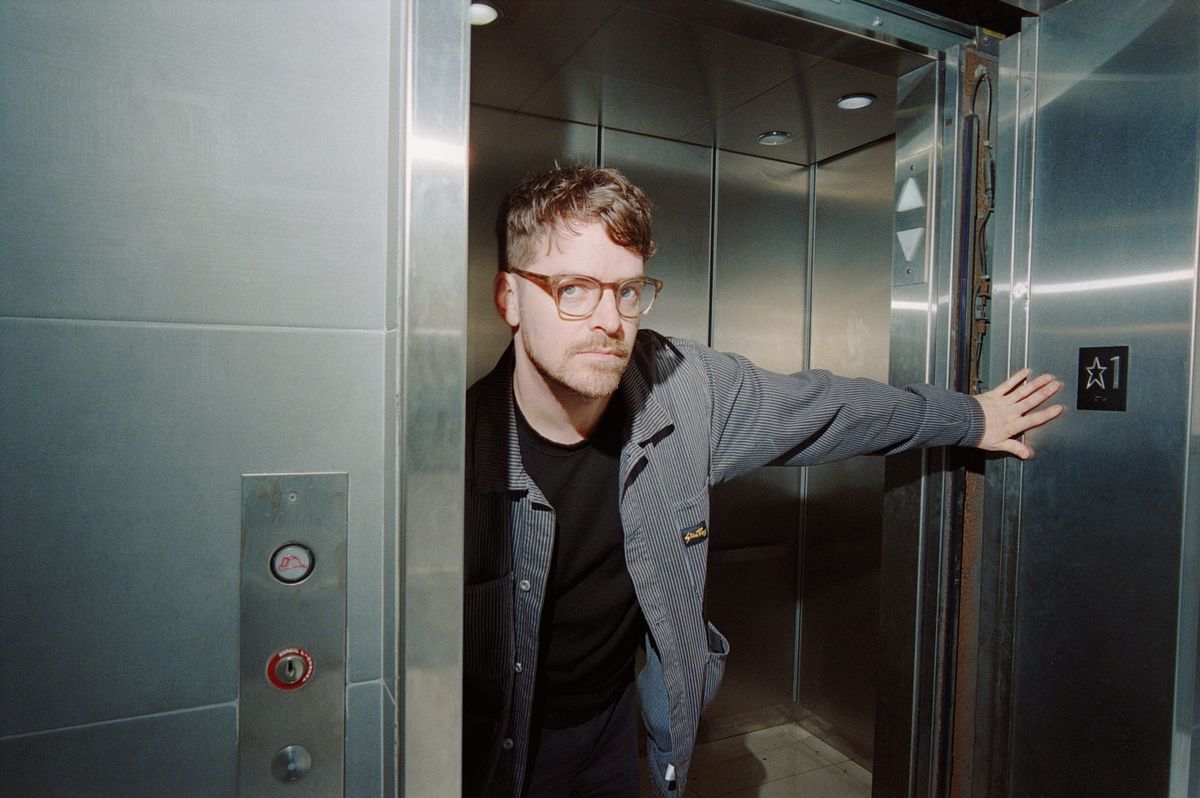
This is a free post from Larry Fitzmaurice's Last Donut of the Night newsletter. Paid subscribers get one or two email-only Baker's Dozens every week featuring music I've been listening to and some critical observations around it, along with a Screen Memories column every one or two weeks where I write about stuff I watched lately.
Today's installment: Ryan Hemsworth has had the sort of career where he's proven to be adept at pretty much anything he tries his hand at—and that certainly extends to his new album Numbskull, which comes out today via Topshelf and is his most substantial pivot yet towards straight-ahead emo and rock-based sounds. Suffice to say, it sounds great; I'd crossed paths with Ryan once or twice in the 2010s and it was great to reconnect to talk all things this new record, his impressive career, and a host of other topics. Check it out:
You've lived in Ottawa for three years now. Explain what Ottawa is like from the Canadian perspective to an American like me.
It's pretty nice—government city vibes. It's clean, and it feels safe. I miss parts of Toronto, like having busier things happening. If somebody that I want to see play a show comes to Canada, they'll be there, and they probably won't come to Ottawa. But I'm pretty close to Montreal, which is nice. I go there more frequently for that kind of stuff.
You've got a seven-year-old and a two-year-old. Talk me through what parenting has been like for you.
It's a crazy balancing act for sure. It just doesn't fully make sense to be a full-time musician and a parent, in a way. You have to try to find your version of a reality that works. Because I'm starting to play more shows and do stuff again, I've found that you have to accept that something is going to be put like to the side—whether it's your career, or spending time with your kids at home. That's been a really weird thing to figure out in general, and in my twenties I just didn't think about things like this at all. I said "Yes" to everything. But because I'd say "Yes" to everything, it definitely led to burnout for me in a way by, like, 2019. Now, I can confidently be more selective with how I choose to spend my time, which isn't much. Luckily, I've made some friends that are in similar positions, and it's pretty consistent across the board. Nobody knows how to have a perfectly balanced life, which is comforting. It's like when nobody else in the class did the homework.
I don't have kids, but my friends with multiple children are always struggling with their sleep routines. Celsius has been something of a life-saver for them, to say the least.
Yeah, it's crazy. Luckily, I toured so much before having kids that it really sets you up to have a fucked-up sleep schedule consistently. These days, with my older kid, it's a win-and-lose situation, because he likes scary stuff too. I'm introducing him to Backrooms and shit like that, but every single night I'll put him to bed and then he'll come up at 11 or midnight and be like, "Come sleep in my bed, or else I'm not going to sleep." Because it's also the summer, we have to be creative and think of things to do every day—and at a certain point, I'm like, "Alright, I'm going to show you some YouTube horror lore." But it always bites me in the ass.
I always was making stuff late at night, but I'm fully still in that routine in a different way. I tuck in my kids, and then I work on music. I stay up too late, wake up too early, and do it all over again.
Is your older child getting into music at this point? Is there anything kind of that he's shown an early preference for as a listener?
Oh, man, it's all over the place—Dua Lipa and the Kurt Vile album, because I was always putting it on while driving around with him. Now he's like, "Can you put on Chance to Bleed?" And he sings the ad-libs. It's very unexpected, because usually it's whatever mom might be listening to in the car, which is anything from Sabrina Carpenter to Dua Lipa. She watches RuPaul's Drag Race, and he loves watching that too. He absorbs whatever. What I've learned as well with parenting is, if you don't want to watch Paw Patrol, just don't ever let them know about Paw Patrol. Introduce them to the things that you want them to like, and they'll like it.
Let's talk about this new album under your own name, and the pathway you took to creating it.
A lot of the ideas started a while ago. Quarter-Life Crisis gave me the confidence to stop overthinking when it came this direction of music that I've been wanting to make more—which goes back to learning guitar and drums as a teenager—and veered away the more I was called a DJ. When I started working with people that were more fully in the indie rock DIY world—Frances Quinlan, Charlie from Hovvdy—I was like, "This is the same as working with rappers in Atlanta." And that's what keeps making music really fun to me every day: Collaborating with people, making new friends and finding the middle ground, which is different for every person.
I was starting to make these ideas in the early 2020s and talking to Sarah from Illuminati Hotties. We made "One Step" and "Break" together really quickly, and she sent them back mixed perfectly. That set off a light bulb for me. I was like, "OK, this is a sound that's really interesting. I can work with people like this"—people who, generally, in the past I would've been more safe with. If I've worked with a rapper, I have a folder of beats generally, unless someone wants to make something in person. But I'd find that the last track in the folder—my "They won't want this"—always ended up being the one that they wanted to work on. There's something about my perception of what I think someone wants, and it's usually like the opposite. So I've learned to recalibrate that part of my brain. As a producer reaching out to people, usually if they say "Yes," they want to do something pretty different from what's expected of them. I was in touch with unexpected people like Tegan and Sara and MSPAINT, and I was like, "What's the most random idea I can share with them?" That's a really fun puzzle to put together.
Travis from Machinedrum said something similar to me earlier this year about how he'd bring stuff to people and be like, "Here's a weird thing that I'm sure you're gonna hate," and then they'd be like, "This is the only thing I wanted, actually."
Yeah, you think you know things, and then you realize that, no matter how long you make music or work with people, you're constantly needing to throw that all out the window.
I know your Militarie Gun's Ian Shelton played a role in some of this record coming together. Talk to me about that.
That came from knowing James from Dazy, who I've known for a while. It's crazy, I've always made internet friends ever since I could find people online. It's a part of being in Canada and loving all this stuff that happens not within whatever city I'm living in. I was starting to do some Bodysync stuff with James, and the more I was talking to him I realized he really liked UK '90s stuff that veered into the rave scene from Manchester. That was a really cool middle ground to find. As I was working on this heavier solo project, he was like, "You should talk to Ian. Maybe he'd be down to do something."
So James connected me with Ian, and then we had a demo going, but I just couldn't get my shit together and he's more about getting it done in person. We'll probably have a song together in the future. But I was showing him some demos and he was like, "I can imagine like my dude Dylan from MSPAINT on this." It was really sick, because he connected me with people. That world—I don't know if it's like this across the board, but they were all really looking out for each other. It was a really open and voluntary ethos—which, the more I make friends within that world, it seems like it's just the way it is, which is awesome. From there, I sent Dylan one idea and he was like, "Sick, I have an idea for this," and he went from there.
Everybody in that world is constantly playing shows and touring, so for some of them it was about keeping them on track while trying not to like annoy them. For producers that make albums like this, that's half the battle: You're doing an admin job of checking in and walking that line of not annoying them while also following up. I also don't force anything. There's been stuff that's gotten to 50%, and I just can't get it across the finish line. If it happens, it happens—and I'm okay with that.
Let's talk more about taking risks when it comes to your sound and career in general.
I'm probably just really good at overthinking decisions. Even this project. nothing doesn't make sense, because a huge part of what I've done to keep it all connected is through mixes. That's been a cheat code—to have this other side of my career where I can integrate everything I'm listening to right now and mix it all together in a way that seems to connect with people. Then that translated to my shows, which are hybrid DJ sets that also have my own music reworked. But that wasn't really ever a plan when I was starting out. I didn't really go to shows before I was playing shows. Not having a lot of real-world exposure to how people perform and establish a linear career, it's always been mixed up in my head. Being from the Napster-LimeWire generation as well, I was always going out and buying albums, but my whole understanding of music was what was in my Winamp playlist. That made me open to following whatever thread felt interesting to me in the moment.
In the mid-2010s, I was playing more shows and festivals, and veering a little more into the EDM world was interesting to me, even though there was also parts of it that I really didn't like. Trying to constantly navigate between these worlds has always been a fun challenge, because I've never like fully sat in one space that makes complete sense to me. I've always needed to move on, and the next project will probably be fairly different as well. I've learned to appreciate that, instead of mapping out the next three stages of my career—which, I know some artists work that way.
It could be because I was just listening to some Fish Narc last night, but what you're doing on this record is not dissimilar to, say, the output from GothBoiClique in the late 2010s. Did you ever cross paths with that stuff sonically or otherwise?
Yeah, totally. I definitely was listening to Horsehead in 2018, 2019—and we messaged a bit. Peep DM'd me at one point, but it didn't turn into too much. I always had a lot of respect for that world, because a lot of those guys were coming directly from the emo-band world—and people are still dipping into that sound a little bit every year. There's always an interest. It's a hard thing to pull off if you're not finding a balance.
When I was playing shows constantly—2014 to 2017—I was always running into those people at different festivals. That's a weird but fun time to think back on. Everybody was coming up off SoundCloud, and it felt a little more Wild West than I realized at the time.
You mentioned earlier that you were experiencing some burnout at the end of the 2010s. It was a crazy decade in the music industry, and you and I lived through it from our respective vantage points. I'm very curious to hear you reflect on the 2010s—because when we talk about people who were at the center of internet coverage, you're somebody who always comes front of mind to me. You've maintained a stable career since, but that wasn't the case for all of your peers. It was a little more cutthroat than people acknowledged at the time.
Going through that era, being able to say "Yes" to a lot of stuff and being fluid in many ways allowed someone like me to find sustainability in a financial way, just because I was open to being like, "Cool, let's do this thing." "There's a Japanese rap group that wants to do a tour with me. I've never done that before, but let's try it." There'd be a lot of random things that would come up, and I wouldn't really know how to do it, but I'd figure it out. We still had a level of freedom, autonomy, and control because Spotify had started to exist, but it wasn't the gatekeeper. We still had the ability to use the platforms that were still the most powerful, which were SoundCloud and Bandcamp. You never had 100% control, but there was enough in a way that felt like you were direct to the fans, listeners, and people who are finding new music.
The way I took advantage of that was to open the floodgates and put out anything that I was making. A lot of the times, it was stuff that I really didn't expect to take off in any way. I had the stems of [Lorde's "Ribs"] for no reason, so I made a remix and just put it out on SoundCloud—and that became one of my biggest things, out of nowhere. There were a few things that that I put zero plan into. I wasn't thinking in that way at all. If I talk to younger artists, I'm always trying to instill that sort of dumb naivety in them. Just do the thing that feels fun and exciting to you in the moment, and people will probably be able to sniff that out and find what they're looking for. That's what I'm still trying to return to.
It's definitely a very crazy era to look back on—and maybe, at the time, I didn't think that much of it in that way. I was just trying to keep going on to the next thing. I can see how, for some artists who were more rigid, a lot of things in the culture accelerated, and the digestion of things chewed up and spit out people pretty quickly. I was just trying to continue moving forward.
It's interesting to hear you be like, "I didn't really think too much about it at the time"—because I feel like the people who thought the most about what was going on at the time were the people who ultimately got the most burned. You also had a lot of hucksters and grifters handing out prescribed, false wisdom. But in the end, I think people have a really good bullshit detector, and they continue to gravitate towards what's true, which is comforting to me, honestly. We're all still smarter than we give ourselves credit for.
Now that you say that, another thing for me was that I never had a big team—and the few people that helped me out, nobody really forced me to do stuff. Generally, I was like, "Hey, I have this idea," and they'd be like, "Cool, go ahead." Usually, that would also mean me figuring out how to do that.
What's your relationship with being online like now, versus 2013 or even 2019?
The invisible forces have made the biggest overall change to the feeling of being online, which is really crazy. I'll still use Twitter and stuff like that, and I'll still find good things once in a while, which is what always brings me back. But the way I used to use it was to have fun and find cool things. Now it's used to get angry, or to be disturbed just enough to keep finding more things to be disturbed or annoyed by. And that's just the algorithms that these sites and platforms use now to keep you addicted.
I didn't really realize how pure the internet was going to feel in retrospect, even 10 years ago. I'm still addicted to it, and I try to engage with stuff knowing that it's going to give me more of that stuff. So now I'm searching, "How do I keep fish alive in a fish tank?" or "What's the best way of consistently exercising?" Weirdly, like the YouTube algorithm has stayed kind of amazing for music. That's still something that I cherish. It'll be like, "Here's a weird band from 1991 that has 34 plays and really sick art," and I'm like, "This is about to be my new favorite thing." That used to be like Twitter for me. Now, I feel like I so rarely get things coming up in that way.
Reddit has also emerged as an unlikely victor over the last five or six years, in terms of usefulness. Whenever I need to know how to screw something in or something about a video game I'm playing, I go to Reddit.
Oh my God—it's like the last line of human connection online, now that AI has fully tried to remove that from us. As you said, I was just playing a game the other day and I was looking up how to get past a certain point, and I was like, "No, I don't want the AI answer. I want some nerd on Reddit to tell me how to do it." More than ever, I want that human connection.
So you still game regularly, right?
More than ever now because of my kid.
What games have you been gravitating towards, both with your kid and without?
We got really into Retro Rewind, which is a movie store simulator. It's kind of hilarious, because he has no concept of these movies in these boxes. I'm like, "These stores used to exist, and they were fun for me when I was your age." His generation really enjoys simulator games—which, there's probably a lot to be talked about in figuring out why that is. At night, I've been playing Still Wakes the Deep. I was getting into Deltarune, but I was like, "I don't know if this is gonna be worth my time entirely." I was also like, "I think this is geared towards a younger person, or a different person." I also replayed the Portal games and Half-Life 2. I'm at this point where I can replay all this stuff and it feels new again.
I never played the Portal games, but I got a Steam Deck and I immediately put both of them on there. So I'm looking forward to running through those.
Do it. They're great.
Are you a Resident Evil person?
I was an original PlayStation and PS2 Resident Evil guy. But now, if I play games, I'm doing it on my own, after everybody goes to bed in my house—and there's now a limit of what I can take with scary games. Is it Resident Evil 7 when you're in the house with the family?
Yeah.
Man, I was trying that recently, and it actually was just like too scary. And I was like, I can't hang.
The opening sequence in 7 is really rough. I will say, I don't think it's a stretch to say that the new one is one of the best games of the last 20 years. It's really amazing.
I did watch some of it. That's my thing—if it's one of these ones where I'm actually going to be too freaked out during it, I'll just watch one of my two YouTubers that I don't get annoyed by play it.
Let me ask you something about the horror thing with games specifically. Do you think that's a byproduct of becoming a parent? I have friends who are parents and, as soon as they became parents, their tolerance level for horror and gore—a lot of the things that, as a childless 39-year-old, I'm still very much into—they're like, "I can't do this."
Something must change chemically in your brain, because I feel like my threshold went down maybe 10%. I can still do movies— but I'd say maybe gore is kind of a thing too. With horror movies, I've gotten pissed at a certain point recently where every single narrative is, either something happens to a baby, or it's a pregnant woman and we don't know if something bad's going to happen to her. Before pressing play, you check the plot and you think, "Oh, she's probably doing great"—and now I have to lwait for something, humanly terrifying to happen in that way. So I guess it has changed my brain a little bit.
The "familial horror" thing is a really bad trend. I love Ari Aster—incredible filmmaker, really smart guy—but Hereditary is one of those Robert Oppenheimer moments in retrospect. The new Evil Dead, there's some really gross stuff in it—which is what you're there for, and that's cool—but it is mostly just a film about child abuse and domestic abuse, and you're just like, "Why the fuck am I watching this?"
Yeah, and generally it's from a dude who's in his late 30s. Horror used to be fucking John Carpenter and George Romero, who were making some real interesting political messages. That's still happening, but it wasn't like, "We're going to torture you, the human who's watching this, in ways that you're not going to benefit from."
I'd put Tobe Hooper in that group too. I saw Curry Barker might be in charge of The Texas Chainsaw Massacre reboot—which, Jesus Christ—and he was like, "I'm really interested in digging in with Leatherface's family." We did that already!
The second one was enough time with the family. We don't ever need to do that again.