Lone on Skateboarding, Soundtracking the Afters, and FaceTiming with Coldplay
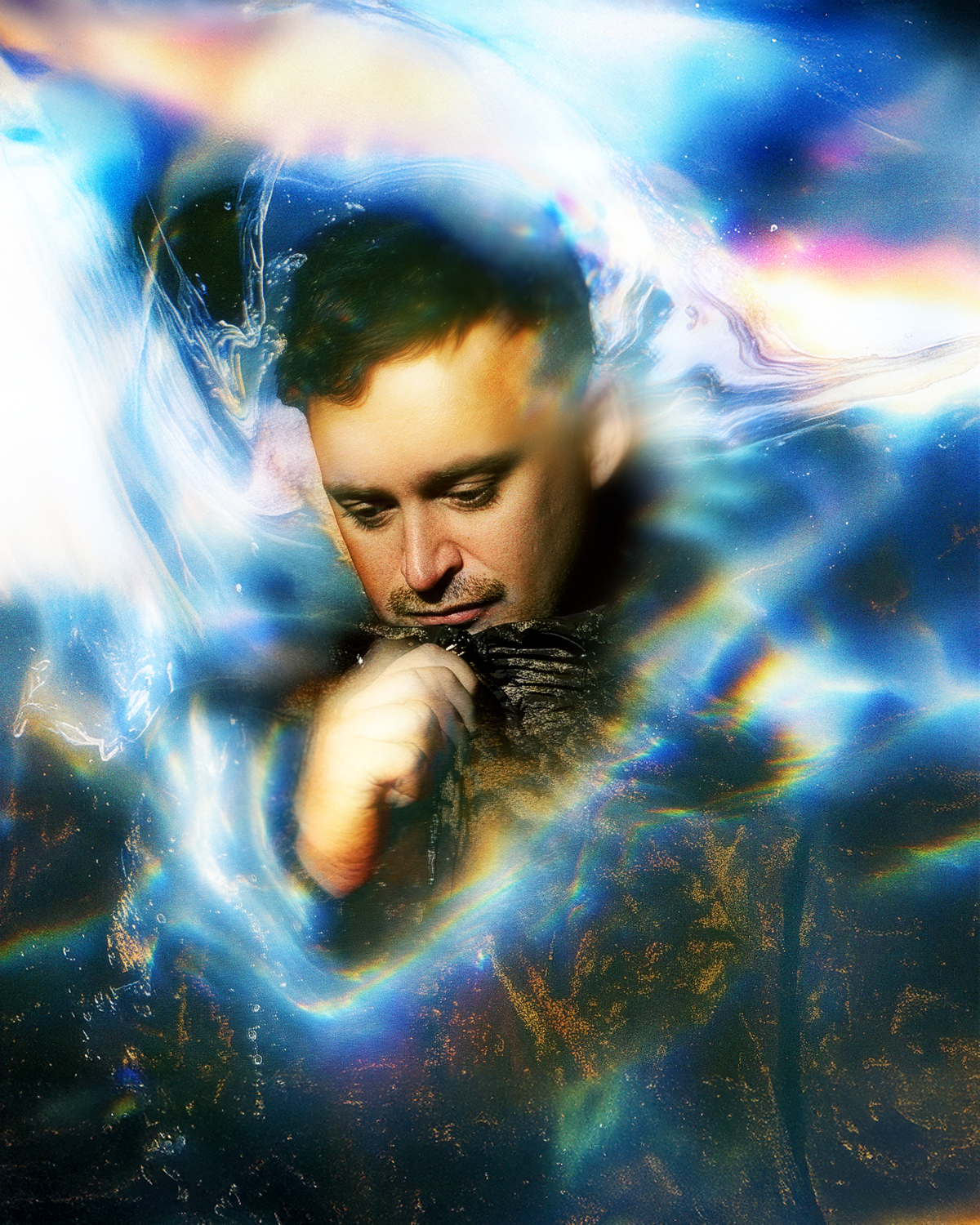
This is a free post from Larry Fitzmaurice's Last Donut of the Night newsletter. Paid subscribers get one or two email-only Baker's Dozens every week featuring music I've been listening to and some critical observations around it. Subscriptions currently run $3/month or $30/year, hit one of those little pink buttons on the right side of your screen to tap in, you won't regret it.
And the spring subscription sale is just getting started! 26% off monthly and annual subscriptions, that's $2.22 a month for the first six months, or $22.20 for an entire year. All in all, it's cheap and it's nourishing. You can grab the monthly sale here, and the annual sale here.
Today's installment: I've loved Matt Cutler's music as Lone since I first heard Emerald Fantasy Tracks back in 2010 (I reviewed it for Pitchfork at the time as well), the follow-up Galaxy Garden from 2012 stands as one of the best dance records of the 2010s period. Cutler's cut (sorry) an exciting path ever since, and his latest record Hyperphantasia (out tomorrow via Greco-Roman) is no exception, pairing his vibrant and loved-up dayglow rave approach with vocalists in a way that stretches his sound to new and brain-busting heights. I hopped on a call with Matt last month to chat through all things the new record as well as some very notable recent highlights in his career—and I have to say, what an absolute bloke. Check it out:
There's some familiar sounds from you on this new record, but it also takes your sound in a few unexpected directions too. Let's get into that.
It's the longest I've ever spent on anything. I started it in early 2022, and I wasn't sure what I was doing with it. I was trying all sorts of different things. At one point, I wanted to carry on the vibe of the last album, which was more dream-pop inspired. I was listening to loads of My Bloody Valentine and shoegaze, and I even bought some guitars. I don't play guitar at all, but I thought, "I'm going to try and get some sounds out of these things."
I made a few tunes, but then I quickly got completely bored of that and realized I had to do something completely different. I randomly started listening to old Neptunes instrumentals that I hadn't heard since they came out, and I went down that wormhole and thought, "I want to make a pop record," and that's what became the actual thing. I wanted to get some vocals in there—to make something really bright and in-your-face, but with some really simple pop music while making it interesting and beautiful. That was an early spark for the whole thing.
As I went on, it started to sound like a lot of my old stuff, so I was like, "Well, this could be the the angle for this one." I'm trying to make pop music on one side of it, but I'm also embracing my own sound. What if I look back on everything I've done and embrace it? So there's a lot of rave-y, stabby, bright stuff. I wanted to make an album that encompasses everything I've done since I started, and really own what I've been doing.
You mentioned going through old Neptunes productions. Rap production of all sorts has always bled into your music to some extent. Talk to me about your relationship to the genre at this point. How old are you at this point?
I'm 41.
Okay, I'm 38, so we're roughly around the same age. I still follow rap really closely, partially because I consider it part of my job, but also because it's somewhere where I'm always like, "Oh, what's happening here?" But we're both around the age where a lot of people check out in general, but especially in terms of keeping up with rap.
I wouldn't say I've checked out, but I'm definitely getting older. I've always been an insanely nostalgic person—even when I was a kid, I was obsessed with the year before. But now, I'm definitely looking back a lot, which is where the Neptunes thing came from, as well as getting obsessed with how they were doing stuff back then.
In terms of hip-hop as a whole, I'm not as as plugged in as I used to be. As with everything, I'm looking back a lot. I really got obsessed with hip-hop as a teenager through skateboarding. Backpack stuff was most of what I was into. Discovering Madlib was the real massive one for me, the bomb that went off—Dilla too, obviously, but Madlib was the one that I always felt super connected to.
What was your level of aptitude regarding skateboarding when you were younger?
Me and my friends were obsessed with it for a good few years. We'd skate our local Ikea car park—that was our main spot. In the summer, we'd maybe skate for a few hours, and the rest of the day was just sat around taking the piss out of each other and eating hot dogs. But none of us were ever gonna go pro, let's put it that way.
Are you still skating today?
It's funny you say that, because I've got a nephew who's just turned 11. He got a skateboard for his birthday, so I said I'd go out with him. I literally just bought a new skateboard the other day, so I've been skating around my flat on it. From the kitchen to where I'm sat now, I've got a little skate route.
This is a very vocal-heavy record for you. Let's talk about how working with vocalists changed things up a bit here.
On the last album there was vocals, but it was abstract. You'd send me a ton of melodies and harmonies, and it'd go into folders full of stuff I could work with. It was more like sampling textures and then building them up using instruments. That's the way my mind works with vocals. It kind of pisses off the people I'm working with a bit, I think, but I'll send them something really rough and then they'll send me a bunch of stuff back, and then I'll basically remix what I've done according to what they've sent me—so it turns into something else quite quickly.
I wanted this one to be more upfront and try and have a go at making something quite poppy and straightforward. But, as with me, it always goes a bit sideways. It was more of a challenge this time. I've made so much music in my life that's just instrumental electronic stuff. There's really no better instrument than a human voice. I was really into seeing how I could push it, while also making it straight-up.
I'm interested to hear you talk about the challenges, specifically.
You get to a point where you definitely need new challenges, and this seemed like the perfect way to expand what I was doing. But it's very time-consuming, getting it right—a lot of back and forth. I didn't work in the studio with anybody, which is something I'm considering for maybe a future project. But I really like remixing music with vocals, where I'll just take the vocal and make my own thing out of it.
In the case of the Lou Hayter track, we started talking a couple of years before anything actually happened. I did a remix for her where I literally just took the vocal and made a new song around it, and that's what got it working. That's the way it'll always be if I'm doing vocals.
Was there anybody that you've solicited collaborations from that have thrown you for a curveball?
There's a rap artist called Juggernaut from my hometown in Nottingham. He's super prolific and an amazing producer as well—he just puts out so many projects. We were always mutually respecting each other's stuff, and it was great to finally work with him. It was a lot of talk, and then it happened. We actually did two tunes—one that ended up on the record and one that maybe we'll put out later—and it was surprising how quickly he did it. It was, like, the same day. That really got me hyped, because there was no messing around at all. His mind is full of this stuff.
When it comes to vocal tracks in dance music, are there any cuts from the past or present that you hold close to your heart?
There's so many, I can't think of a single one. What inspired this album's vocal tracks—and, actually, most of my stuff going back through all of it—is a lot of '80s soul and R&B. I was thinking about Neptunes and what they were doing in the early 2000s, and a lot of dance-y soul from the '80s as well—those beautiful, soulful vocals with totally synthetic production. That era is what I love the most.
One that did stick out in my head was Chaka Khan's "I Feel For You." Every kind of afters, going back as long as I can remember, that's the song that has to go on if I've got anything to do with it. That glossy, synthetic production with real strong vocals is something that I'm always attracted to.
There's also a few meta-textual interludes on this record. Talk to me about breaking the fourth wall.
It's a tactic to guide the listener. The best albums are always a journey. I'm obsessed with how one piece of music stops and another starts—the science of how that works. You can always tell when someone's really thought about that. Since I was a kid, I can remember listening to peoples' albums and thinking about how they make it feel so right and guide you through this body of work. When it comes to beatless interludes, they work so amazingly well when you've got like a track that's really dramatic and has loads going on. It's good to have a breather for a minute.
If you're gonna have these interludes, I really like the idea of trying to make them some of the best things about the whole record. I see it as a challenge to make something that's functional and just as interesting as the big track. It's a bit of a broken record to shout these guys out for me, but Boards of Canada are the absolute best for me. Some of their best tunes are the one-minute breathers. One day I'd love to put out something that's just those tracks. That'd be a good challenge.
Talk to me about how you perceive your own musical evolution.
I never make tracks just for them to live on their own. Even when nobody knew I was making music for years, all the music I made was going towards an album. I'd make albums as a kid—not that anyone would hear them. I've been training myself all these years, because all I ever do is make music that goes towards a body of work. It's probably quite strange, but that's just the way I always did it, because I loved albums so much as a kid.
Each project is hopefully different enough that it takes people by surprise, while having enough of my sound in there that links it all together. When I look at my favorite film directors, they take on a completely different genre and story each time—but if they're really good, you can tell within the first scene that it's them. Looking back, there's so much at this point that I'd probably do differently, and some stuff I'm really proud of. But I almost think of each one as a movie. It's a different plot, but I'm totally aware of what my distinctive elements are. I've been doing this so long that I'm consciously putting those things in. It's not a coincidence.
Coldplay used part of "Blue Moon Tree" during their most recent tour. I was honestly very surprised to find that out.
So was I. Probably the most shocking, crazy thing that's ever happened to me. I've never really listened to Coldplay myself. Their management approached my manager and said, "Hey, I work with Chris. Is it okay if we get Matt's number?" My manager rang me up and said, "I don't know if this is real or not, but can they have your number?" I was like, "Yeah, why not?" I've got to say, shout out to Chris Martin, he started texting me and he's really, really sweet. He FaceTimed me, and we had this really long chat about music. There are so many people, through either remix work or whatever I've done in the past, that I never even hear from at all. For the biggest band in the world to get off their ass and give me a call meant a lot, really. It's a totally mental thing that happened, but I've got to say, it was really really nicely handled on their part.
I believe it! I've always been a defender of them. They have great taste, and they're way sharper than people have given them credit for. I don't think everything they do is like awesome, but they throw more curveballs for a band their size than they're ever given credit for. And as you said, they're huge. They're bigger than some people even understand them to be.
When Chris Martin FaceTimed me, he was sat on a porch in L.A., and he was like, "We're building a stadium behind me, because we can't do soundchecks in the actual stadium. It makes too much noise." It does seem like one of those things where, with their success, I feel like it couldn't have happened to a nicer group of people.
I'm really curious to hear you reflect on your experience in the music industry, specifically within the club sphere. Obviously, the vagaries and whims of dance music are changing constantly.
It's a really weird one for everyone at this point. From 2007, I was DJ'ing and playing live pretty much constantly, and it gradually grew. It was really great, but it was really hard sometimes. The travel was nuts. I got to a point, just before lockdown, where I was the happiest i'd ever been with it. The bookings I would get were all making sense. I was playing big shows, and it was connecting most of the time. It was really working, I was really happy.
Then, the COVID thing happened, and I don't think anything's been ever the same as that at all. After finally getting back to some sort of normality, I was playing shows again, but it Was a bit more low-key than it was before. When I started making this record, I was like, "You know what, fuck it, it's the first time in my life I can afford to take some time and just work on a record—I don't have to be traveling all the time." So I spent maybe two and a half years on this new album, and I played the first show a couple of weeks ago at Corsica Studios in London, and it was amazing.
I'm definitely in a position now where I'm rebuilding, and dipping my toe back in that world—and, honestly, I'll have to get back to you on how it is and what it's like, because I don't know at this point. Obviously, social media numbers and everything count for so much now ,and that wasn't the case 10 or 15 years ago. There's a lot to compete with. But at the same time, are young people going out as much and getting involved like they used to? The landscape is completely different. But I'm more optimistic and excited now than I've ever been, because I'm older now and I know what I'm doing—and I know what I don't want to do more than ever. So I'm excited to jump back in, do some shows, and see how it goes. This first London one really gave me a bit of a buzz. People came out, and it was great. So I'm just going to take it one gig at a time.