Hatchie on Letterboxd, Dream Pop, Working With Jay Som, and the Retail Experience
This is a free post from Larry Fitzmaurice's Last Donut of the Night newsletter. Paid subscribers get one or two email-only Baker's Dozens every week featuring music I've been listening to and some critical observations around it.
And we're a little less than halfway through the holiday subscription sale, which will play out across December as well. It's 50% off monthly and annual subscriptions, as good of a deal as any. You can grab the monthly sale here, and the annual sale here. It's a great way to support a 100% independent publication.
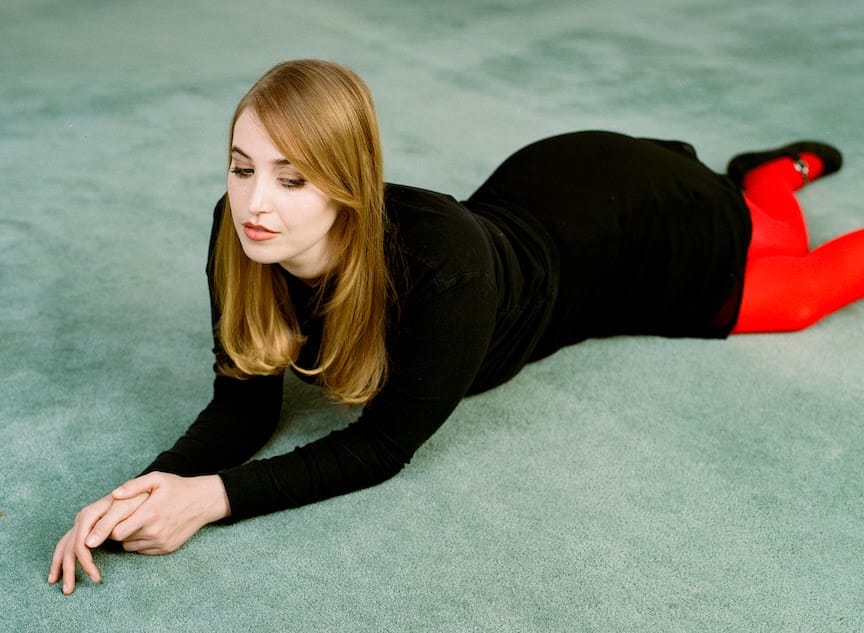
OK! You're in for a treat, as I'm doing a big push when it comes to publishing interviews for this month, running a ton of chats with people who put out very solid records this year and I wanted to catch up with...the first guest in what I'm calling No Days Off December (too cringe?) is Harriette Pilbeam, who put out her excellent third album as Hatchie, the Jay Som-produced Liquorice, at the top of last month. I interviewed Harriette in person around her first record Keepsake way back in 2019, so it was great to catch up with her again about a whole host of topics. Check it out:
You moved from Brisbane to Melbourne a few years ago. As an American who doesn't know anything about Australia, I'd love to hear you talk through the difference between the two cities.
Melbourne is a two-hour flight down the coast, and it's honestly, a pretty clichéd place for everyone to move in their 20s and 30s because there's just a lot more going on. We were the last people hanging on in Brisbane that hadn't moved yet, and we were digging our heels in. "No, we're not gonna do that, everyone does that—Brisbane's cool, we can have fun here." But after a while, you realize that all of your friends live in Melbourne.
It's just a bit cooler. There's a lot more stuff going on here—more gigs, events, venues. All the venues in Brisbane have closed down as well, so from a musician's perspective it just makes more sense. It's more of a small-town vibe in Brisbane. Everyone's family still lives there, but not many people that you grew up with still live there.
Walk me through the last few years that culminated in this new record.
Coming off the back of the previous records that I'd put out, I was just so wrapped up in the concept of Hatchie and what I thought other people wanted to hear. With this album, I was feeling so burnt out and exhausted from a few years of nonstop touring, and there was a lot going on in my personal life, and I just decided that I needed a bit of a break. So I took a big break between these albums, because with the last one, I was ready to go as soon as the previous record was out. I was thinking about the next one and trying to write nonstop. With this one, I felt like I needed some time to live my life and just be myself for a bit. After spending a lot of time in America and traveling, we decided to settle back in Australia for a bit and just see what happened.
I wanted something that was a lot more organic and felt a lot more like me at its core. I really focused on what I loved about writing music when I was younger—writing music that I want to hear and want to play live and doesn't require a heap of backing tracks or seven people onstage.
Talk to me more about navigating those expectations. I know the last album was also initially driven by music that you wanted to play live specifically.
That album ended up being very influenced by lockdown, obviously. I was thinking about how badly I wanted to get back to playing live, and I was in that headspace of, "How can I keep this going as a career? What's going to help me grow?" I was obsessed with trying new things and expanding my skill set. That album is a big reflection of my struggles with identity in general—particularly in my 20s, which everyone goes through. It was very evident in my music that I was going through that, and I was really influenced by replicating other artists' sounds with that album.
With this album, I didn't think about that at all. There were no particular songs where I was like, "I want to make a song like that." It was about what naturally came to me when I was thinking more about concepts and emotional stories. A lot of this album was also inspired by tragic romance films like The Umbrellas of Cherbourg, which is one of my favorite movies when I was younger. It didn't have an ending where the couple ended up together, and that really blew my mind. I re-watched that when i was starting to write for this album and was obsessing over that concept of tragic romance.
How did it feel when you went back out and played live after after lockdown?
Mostly, I really missed it. It's never been the same since that time, but it's also tough, because pre-COVID we were constantly growing and doing everything for the first time, so everything felt really exciting and amazing, but also really overwhelming. I don't know that I really had time to process things before COVID, so now every time we go out on tour, I'm taking everything in a lot better. I'm a lot more aware and present, which is really good.
But it was weird, because for the last album, I was like, "I'm going to write this album that sounds massive, and it's meant to be performed live on big stages." When those things didn't happen for whatever reason, it was like, "Oh, this music doesn't feel how I thought it would feel to play live." It was actually really difficult to achieve live without lots of people on stage. It was a really interesting lesson and a great experiment, but I felt really relieved and excited at the rehearsals for this new album. It's a lot more achievable, musically and sonically. It just feels right this time around.
You mentioned the beginning of everything for you, especially with Sugar and Spice and Keepsake, the latter of which I interviewed you for. Since then, the concept of getting buzz around your music is totally different. What was that experience was like for you at the time, especially compared to coming out of COVID and finding that everything is obviously quite different?
Obviously, it's impossible to talk about these things without talking about social media, TikTok, and virality. That wasn't on anyone's radar back then. Now, it takes up so much of your time and headspace, thinking about what content you're going to make and and how to get seen online—because all it can take is one video or trending sound to change your life.
Back then, it wasn't about that at all. It was like, "We just need to play 100 shows in a year, that's gonna do it." And that's what we did! We played over 100 shows in one of those years, which is insane. We put so much work into touring. and that's where we cut our teeth and how a lot of people found out about our music. We still get people coming up to us at shows being like, "I didn't know who you were until i saw you supporting Girlpool or the Vaccines." Now, that doesn't even feel possible.
I'm not a new artist anymore, so the strategy has changed. But I also had no strategy back then, because it just didn't even come to mind. We were just going with the flow, going where the fans were. Now, everything feels a lot more strategy- based and online. I don't know that [what happened with my early career] could happen again in the way that it did, particularly because it doesn't really happen with indie artists at the moment. I mean, the way the ball got rolling with Hatchie was that it got played on the radio. I don't know what's going on with radio at the moment, but it just feels like a completely different world.
I don't know how anyone's touring nonstop these days. It feels impossible to me—the expensive visas, flights, accommodation. We're still in debt from that time period, and I can't imagine how much worse it would be if we did that now. I also don't think I was very present during that time—I was just going with it, and it genuinely feels like it either didn't happen or was a weird dream. I try not to get sad about it, but it does feel like a completely different world where that's not really possible anymore.
I don't know how anyone gets recognized with intent these days. There's also so many artists trying to make it right now—which, it's amazing that it's that accessible to be a musician. But it feels like I'm the tiniest drop in the ocean these days. I don't know how people start a project now. It's the least predictable thing in the world, whether or not an act is gonna make it right now, which is crazy. It's a lot less talent-based than it used to be—but, whatever. It's always been that way.
How do you feel lately in regards to your general social media habits?
I was pretty stubborn about not wanting to lean into it for a while. I was like, "I'm a true artist, I don't need that. All my favorite artists from 10, 20, 30 years ago, they don't do it. Why should I have to?" Because I considered a lot of what I did more aligned with those artists rather than newer artists.
These days, I'm a lot more relaxed about it. I'm in my early 30s, and I'm still a very online person in general, separate from music. I'm very deep in internet culture. So at one point, I was like, "Okay, whatever, I'll do it." It definitely feels more of a requirement than ever. I'm not going to dance, though. I had a list of things I wouldn't do when I was talking about it with my label. But as long as it's on my terms, I'm happy to do it. It definitely feels weird at times, and it does take up a lot of time to be honest. I basically work full-time at a day job as well, four days a week. I spend, like, two days a week fully on Hatchie stuff—including content, and that takes up the most time, which is pretty crazy. Once it starts feeling like a full-time job, that's when I'm like, "I can't do that."
What's your full-time gig right now?
I'm an assistant manager in retail. I work at an optometrist. It's so random. I got the job when I moved to Melbourne, and it stuck. I've just made my way up to being an assistant manager. I don't even need glasses, which is the funny part. We have to wear glasses at work, so when they find out mine don't have any script in them, I'm like, "Oh, sorry," and they can't comprehend it. But it's helped with having a solid footing, and it's resulted in a big shift in my mindset since moving down here.
I used to always be like, "Music's my main thing and I'll just work a hospitality job on the side—I'll work nights, weekends." Any time an important tour came up and I had to choose between work and the tour, I'd always quit my job and go on tour, I didn't care. These days, it's a bit different. I felt like I needed something a little more supportive, and it's definitely going to be a harder decision when big tours come up, but I'm just taking it a week at a time at the moment, so we'll see.
As somebody with a lot of retail experience in my past, I'm really curious to hear about the customer service aspect of things for you. What are some of the problems you have to solve?
Oh, God. Retail really is straight-up customer service, just as much as the service industry is hospitality. It's just a constant output of energy, and you don't really get much energy back from people. That's what I find the most exhausting. I think everyone should have to work at least six months in the service industry in their lives, because it changes you as a person. It teaches you so much about patience. and you meet all kinds of people—and I'll leave it at that. I've had someone make me cry in the last year, and I was like, "Wow, I didn't think that was still possible for me"—but it's still an option. It's hard, when you've been quitting jobs every year in your 20s to go on tour. My resume is just the most random patchwork of hospitality and retail. This is the most grown-up job I've had yet.
I worked a lot of retail and service jobs from a really young age, so if I'm on the other end of something and I find myself frustrated or pissed off, I try to remember that whatever problems I'm having right now about whatever, the person on the other end is probably having the worst day of their fucking life.
Exactly. It's the same with when your food's slow because the restaurant is really fucking busy. Why would you yell at the person serving you? People are just crazy. The stuff that people get angry about is absurd. It doesn't make any sense.
It got worse after the pandemic, too! Everybody was like, "I'm entitled, and I was in the house, and now I want everything."
"I want people to be waiting on me hand and foot." I don't get it, I don't know what the hell is going on, and I don't know how it's gonna get better, because it's getting worse.
One thing about your music is that, from the very beginning, it was inspired by dream pop, shoegaze, and indie-pop. It's a hard sound to get right. Talk to me about digging into the nitty-gritty of textures. People who know that sound can recognize immediately what an original Picasso is compared to a fake, so to speak.
That's always been a concern of mine. One massive change since the last time we spoke is how many people are doing dream pop and shoegaze now—and it's been really interesting to see what people refer to as "shoegaze." Joe, who's my husband now and has done this whole project with me, is really the texture guy who leads things in the right direction when it comes to production. With this record in particular, I'd often write the bare bones of a song and then we'd construct the rest of it together, which is how we did the early stuff as well. I think that's also why the record sounds a bit more like the early stuff.
Melina's amazing at guitars as well—that's why we chose her. She really understands the sound. Another thing that really makes this like a true dream pop record is the melodies and harmonies. A lot of people think it just comes down to production, but it's the production and the writing. I'm a very melody-focused writer. I do lyrics last, usually. I know a lot of other people start music by writing the lyrics, but when I start writing a song, I have no idea what it's about. I don't decide that until later.
Let's talk more about your lyrical process. How do you think you've evolved over time?
That's a good question, because I've been trying to think about that lately too. How have I changed in the way that I write? What I said before about giving the songs time to breathe has been the most important thing for this record, in terms of the lyrics. I tried to not overwork the songs—which, looking back, I think I did with Giving the World Away. I overworked a lot of the lyrics on that album, and that's chill. I have no regrets. But with this one, I honestly tried to spend less time on the lyrics—which sounds crazy, but it helped. I might've had half a song written and come back to it a few months later and slot in a few more random lyrics. I read a lot of novels when I was writing this album as well, and that headspace helped.
You mentioned tragic romance movies before. What have you seen lately?
The most recent movie I watched was Face/Off for the first time. That was so good and insane. Not what I was expecting. I don't know what I was expecting, but it wasn't that. I saw Sorry, Baby—have you seen that?
Not yet.
I really liked it. I saw it at the cinema as part of a film festival. I go to the cinema almost once a week. It's my rest and relaxation. I go alone most of the time—I almost prefer going alone. I'm looking at my Letterboxd...Together, I really liked that. Have you seen it?
I did. I didn't love it. I might be in the minority on that one, though.
It's funny when that happens—and then you're like, "Dude, did I like it?" I find it really hard to not change my view after seeing all my friends' Letterboxd reviews.
If I gave a completely opposite review, I'm like, "Oh, maybe I'm wrong."
You know what the problem was? Honestly, I like Alison Brie a lot as an actor, and I've enjoyed Dave Franco in stuff occasionally too. I felt like, with this movie, they were trying to sell people really hard on them being a couple that the general public should care about. I felt like I was being sold something, which isn't a great feeling to have.
I get that. What made me like it was the body horror element. The rest of it, I could take it or leave it.
Do you like a lot of horror in general?
I do. We went through a big horror phase last year. I hadn't even seen The Shining until recently. I'm looking at my July—I watched 28 Years Later, Us, Trap, which was so awful. Like, more awful than I could've anticipated. Have you seen that?
I saw it with my wife and our friend, and they both really didn't like it at all. I gave it three stars on Letterboxd, because I was like, "This is fine." It was a way to pass the time. It's definitely not my favorite of his. Yeah, sometimes I'll pop into a movie in the middle of the day and be like, "I'm just gonna go see this," and I walk out and was like, "That was awful." But, you know, I feel good that I saw a movie. I treat it like going to the gym. I'm like, "I got my movie in for the week, even if i didn't like it."
Do you like using Letterboxd?
I do. It's one of those things where you have a watchlist that you never look at, but you're like, "Oh yeah, that's my list"—and then I never check it when I'm trying to think of a movie to watch.
I find it the most interesting for just seeing what other people are watching.
I like that element of it too. Do you use it a lot?
Yeah, I love it. I say to my friends who aren't really online that, as somebody who likes to be online, it's the last good social media platform. Sometimes I'll see somebody watch something and I'll be like, "Oh, that looks interesting, I should check that out," and then I'll watch it and maybe find a new favorite movie.
Yeah, it's got a sense of community on it, and I still respect people's opinions on it. I feel like it's shifted a bit in the last like five years. I've seen a lot of people who were on Letterboxd pre-COVID complaining about the fact that everyone just writes joke reviews. The reviews are all just everyone trying to be funnier than each other.
Let's talk more about working with Melina, who I also recently spoke to for the newsletter. Tell me about working with her in the studio.
She's another artist who's toed the line between a few different genres, which is how I've always felt about Hatchie. I wanted to work with a producer who was a musician and had been in the same position as me, because sometimes you work with producers who haven't been in bands before and it's a bit of a different vibe. I also wanted to work with a producer that wasn't just, like, a white guy—because that's who everyone suggests when you ask for recommendations. That's not directed at my label—it's just anybody that I talk to when I'm like, "Got any recommendations for a producer?" People are always like, "You should work with this guy," and it's always some guy in L.A.—which is fine, nothing wrong with that. Melina's in L.A. as well, and I've loved every producer we've worked with.
I just wanted to try something different, and I loved her music, so someone suggested her and it seemed like a no-brainer. We set up a call with her, and she was so chill on the call. At one point, Joe and I were like, "We just wanted to let you know we're really big fans of your music, and we love the song 'Superbike,' it was a really big influence on the Hatchie sound early on." She was like, "That's funny, because that song was actually influenced by Hatchie." It was such a nice moment.
She's so hilarious. Our humor aligns, and it's a really important thing for me to have a good time when I'm doing these things. It felt like hanging out with a friend, to the point where we had to keep being like, "Okay, we should get some work done, get back on track, we've got a limited time frame." That was a sign of a good partnership. We just love hanging out. She very much has her own sound, and she's a great guitarist and singer. I'd work with her again, for sure.