Greg Mendez on NOFX, Drinking, and the Philadelphia Sound
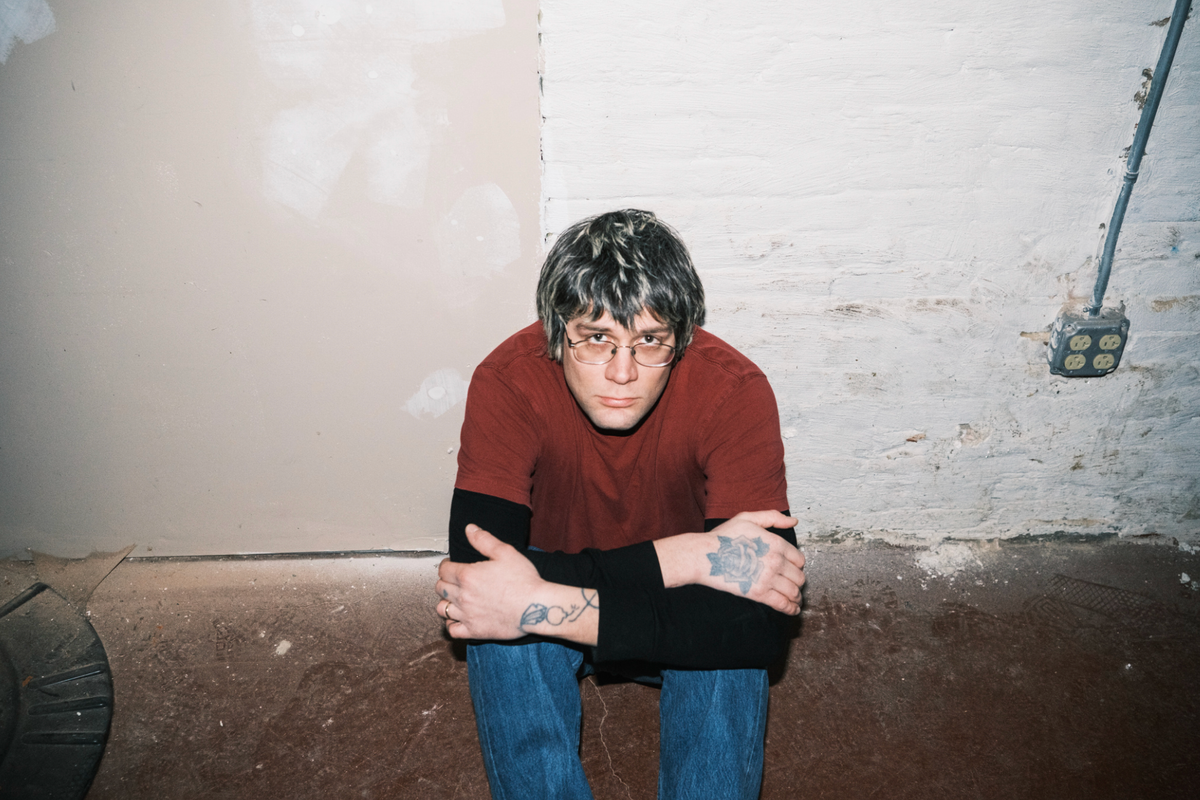
This is a free post from Larry Fitzmaurice's Last Donut of the Night newsletter. Paid subscribers get one or two email-only Baker's Dozens every week featuring music I've been listening to and some critical observations around it. Subscriptions currently run $3/month or $30/year, hit one of those little pink buttons on the right side of your screen to tap in, you won't regret it.
Today's installment: Greg Mendez has become one of the worst-kept secrets in indie rock over the last few years, and with his great new album Beauty Land that dropped last week, it's almost like no one's even trying to keep this damn secret anymore! In all seriousness, I really love what Greg has been up to and think that his close-mic'd style is getting better with every single record, so I was very happy to hop on a call with him earlier this year to talk through everything regarding his new record and then some. Check it out:
This is your first proper album for Dead Oceans. Let's talk about how the process of putting this one together may have differed from the past.
I tried to do it very similarly. I've been practicing doing it the way I've been doing it for a really long time out of necessity, so a lot of the skills that I've developed, I wasn't sure if they would translate into going into a nice studio with a producer. So I decided to take my time, do things at home, let things marinate, and like give myself as much time as I needed to work them out. I did get some nicer gear, but from the outside it looked similar. From the inside, I was very aware that the circumstances around it were different, so it caused me to ask a lot of existential questions about whether it was even possible for me to keep doing the same thing. I tried to do my best to get into that headspace, but it's different to try and get into a headspace than it is to just be in it on some fundamental level.
Tell me about what your usual headspace is like when it comes to songwriting.
I get a lot of, maybe I'll call them transmissions. It's actually kind of fucking annoying, because it'll be when I'm out walking, or driving, or hanging out with people, and all of a sudden this melody will pop into my head, and I try to remember it until I can sing it really quick into my phone. Then I'll just work off that. Sometimes I'll just be sitting on the couch playing guitar, and something will will come like that. But I'm always following what I like and what feels good to me—that hasn't changed.
I guess the thing that has changed is, in the past, I was just doing it for myself. I didn't expect anybody to listen to it, and nobody stood to gain or lose any money off of it, including me. I don't think it was possible for those perceived pressures not to seep in, even on a subconscious level.
Given that you've been making music for a minute or two now, I'd love to hear you talk more about the financial aspects of what you do.
In the past, I tried to spend as little money as possible on it, which is where recording myself came from. I'm not a recording engineer, I was learning as I went the whole time, stubbornly. I wasn't able to do much real touring until the past few years either, because I was always working some other job. I was taking the songs and recordings very seriously, and I felt like I was building some kind of body of work, but I didn't really expect anybody to hear it besides my friends and people in Philly. I tried to not sink too much into it, and I couldn't afford to lose that much money on it. People want to sell you gear and tell you that you have to do this and that, and I feel like it's just not true most of the time.
Are you doing music full-time now?
Yeah, for the past few years. I do some like side hustles too, but music is basically the bulk of our income currently.
Over the years, what are some of the jobs you've worked on the side while making music?
Anything unskilled that you could imagine. I bartended, bar-backed, did fire water and mold restoration for a couple years. I was a production assistant on photoshoots. I worked in a wood shop for a year. I delivered weed on a skateboard for a while.
Tell me more about delivering weed on a skateboard. As somebody who's bought a lot of weed in New York over the years, I'm very familiar with the various aspects of delivery service, but I've never had anybody deliver it to me on a skateboard before. I'm usually letting somebody in with a bike.
I just didn't have a bike. When I moved back to Philly, I didn't really have much going on here, but I'd take the bus up to New York with a skateboard a couple days a week and do these deliveries all around Brooklyn. It was out of necessity, the skateboard thing. It was faster than walking.
That's true. I gotta imagine it was also quite strenuous!
Yeah, it wasn't the best. I didn't do it for that long. It's hard on the knees.
Let's talk more about the home recording process. Has it evolved for you at this point, or are you sticking to a trusty setup?
The approach is kind of the same. I just throw some mics up and move them until I think they sound pretty good. What's changed is I have a couple more microphones. I've also figured out some things that do and don't sound good over the years. The general approach is that I do acoustic guitar and vocals live first. On this record, I doubled the vocals less. The drums are almost always last, because I don't have a drum set.
What do you feel like you've gotten better at? Sometimes, it can take a while for even the most seasoned home-recorders.
I still think I take a while, but I can make a acoustic guitar sound decent a little quicker now. I also was so frantic in my earlier years. I'd just put a mic down, not move it around, and be like, "I guess that's good enough." And there still is a level of that. Recording is a bit forgiving in that, even if you do something that sounds not the best, if you make the rest of it sound good, it generally sounds good.
The bio for this record describes your setup in a windowless room. That sounds pretty grim!
I'm in the room right now, actually. There is a window, but I put an acoustic panel in front of it as well as heavy curtains, because the noise from the street was kind of intense. But, I mean, it wasn't grim. Some of it was grim. It was a year and a half, and my life started falling apart a little bit with the way I was treating myself. It was an intense process.
Talk to me more about what you were struggling with.
I wasn't eating well, I wasn't sleeping well. I started drinking a lot, to the point where I had to stop more recently. I'd quit smoking cigarettes for a year and a half, and I started again. I was isolating, socially. I let the record take over my life. When I do that with something, and things that I've worked really hard to fix in the rest of my life start coming back—picking up self-destructive behaviors—if I'm not taking the time to constantly be bettering myself, I'll just get worse.
As far as going back to old habits, are those things that you can pick up on your own and be like, "Whoa, okay, I'm going a little too far in one direction here," or does it help to have outside input in terms of what you're up to in general? What are the warning signs?
I had some outside input this time, but sometimes I'm able to catch myself—but only if it gets to a certain point. Sometimes I don't even realize what was going on.
You said you put down drinking. Is that for good or just kind of a temporary thing?
Who knows? [Laughs] I feel like my life is better when I'm not doing that. It was making me more anxious and depressed, which was what I was trying to medicate. But it still didn't make it easier to stop when the solution becomes the problem.
That's real. Jumping off of that, I'm curious to hear you talk about the notion of songwriting being reflective of one's own experiences, versus writing from a removed perspective.
Honestly, it's all jumbled together for me. I'd never want someone to feel like they were called out, and I'd never want to hurt somebody, or myself. I try to make it feel true, but also far enough removed.
Something that leapt out at me while listening to this record was that it's the first time in a minute I've heard something in the indie rock sphere with a little bit of a Brian Wilson-slash-Beach Boys thing going on. That's not so much in vogue anymore. I'm curious if that was intentional for you, or if it's something that just crept in.
I think it was intentional. I just never got over that sound. I still love the Beach Boys, and the Beatles and the Kinks—anything that reminds me of those classic-sounding chord progressions, melodies, and harmonies. NOFX was my favorite band in middle school, and I still love them, because they're doing that same kind of thing with push-and-pull, complex interplay. I fucking love that, and I've always tried to do that—and I feel like I've failed a lot, but maybe this is the closest I've gotten to doing it.
Who are some other songwriters you admire?
When I was a little older, I got more into Leonard Cohen, Neil Young, Elliot Smith—all the stuff that had the same power of punk, but in a different way. It took me a while to get past the aesthetics of things, but once I got past the feeling I got from loud guitars, it really opened up a lot of doors for me. I could listen to old folk music and not be like, "This is just some lame shit that like my uncle puts on." I could really appreciate the beauty and power of what's going on and see the through line between everything.
Let's talk about the musical character of Philadelphia as it stands. As somebody who covers music for a living, in recent years when I find out an artist is from the area after listening to them, I'm like, "Oh, well, that definitely makes sense." But sometimes those connections that us critics draw can end up being a false inference. From your POV, is there actually a musical landscape like that within the city's scene?
I think there definitely is, and there's a pretty tight-knit scene. A lot of it is playing shows with each other, playing on each other's records, and being in a bunch of bands. I also feel like the experience of living here is pretty distinct. I don't know how, exactly, but I do feel like that informs the sound a little bit. I don't know if I could always put my finger on it, but you can tell when a band's a Philly band, or if they've lived here for a while.
A lot of the indie rock—myself included—is not born and raised here. But it is the last affordable big city in the Northeast, where you can come and be a fuckup and not have a backup plan. Maybe that's changed a little bit more recently, with some people getting wider recognition here. But in the 2000s and 2010s, it was a very different kind of person doing very different kind of stuff who would move here. You weren't like, "I'm gonna move to Philadelphia to make it big." That just wasn't a real thing.
If you asked me in 2010 who the biggest indie rock musical export from Philadelphia was, I would've said Dr. Dog. It's funny though, whenever I talk to Philly people, they're like, "Don't be too loud about the fact that it's affordable here. We don't want people to ruin this."
I mean, it already is getting ruined. You used to be able to get a room for like $200 a month. That's long gone. But Dr. Dog's cool too. They're nice. They're good guys.