Eugene J. Candy on Making Candy, Working the Macy's Thanksgiving Day Parade, and Playing in Punk Bands
This is a free post from Larry Fitzmaurice's Last Donut of the Night newsletter. Paid subscribers get one or two email-only Baker's Dozens every week featuring music I've been listening to and some critical observations around it. Subscriptions currently run $3/month or $30/year, hit one of those little pink buttons on the right side of your screen to tap in, you won't regret it.
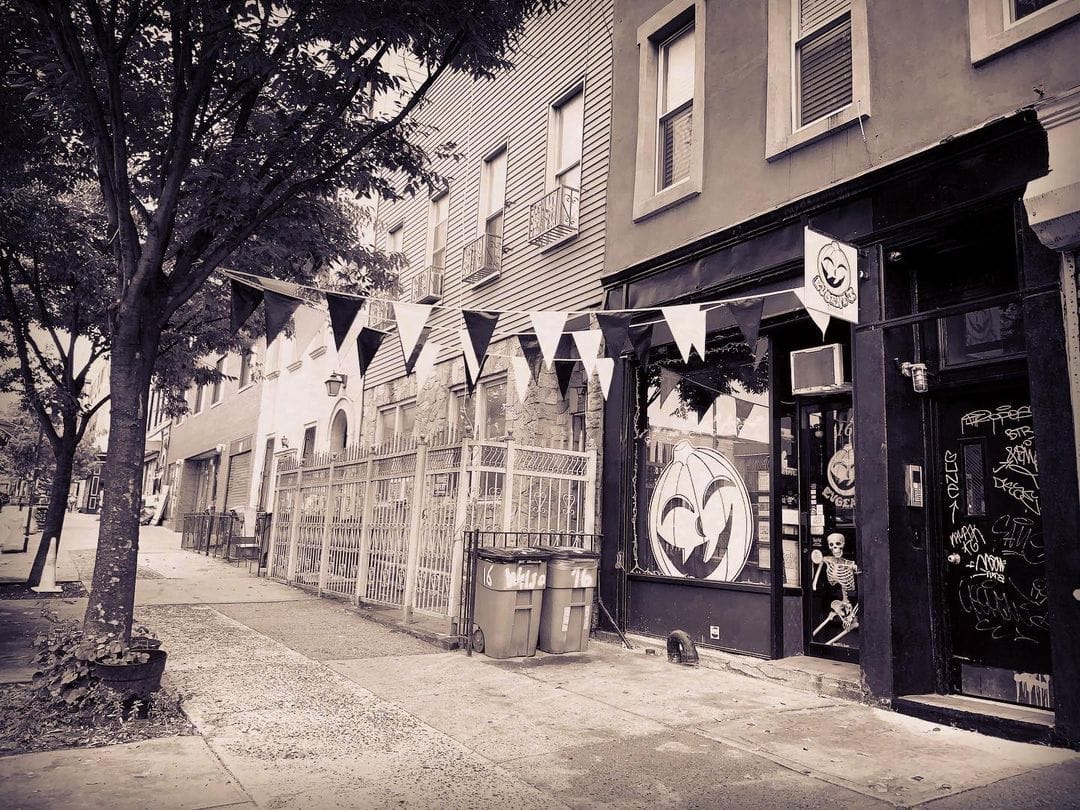
Today's interview is a bit of a left turn, but it's sweet—literally. A few years ago, I saw friend-of-the-newsletter Shaun Durkan of Crushed big-up the Bushwick candy shop Eugene J. Candy on IG; I'd been living in the area for a year or so but had no idea that there was a small-batch independent shop slinging things like chocolate-covered Cinnamon Toast Crunch (don't do the bit at me) and tangy, crunchy Freaks (we'll get to what those are in a minute) by the bagful. I've been stopping by Eugene J. Candy ever since for bags of candy that have honestly increased in size every successive time I've gone there; only one visit and it's impossible to resist picking up enough dark chocolate-coated Gushers to fill a bathtub with.
As time passed, I also found out that Eugene has a bit of a punk band history too, having been a member of 2010s NYC noise-rock group bbigpigg—so my growing curiosity regarding how this guy is making such good candy naturally became tied to an interest in talking to him for the newsletter. After politely badgering the extremely gracious Eugene as he weighed out my latest haul behind the counter, we hopped on a call last month as he unspooled for me his own personal history and creative mindset when it comes to getting in the candy lab. I was extremely happy to be able to make this happen, and my hope for this interview's reach is two-pronged: If you're already in the NYC area, you'll hit up Eugene J. Candy for some delicious treats—and if you're, say, a touring band rolling through Brooklyn, you'll spread the gospel when it comes to this excellent independently-owned shop. Check it out:
@3u63n3jc4ndyc0 ♬ original sound - Eugene J. Candy Co.
Where specifically were you raised in New York?
I grew up in Flushing, Queens, but my folks have moved to Whitestone in the past seven years or so. I went to high school in the Bronx, college in Manhattan, my first job in Brooklyn, and I spent a year in Berlin—but my other time since has been in Brooklyn.
How was your year in Berlin?
It was good. I was playing in a band, and the whole band was supposed to relocate, but for some odd reasons, we never got over there, so it was just me. But I played some music over there, too. I mainly used it as a hub to travel, so I got to see all of Europe.
I want to talk a lot about your business and what you've been doing with your store specifically, but I am curious to hear you start out by talking about your background in music.
When I used to tell people I played in a punk band, people would be surprised—and in the punk scene, I tell them I have a candy store, and people are like, "What are you doing in a candy store?" But, to me, it's the same thing. They're both really creative outlets. The reason I make the candy is because, not only do you come up with a new candy, but there's so many other design elements. You can come up with a name, the logo, the packaging—it's all endless design, and with music it's the same thing, especially when I was older. In experimental music and noise rock, it was stretching me to my limits of what I can do. It's really simple stuff, but the joke was, when you play noise rock, you have to unlearn guitar—especially with my setup, when I used a pitch-shifter. You figure out a new way of using the instrument, so it's all exploratory discovery.
I was in bands mainly in college, and when I was much younger I formed stuff with grade school kids—but aside from playing in basements or attics, I never played out and it never felt like I was doing it for real, so I really made an effort. At that time, the Village Voice was more relevant, so I found my first bandmate through a Village Voice ad—another guitar player. We were just two guitars playing at practice spaces in the Lower East Side, and then we wanted a drummer. We tried putting up posts on telephone poles, but we couldn't find anyone, so we put out another Village Voice ad and met up with a drummer that we loved. We hoped that he would love us back, and it turned out it was mutual. At that time I was getting introduced to two bands that changed my playing style: U.S. Maple and Arab on Radar. So our band reflected that sound—no effects, straight guitar-to-amplifier, that U.S. Maple aspect. Our follow-up releases were more listenable, less abstract—more like head-bobbing, groovy noise rock.
It's interesting to hear you talk about how making left-field music and making candy has that anything-goes aspect in common. I'm curious to hear you talk about what your earliest experiences with candy were.
It stretches back 15 years, but at the very beginning it was like when you're learning a new instrument—I was just trying to learn the basics. I started out really simple with the classic things you can do at home: Hard candies, lollypops, marshmallows, toffees. I really wanted to make a gummy bear, but I was having difficulty using store-bought ingredients. I could make something plump and juicy, but I really wanted a tougher gummy—even closer to a Haribo gummy—and I struggled with that for a long time, trying to reverse-engineer that in the very early stages. But once I discovered it, I lost interest, because there's not much fun in just making the same thing over and over again.
But the panning process, which is what I use now, is this process of tumbling centers and thin layers of chocolate or sugar syrup and growing it like a snowball. With one machine, I have so many types of candies I can make. I'm in love with it, even though this process takes many hours—or many days—to make one single candy. You have to be, I guess, a little crazy to do this stuff. But I find it fun in that exploratory way, too.
@3u63n3jc4ndyc0 ♬ original sound - Eugene J. Candy Co.
Walk me through the leap from "I'm making these individual pieces of candy at home" to acquiring equipment to make candy.
Even with my move to Berlin, at that time I was still making candy. I literally took pots, pans, scales, and powders of gelatin and sugar over there. I had a lot of time over there. I was fortunate enough to meet up with someone who was making these little plush dolls, so we created a little company and started selling candy and little plush animals at flea markets. Eventually, we put them into a couple of cafés. At that time, I was making a double-sided lollipop that I called the duet. It was a lollipop meant for sharing, and I'd wake up in the middle of the night and bike out to Berghain and sell them out of a briefcase to clubgoers. But I never fully believed in that item—I thought it was too gimmicky.
So when I came back to New York...I used to do chemical engineering, research and development, for a green company in the Brooklyn Navy Yard. I left that world and started working at Dylan's Candy Bar as a sales associate, thinking that later in the future I could get into corporate and find something I liked. After a year and a half, a position opened up in corporate, but I learned quickly after that it wasn't right for me. If you're into celebrity and fashion, Dylan's is the best place for you—but they didn't really make anything there, it was all private-label. I got a little disillusioned. It was just retail, but I wanted to make candy.
So I started looking for my own thing, and that's how I opened up the shop. But it was during that time when I worked at Dylan's that I thought it'd be a really funny idea if I was creating parallel Wonka products under the umbrella of one of his rivals. I was into looking at domain names, and I found that the three rivals— Slugworth, Prodnose, and Fickelgruber—were taken, but Thicklegruber.com wasn't. So I quickly snatched that up, and then I started thinking of different candy ideas. If you have Wonka Nerds, I came up with making these bigger versions of called Freaks, which has taken off on its own because it's fun candy name. That whole process of making the Freaks is what the panning process is needed for.
Instead of a full-size machine, I initially bought a KitchenAid attachment, but I really struggled. I had no clue what I was doing. I knew I wanted to dry the sugar on the cores of the centers, so I was using a blow dryer, which was a mistake. It was blowing sugar dust into my room. Fortunately, in the candy industry, every couple of years when the demand builds, they offer a short boot camp on this process. I was able to take one, and alongside people in the R&D department of major manufacturers, me and maybe a couple others were self-funded. We got to make things like jelly beans, gumballs, and chocolate-covered things. It was really well-taught and very scientific, which is right up my alley with my engineering background.
Everything since with the shop has just been tweaking things here and there. Even what recipes I have right now, I always try to make a little tweak—whether it's with the color or the process—just to keep it interesting for myself and discover something new, even if it's accidentally, instead of just feeling like I'm making the same batch every time like it's manual labor.
What's your equipment setup like now, and what does it take to maintain it?
It's really simple—a motor motor attached to a spinning bowl. It came from a pharmaceutical company in Jersey, and you can put different-sized bowls on it. I have a really small one with an 8-inch diameter that I can do little experiments in, and with the 12 and 18-inch ones, I do more production-focused batches. In the real world, you'll have these bowls that are 36 and 48 inches—and those are the ones that you'd normally do bigger production sizes in. If you go to a company like Mars, they have giant drums that fill up the size of a studio apartment that just spin.
When it comes to trying to make new types of candy, have you had any notable failures?
A lot of the stuff I do now is based off of past successes. One of the challenges I have is that you usually do the panning process in a room that's temperature and humidity-controlled—but I do it in the same space as the shop. So in the summertime, it's warmer and more humid—even though I have the AC on—and in the wintertime, it's drier and cooler. So I have to adjust accordingly. The process will take a lot longer in the summer, and right now when it's cold, the process is so fast and way more enjoyable. You don't have to tend to the machine constantly—there's moments where you can step away as it's the sugar's crystallizing. Even now, when I do a batch of candy, I might go back to my notes on the conditions and steps for every recipe so I can figure out where to make adjustments. When I do recipes, I'm pretty much always comparing it to a previous batch and making adjustments.
Is there a taste-testing element?
With panning, I'm buying the center and then adding chocolate on top frequently, so it's not like I'm making the center from scratch and have to taste-test it. There's this one candy I do—a chocolate-covered watermelon Sour Patch—and I've never tried it. In the beginning, I'd just made it, so I didn't really want to taste it. Now, it's like an ongoing gag—the one I've never tasted but people always ask for anyway. There's a lot of times where I'll make something, and a customer will be the first person to try it because I haven't even tried it yet. I'm just kind of burned out, unfortunately—but my opinion doesn't really matter. I can love it, but if the people hate it, then it doesn't work. I can dislike it, but if other people are loving it, then that's the only important thing. I joke that it's the curse of running this business: It's ruined candy a little for me.
@3u63n3jc4ndyc0 ♬ Mmm Mremememew Memew - yulia
Let's talk about the challenges and rewards of running an independent retail business.
I always knew I wanted to do something on my own—even when I was doing the research and development work. My family are all entrepreneurs, so I always had that in my perspective. I really just wanted to manufacture, but with limited capital, I'm just doing everything from savings. I figured I'd open the shop and start small. I had a 10-to-20-year plan to slowly pull back, but it's been a little bit of a challenge. The plan was to make some candies, find a co-packer and contract manufacturer, and then I'd distribute it, take it to shows, and grow the business from there—maybe, ultimately, I could build a manufacturing space.
But the nearby co-packers have 20,000-pound minimums—which, with no wholesale accounts, I can't even fathom putting in that order, warehousing this stuff, and trying to find customers. I found a company in Eugene, Oregon that felt like destiny, since their city is my name—but they have much smaller minimums and are going through some ownership changes, so their supply would be a lot more expensive. I'd do it just to get my foot in the door with them, but that's been stalled.
How long has the store been open for?
March 8th is the anniversary, and it's going to be 10 years—10 years of my life, gone in the flash. The store feels like a time machine for me, because from 2016 until now, I feel like I'm exactly the same person, living under this rock of a business. I haven't gained new experiences or learned any new skills—I'm exactly the same, but every time like I step out of the door, the world has changed. I also always say that if you don't want to work a 9-5, we're 24/7 now. Every year, as a new year's resolution, I say, "I gotta see my friends more." But I make the candy at four in the morning, so by the time I close, I'm already dozing off.
When I opened here, I thought things would be a lot faster in this area as well. I came to Bushwick with the punk scene after playing shows in the 2000s all over the Lower East Side and Williamsburg. I knew this neighborhood would change the same way the Lower East Side and Williamsburg did—but it's taken a lot longer, especially with the pandemic. I kind of can't believe I entered middle age with this shop, unexpectedly.
Yeah, I was going to ask you what you've perceived as far as how Bushwick's changed over the last decade.
I really love Bushwick right now. When I hung out in Williamsburg, it was only when it looked like current Bushwick. Now, I go to Williamsburg maybe once or twice a year. I know this neighborhood was changed too, but I'm very happy that I got to open here, because my neighbors have been amazing and inclusive. I'm always working, so during the holidays if they're grilling, they always run over a plate. Me and my neighbor next door, we always take turns sweeping and shoveling each other's sidewalks. It's really great small-town neighborhood vibes here, which I probably would've lacked in Williamsburg. You'd think, since we're the candy store, I'd have a lot of kids coming in—but I have no kids coming in. It's all like the 20-and-30 year old kids, and the support and excitement from them spurs me on. There's interest in what I'm doing, and they find me unique and interesting.
You're also one of the balloon handlers during the Macy's Thanksgiving Day parade. Walk me through your personal history with doing that.
A really close friend of mine did it a year prior to me, and she invited me on board. We've done the mermaid parade together before—we'd make costumes and create a theme—so we have some parade history. At an older age, no one wants to see us anymore, so we pivoted. It's been a great ride. We somehow got hooked up with one of the main volunteers. so for the past couple of years we've been hooked up with the best balloons. We got the inaugural Bluey balloon that made the front page of the New York Times, and last year we were on Snoopy for its 50th anniversary.
My friend has been on her ascent through the ranks, and she became a "pilot." They stand in front of the balloon and direct us all. This past year, she conducted the balloons we were on, which were the poinsettia ornaments. We're gonna put in our time and climb up through the ranks. The greatest thing about the parade is the people. It's the most wonderful, wholesome bunch of people from all over the world—a lot of people from the Midwest where it's been on their bucket list to be in this parade. It's just the sweetest people who love the holidays.
It's funny, because when you mentioned the hours you keep regarding making candy, I know you have to be up super early to get on the parade route.
Yeah, it's been perfect in that sense too. There's a spring training in June, and then multiple training days the week leading up to Thanksgiving. All those happen at 9:00 a.m at Metlife Stadium, and there's a bus that picks us all up from Macy's around seven in the morning—so all that works perfectly with my schedule. I'm already up, and then I don't open the store till noon, so maybe I have to open an hour or two later—but that time would be free for me normally anyways, schedule-wise.
What's your musical taste like these days?
I haven't really been exploring too much music. In the store, I just play tons of soundtracks and movie scores. The one band that I've fallen in love with recently is Wet Leg.
Yeah, they're great.
It seems like Britain is churning out a lot of cool bands, between them and IDLES and Dry Cleaning and black midi. I discovered them because they won a Grammy and I checked out the song—"Chaise Lounge"—and I was just taken aback at how strange the song was. When I listen to them, it gives me the same feeling I had when I was 13 years old, discovering music for the first time. They're just fun. I went to see them with my friend from the Macy's Parade at Central Park Summerstage, and I was joking thatwe were going to go there in our 40s and be in a sea of like 18-year-olds. To our shock, everyone was our age or older. It was incredible, I couldn't believe it. We later went home and checked out the Summerstage Instagram page, and even in the front row, before the show even started, it was all these people with graying or balding heads. We were, like, stunned.