Dua Saleh on Minneapolis, Sudan, and Being Surrounded by Gold
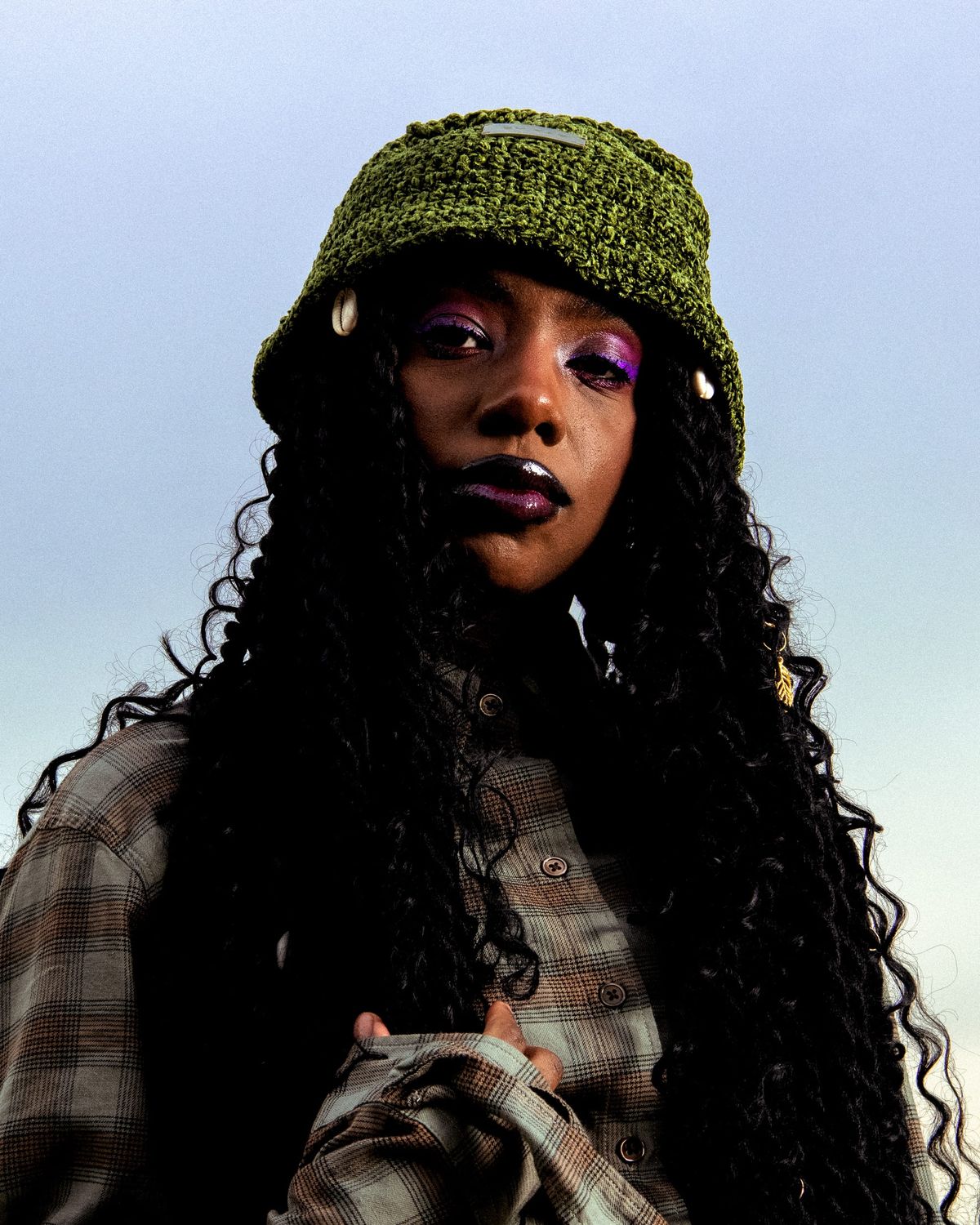
This is a free post from Larry Fitzmaurice's Last Donut of the Night newsletter. Paid subscribers get one or two email-only Baker's Dozens every week featuring music I've been listening to and some critical observations around it. Subscriptions currently run $3/month or $30/year, hit one of those little pink buttons on the right side of your screen to tap in, you won't regret it.
And the spring subscription sale is set to go through Memorial Day weekend—that means three more days to get a great deal in supporting this largely very free publication. 26% off monthly and annual subscriptions, that's $2.22 a month for the first six months, or $22.20 for an entire year. All in all, it's cheap and it's nourishing. You can grab the monthly sale here, and the annual sale here.
Up today: Dua Saleh just released a great new album Of Earth & Wires that makes their genre-blending sound more truly indefinable than ever before. Dua's had quite a busy 2020s, between their steady rise in the indie realm and their acting gig in the beloved and now-departed Netflix show Sex Education, so I was very much looking forward to chatting with them about all things their impressive career so far. We had a great chat even though they found themselves frustrated by nearby construction sounds bleeding into their apartment—hey, in the Big Apple, that's what we deal with all the time! Anyway, check it out:
Talk to me about what you're pulling in sonically with this record.
Generally speaking, I'm going more towards indie R&B. The last album that I put out and this album are both inspired by R&B. I Should Call Them was a deconstruction of R&B, this one is a reconstruction instead of leaning on an understanding of the materials that other R&B artists have provided.
Let's talk more about your overall relationship to R&B as a listener.
As a Black diaspora person, R&B is just part of my world. I did live in a historically Black neighborhood growing up—the Rondo neighborhood—so I got to listen to a substantial amount of Black American music, especially jazz, because I lived in an area where the Jazz Fest was thrown every year. My understanding of R&B is very influenced by my material surroundings, but also as a Black person who enjoys R&B, I do keep up with the waves and trends of more traditional R&B, but it's hard not to defy genres at this stage in life, especially as people are becoming more experimental and music becomes congested with an influx of sound from the indie realm.
Let's talk about your creative relationship with Ryan Olsen, who's always had one foot in the sound of R&B as an artist.
Ryan was on my first project as the executive producer, along with Andrew Broder. He's also one of the producers on this project, but the primary executive producer for this project is Billy Lemos, who's L.A.-based, but gained popularity in Chicago. So this is a very Midwest-heavy album, but I'd say that it's primarily been led by Billy Leemux sonically But Ryan was there for songs with Justin as well.
Talk to me a little bit about what the Midwest means to you.
Right now, in terms of journalism and social media, a lot of people are paying attention to the Midwest because of the onslaught of ICE raids happening in Minneapolis, Chicago, and other places that are being targeted because of the high percentage of immigrants that live in the Midwest. The attention is on my specific hometown, Minneapolis, and the Twin Cities area, because they're being targeted, I guess, by ICE. The federal government isn't really doing much except for trying to intimidate, and it seems like the police force right now is frustrated with ICE but they're not really helping much either. There's a dynamic shift where everyone's afraid of the way that ICE is wreaking havoc.
Yeah, I have a few friends in Minneapolis, and it seems like one of those moments in time where, if you live there, you're in it. Talk to me about how the people you know have been directly affected by what's going on.
I'd say that a hundred percent of the people that Im in touch with either come from an immigrant background or are actively dropping off food, ensuring people get their paperwork done, and giving people rides back and forth from work or child care facilities. Everyone that I've talked to has been affected in some capacity, or is nervous about it. I don't know anyone who's been deported personally, but I've heard from friends that have been detained or where their family members have been deported. That's disturbing, to say the least.
It's a shock to me, because I never did expect for this to happen. I always have a freak-out when i know there are going to be political shifts in the greater sphere of life, so I always kind of know when it's about to happen, because I end up breaking down or crying. It happened every time Trump got elected. I was like, "Oh, we're cooked. We're so cooked." I don't think people processed it.
I think you have a lot of people in this country who are processing stuff that they've never even had to consider for the first time. It's interesting to me because I'm kind of always like, "Weren't you guys thinking about this stuff before?" But on the other hand, I try and have sympathy, because in terms of what the human brain is able to keep in, it's understandable that some have reached the limit of that capacity.
Yeah, I don't know. I think everyone's just nervous. We don't know what's gonna happen. I could've told them that, this entire time, he's literally a royal jester. What's that show that he was on?
The Apprentice.
Yeah, I'm like, "Bro, he literally is a community jester. Everybody's making fun of him. He's gonna be chaotic once he's in office." Twice is pushing it you at this point.
The press materials for this record included you addressing your general perspective when making this album, as well as the ongoing conflict in Sudan, which has been going on for quite a while now. Talk to me about how that factors in to your music and what perspective that adds for you as an artist.
All the gummy parts of being a human being—the emotions, the grief, the joy, the bliss, the resilience of queer love—all the good parts of storytelling that comes with putting out a body of work, I just wanted to pour my emotions into songs that people can translate into their life and listen to as a looking glass. I'll be Alice. It's a terrifying wonderland, but it is a wonderland, more or less.
The first album was about these two lovers who find each other in an apocalyptic world that's falling apart. Before it's destroyed, this is them and their story—after they've survived, they're losing sense of their understanding, their history of their identity, their world. They're trying to hold on to this love that they have with one another, and to maintain that resilience—but it's hard to hold onto when they don't really have a sense of self.
It's hard, sometimes, to hold on to love in trying times, and so that's how it feels right now as a Sudanese person. I'm watching my world fall apart—I've already watched my world collapse. We're in our third civil war that I've known of in my life, and I'm trying to hold on to my identity. I don't even know my indigenous language. I know a language that was given to me because of imperialism. I speak Arabic, but I don't know my tribal language. I don't know much about my background. A lot of our historical artifacts have been destroyed or actively depleted. I don't really know much about my indigenous identity, but I'm trying to hold on to it, because I know that it's important to have an identity of sorts. Overall, the past two albums have been my love story, too—with Sudan, my world, and my existence. On this one, you get to see how it's nearly impossible to hold on when there's nothing tangible for me to hold onto.
What are some of your earliest memories of Sudan?
I actually don't remember. I was born there and stayed there for a year, but then for four years I lived in Eritrea in the refugee camps, because my dad was a political refugee. I remember running through the desert, playing with critters and stuff like that. But I also don't really know what are my memories, and what are the stories that my mom told me.
In the press materials, you also talked about "finding your place as an artist amongst AI, which is obviously kind of a big concern for everyone right now in general.
AI is muddling people's artistic integrity because they don't want to deal with their real emotions. They'd rather just have a computer do the hard work for them. So I'm kind of scared, because at that point you're becoming less connected to real feelings and humanity, and that removes the point of art, which is to elicit feelings of sorts—feelings of joy that make you want to dance because of the rhythm of the beat, or woefulness.
When it comes to music, I've definitely talked to people who have said, "Oh yeah, I use AI, and a lot of people are using it more than you know," which is interesting and unsettling to hear. There's also the question of what AI means, which seems to be different for people too.
I think I have a different informed understanding of AI as somebody who's a refugee of war and keeps up with world events. I'm thinking about how AI is a tool of war. When I think of AI, I think about drones, bombs, water depletion while people are dying of drought and starvation. I don't really only think about it in artistic ways. Obviously, as an artist, I'm concerned, because it's financially harmful to have a non-human biased entity creating art that's probably going to be used for propaganda or political benefit. But I'm less concerned about the artistic implications of it and more interested in the financial and political implications of the, I don't know, tool? I guess AI is meant to be a tool, but, whatever—it's a war weapon to me.
You've found a bit of success as an actor alongside your music career. Let's talk about what the different disciplines demand from you.
I think about the the physical implications of both forms. With acting, you have to be in the body of the character at all times, which had to be reinstilled in me, because the [Sex Education] directors would be like, "You're doing your posture, you're not doing Cal's posture," because I'm more feminine in the way that I physically move in the world. I was aware of this even when I was more masculine-presenting. I have a lot of water in my chart—seven Scorpio placements—so that makes me very feminine. That was something that I had to beat into myself, basically.
With singing, you have to be in the practice of looking out for yourself, like a band kid caring for their instrument. You have to be mindful of what you consume, how you sing, where you sing from. I'm thinking about a lot of like technical stuff recently when it comes to acting, but both of them tell stories. The only difference is that one of them is my story, and another one is another person's story influenced by my personal life.
Talk to me about your experiences in the music industry thus far.
I'm still relatively newer to the mechanics of it, because I just got signed um maybe two years ago. I was doing everything with an independent team prior to that, so I'm just actually just getting my feet in the water, which is kind of surprising because I have been doing it for a while now. Basically, I just got started with the actual, material industry. I feel like I do get away with a lot, in that I get to be my own artist. I'm very privileged to be surrounded by highly coveted producers and artists—icons like Bon Iver and Grammy-nominated poets like Aja Monet. I'm surrounded by gold. I'm really lucky as a person, at least within the industry and in my career, because I'm just like surrounded by a wealth of knowledge and power—cultural pillars, people who are at the center of culture a lot of the time. I'm shocked and amazed most of the time at, the stuff that I get to do, the type of art that I get to create. Let's just hope it continues to go in that direction in a more positive and successful way.