Chuck Roth on Teaching, Practice, and Feeling the Vibrations
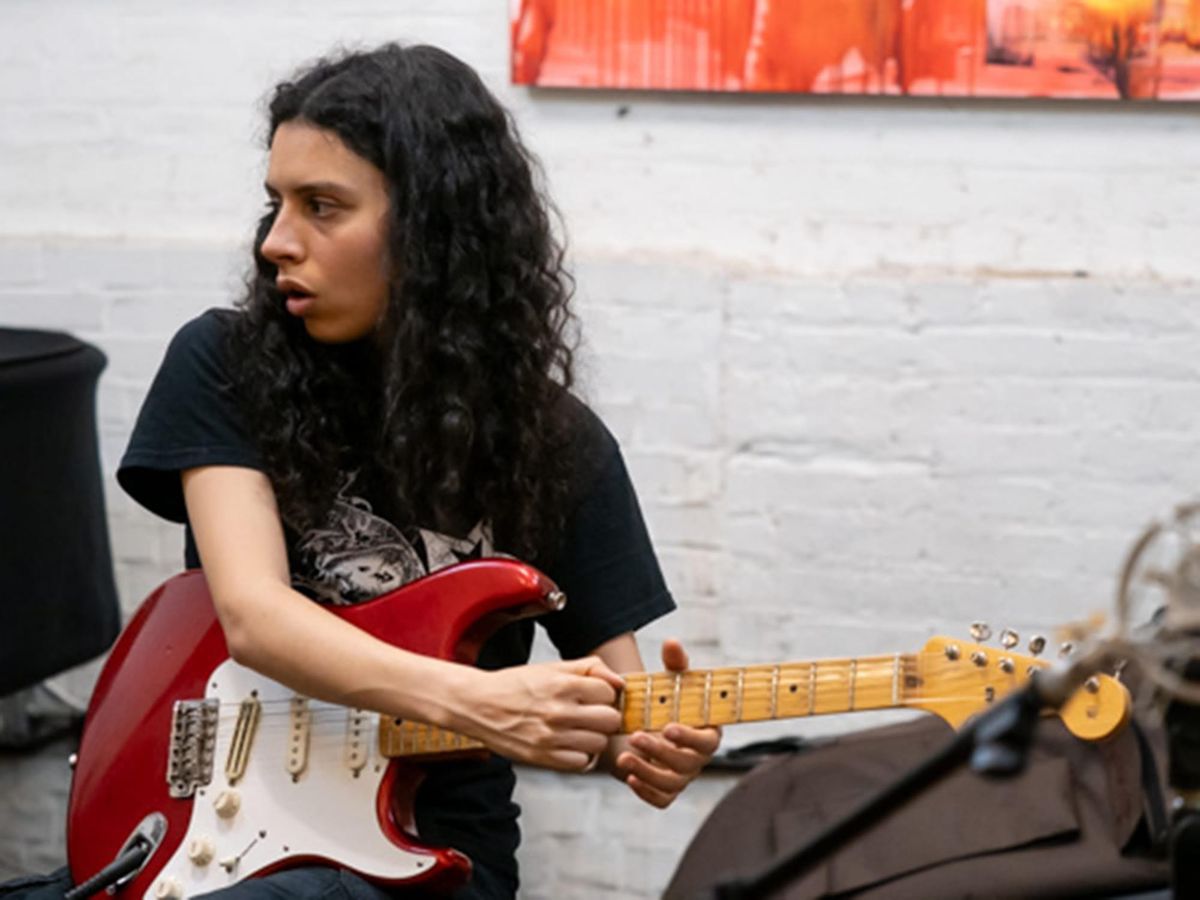
This is a free post from Larry Fitzmaurice's Last Donut of the Night newsletter. Paid subscribers get one or two email-only Baker's Dozens every week featuring music I've been listening to and some critical observations around it, along with a Screen Memories column every one or two weeks where I write about stuff I watched lately.
Here's what I'm serving up today: A year or so ago, friend of the newsletter, excellent musician, and very respectable critic Colin Joyce recommended Chuck Roth's beguiling watergh0st songs to me, and I was instantly taken by the hard-to-pin-down shapes that Chuck draws with his inventive guitar-playing style. Just a few weeks ago, Chuck released his follow-up, Texture Songs, on Bill Orcutt's Palilalia label, and the album absolutely one-ups its predecessor by way of Chuck's deepening, deceptively complex songcraft. Bill ended up connecting me with Chuck for an interview, and the resulting conversation was really fascinating when it comes to his creative approach and musical style. I loved talking to Chuck, and I bet you're gonna love reading this interview as well. Check it out:
Let's start out by talking about how this new album came together.
I'm working out general blueprints for a lot of these pieces all the time. Even when stuff is finished, I'm practicing different ways to play stuff. Some of this material feels like new, completed, different things that aren't just smaller fragments that become more improvisational. It's tough to say what makes something become a more cohesive collection, as opposed to what's ultimately just a long, deep, and disorganized body of work.
But I was interested in having things feel a bit more textural on this record in particular. It's usually something I've done as a point of entry for me to kind of expand the writing's initial motifs. When I was in college, if I was away from my guitar, I'd write a sketch on GarageBand or Finale really quick, and then I'd be like, "I wonder how I can make that shape feel physical on the guitar later." This album was the inverse, in many ways. I was like, "I like the physical property of playing this on the guitar. Is there anything I can do starting from there that then becomes melodic stuff?"
Let's talk about your early experiences playing the guitar.
I probably first started playing guitar when I was six or seven. I think it's great how far we've come in terms of who can play certain music, because when you're at a guitar store and you're ostensibly, to these dudes, some annoying eight-year-old girl or whatever, they're just like, "Get the fuck out of my store." I think that's why I play the way I am—because I've always really liked this instrument.
The guitar was a sort of solitary practice for me. I didn't really have bands until I was maybe in college. There was a lot of time playing by myself. I had GarageBand, which, as a kid on your laptop, you could make stuff with the knobs. Some cross-wiring must've happened, where I started to think of shaping waves on electronic music as what I wanted to maybe do on the guitar. There came this point when we were teenagers where people wanted to make interesting-sounding music, and you'd make beats on your laptop. But the idea of standing with my laptop onstage used to bum me out. I was like, "I can get haptic, interesting stuff doing this on the guitar."
Another huge part of this is, of course, playing and studying classical guitar. You get really invested in the timbre, shape, and texture of your sound because you're doing so much interpretation—which then means you're figuring out how to make a piece that's hundreds of fucking years old sound like yours. These older pieces aren't always for the guitar—they're for the lute, the harpsichord, or some other instrument. A lot of classical guitar's history is this really strange construction of classical guitar, as opposed to like Spanish guitar or whatever. It's just, We're gonna like take these pieces and arrange them for the guitar." So I was interested in making a guitar do something that was for the role of something else. That was my point of entry to play in that way—besides generally being a young person online, trying to figure myself out by listening to a bunch of different music on the internet.
Talk to me more about the development of your playing style. It's so physical-sounding. Even if I'm not literally watching you play, I can almost imagine how you're playing it.
Speed, in many ways, is a cardinal tenet of how we perceive mastery of the guitar. You play really fast, and it's really smooth. I don't like how that sounds. It's a chordal instrument, so I've never really been drawn to that kind of sound. Maybe that's a cop-out, I don't know. Maybe there's some initial insecurity about that. But I've always wanted stuff that has felt almost kinetic. When I was young, I really liked things that made me feel like I could move in my body—when I'd hear a heavy punk song. My dad grew up listening to a lot of thrash music, and he was really into riffs and tempo changes. He'd love when something would change tempo and you'd almost feel the gears slow down a bit. When you change the rhythm of something, the contour of how the strings are vibrating, that's what makes something hit really hard—and then there's that electronic thing where I feel like I'm shaping a wave.
There's this rhythmic guitar element to my playing. I want to create something that's like similar to a drum set by breaking up different timbres of what I'm doing. For "Slow Dance," I wanted to make sure that the bottom part had more nail and the upper part was a bit fleshier. That's a big part of how the arranging is working. I'm doing these slight adjustments with my hand. Most of my practice is slight adjustments of my hand, doing the same thing for very long periods of time. It's a very granular practicing. I'm not really transcribing other stuff. That's mostly how I do everything—very granular, tiny movements, aesthetic contemplation.
Did you take lessons when you were younger?
Yeah.
How was that experience?
There's probably some stuff it introduced me to, like the idea of interpreting pieces of music and hearing how things sounded. That was big. When you're a kid, there's this initial impulse where you want everything to sound really flashy and impressive, and there's something valuable to having an adult in the room tell you, "It's really good if you can just have something sound really good at mid-tempo." When you're with another person who's played an instrument for a long time, they can provide you with different avenues of how to occupy your instrument. I'm not, like, a guitar hero guy. There was never a period where I just wanted to sound like Jim Hall. I was never like that.
Let's talk about how your body has adapted to the physicality of your playing. I have to imagine that your body adapts over time in ways that aren't visible to anyone but yourself.
The primary way that I'm aware of my body is that I'm doing it all the time. In the winter, I can tell if my warming up is taking longer. With practicing slower stuff, that's how I was able to get those sustained vibrations on the last record. When I was younger, I was literally doing the opposite of some advice that's given to me and then pay really close attention. In guitar class, they'd be like, "You don't want to buzz anything. You don't want anything to squeak." And I'd be like, "But what if I buzz it really slowly?" And by buzzing things really slowly, I started to become aware of how I could control or create these rhythmic patterns. It makes me very sensitive, I guess. I do feel like I see a lot of stuff through my fingers. It makes me pretty obsessive. It's interesting, because I make all these faces like when I'm playing, and I don't even quite know what I'm trying to get out. I get so agitated, and I feel like I'm exercising out this crazy agitation when I'm playing.
When you're a kid and so much of the world is new to you, and you first hear something and you're so stoked, you're like, "Oh my God. I've never heard that." Or when you see a crazy Clyfford Still painting for the first time and you're like, "Whoa, I didn't know an image could do that." When you get older, that happens less and less, but it's almost this really embarrassing child thing where, when I'm playing, I'm still just so excited about how the sounds are, because the guitar can really do anything, That's what I'm attaching to. There's this uncontainable excitement, and the way I've been able to maintain it is by keeping everything really granular and small, and trying to have the piece of the music that is evolving before me be really tied to that physical element. It's almost like this weird Morse code that's coming through the guitar. I'm feeling these vibrations.
Let's dig in to your lyrical process.
All of the lyrics in the last several years have come after the guitar stuff is done. The melody is always there, but the lyrics are usually right after I've done everything else—which means that not only have the arrangements been finished, but thy've probably gone through several iterations at that point. Something has to have germinated for quite a long time for me to even feel like there are like words that can even decorate the margin of this thing, because the emotions are so specific—especially when it's a really textual guitar piece. I'm really self-conscious about the lyrics interfering with the emotional landscape that I've constructed.
One of the ways I'm embodying the songs is by singing, and I don't want the vocal to feel like it's sticking out or in some way drawing more attention to itself—because, the voice, it's such a loaded thing. I'm trying to pull out lyrics that interfere with that emotional landscape as little as possible. I don't want them to provide that much of a contrast. That might change, actually. Even with this newer stuff I'm writing now, I'm noticing that it's changing. But, like, if I just had an instrumental version of "Highway," there is an emotional arc that it goes through,
and I want to complement that arc.
I'm very suspicious of lyrics that utilize cycles, especially in pop music. It actually kind of scares me. Sometimes, lyrics create these mnemonic devices for behaviors that you should drop. "This is something I do, I'm going to keep on doing it this way, and it's okay, because it's in a song." I don't know. It creates this submission that is scary to me.
Let's talk about your day job.
I'm a school teacher. Between the hours of 8 and 3:25, to most people I interact with, I am someone's strict fourth-grade teacher. To most people who know Chuck in Brooklyn, they're like, "Oh yeah, that's my teacher who told me to be quiet." That's my life, basically. Between the early morning hours, I get up at 4:30, I get ready, and I'll practice guitar a little bit. There's actually a practice room at the school I work at, so I go there, and then I come home and I work on music some more.
What's your sleep schedule like?
Terrible. That's probably why I could probably be more patient with my students. I'm so tired.
How old are you?
I'm 29.
Word. I'm 39, and over the last five years, I've become very much, "I need seven hours, and if not, my day is ruined." But at the same time, I have so many friends who have kids. And they're like, "Yeah, I've got four hours of sleep this week total." And I'm like, "Damn, that's crazy."
It's interesting, because that's the guitar for me. If I have some sort of issue where I can't practice enough before my classes, I'm in a terrible mood that day. That's what's also probably interesting about this record: So much of this music has been written at, like, six in the morning. Most of my music has been written pre-sunrise, which is actually probably significant in the emotional landscape of the record. It's pre-sunrise music.
How long would you say you practice every week?
Oh, God. So, I get up, and the train I get to to go to work is usually at 6:20. So I try to get like a good half-hour-to-45 minutes before I go to school, because I'm really paranoid about being late. There's always something that can come up. The school building will open at 7, and then usually from 7 to 9:20, I can practice there. If I'm good about getting all of my prep for the next day in between my free periods, I can usually get out of there at about 4. I'm probably practicing—and this includes loosely playing—four hours a day, more or less.