Casey MQ on Working With Oklou, Club Quarantine, and Following the Paths
This is a free post from Larry Fitzmaurice's Last Donut of the Night newsletter. Paid subscribers get one or two email-only Baker's Dozens every week featuring music I've been listening to and some critical observations around it.
And we're entering the final week of the holiday subscription sale, which goes through January 25th. The deal remains: 50% off monthly and annual subscriptions, it really doesn't get much better than that. You can grab the monthly sale here, and the annual sale here. It's a great way to support a 100% independent publication.
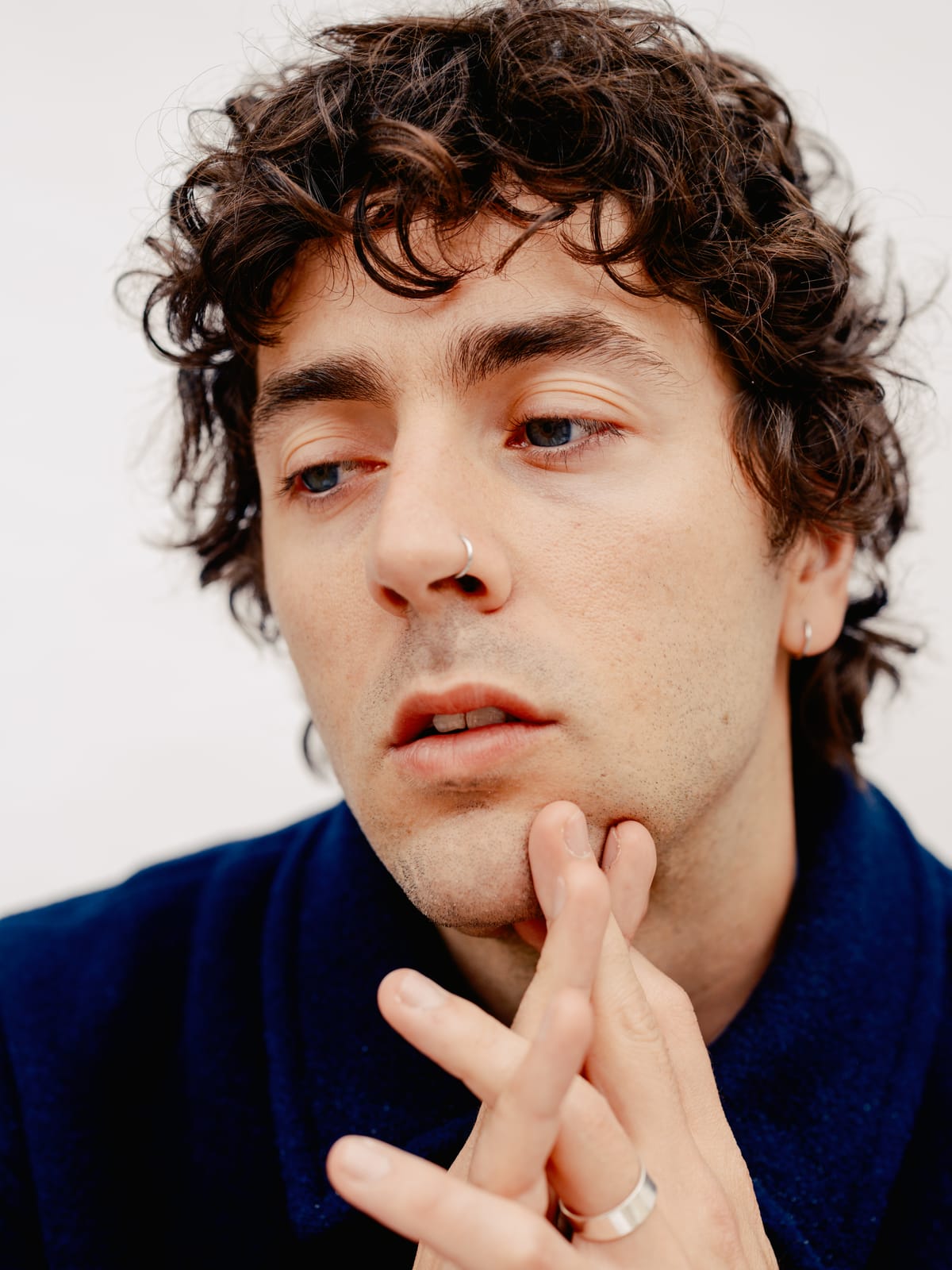
Let's get into it: Canada's own Casey Manierka-Quaile—Casey MQ, if you're into the whole brevity thing—has an increasingly rising profile both on his own and in the world of collabs. His latest solo record, Later that day, the day before, or the day before that, dropped on Ghostly in 2024, and alongside his work with folks like Cadence Weapon and Eartheater, he also has a close creative kinship with French alt-pop vanguard Oklou (you heard him all over her brilliant Choke Enough from last year, as well as her excellent 2020 release Galore.) I was very happy to hop on a call with Casey late last year to chat about all things regarding his increasingly impressive career, and his own insights made the chat more than worthwhile. Check it out:
How long have you lived in L.A. for?
Three and a half years now. I grew up in Toronto my whole life, and it's so different. I'm so East coast, and growing up in Toronto, you're just sort of walking around to get to everything. But, in all honesty it's been fine for me. I like driving around, and I have a great group of friends here. It's been such a blessing, and I'm really happy I made the the decision those years ago.
Regarding Toronto—and I'm only asking this because I just saw the movie the other day—what's your level of familiarity with Nirvanna the Band the Show?
I have friends who are deeply involved in it and connected to Matt Johnson. It's so funny, because when I went to TIFF, a bunch of friends were like, "Well, you gotta go see it." And I was like, "Well, I haven't seen the whole show." They were like, "It doesn't matter." In the end, I've still yet to dive into the world—but I know the lore, and I know how far and deep—how amazing—it goes. My friend's in the movie, and he's one of my best friends, so I'm kind of annoyed at myself for not being like, "Okay, I got to go see it now."
Do you watch a lot of movies and TV in general?
It's a huge part of my life in L.A. I started doing this movie club, and we get together every Sunday at the house, and someone has to pick a movie that they've never seen before. You don't get to know what the movie is until you come to the club. Film has been a huge part of my life, and I love scoring film as well. It's hugely connected to my uh art.
I've also been in a movie club with friends for a while.
That's good to know, because we've been one year in and people are like, "We love it, it's great," so it's not going anywhere.
For me and my friends, it's a good way to get in the groove of watching things that you may not typically reach for otherwise.
Yes, exactly. There's movies on your Letterboxd watch list where you're like, "Okay, I really want to watch this movie, but I'm not watching it alone." This is an excuse to make everyone endure this with me.
What's been some recent selections in your movie club?
We watched Audition recently. I hadn't seen that, and that was amazing. We also watched The Piano Teacher, that was actually incredible. I hadn't gotten to that director yet—Funny Games, I haven't—so there's a world to be enjoyed. Or maybe not enjoyed [Laughs].
Talk to me about how you've evolved the Casey MQ sound in terms of your solo releases.
The biggest thing that I've come to realize about myself over the years was the way I take paths. I see a path and I'm like, "Okay, I'm gonna walk that one," and I try and walk it as far as I can. Then something happens where, naturally, I see another turn and I'm like, "Oh wait, I gotta go that way." There's been times since I was young where I've been like, "I need to make this kind of album, but I want to make this album first," and then there's all these ideas that I want to do. But over the years I've tried to be like, "Okay, but you don't have to pack it all in in one thing, so let's focus." I imagine in years to come, I'll just try different things—but I get sucked into certain worlds and ideas.
At the very core of it, I hope that the harmony that I've grown up with as a child—what I'm drawn to in melodies and structures—holds these paths together. It's happening again with the new music that I've been making for the last year. I'll be like, "Oh, what's this path?" And then I can recognize all the other ones that I've had to walk before. But i don't know which is which, and that's what keeps me entertained in the process.
Talk to me more about those branching paths, as well as the fear of kind of getting distracted by one's own predilections. Are you somebody who's always putting stuff together and has a backlog of work to refer to in terms of what you want to pull from? Or are you somebody who has to sit down and intentionally create as far as where you are heading?
It's been myriad trial-and-error. I'll be like, "Maybe I should try it like this way, because I read somebody about doing it that way." But I really did learn through over time that it's about the process, at the end of the day. Initially, I was like, "Okay, I need to see that result," and now I'm like, "Well, actually, the process is where the results will really reveal themselves."
When I was starting to understand some sense of my musical voice, I'd get confused because I'd be pulled in so many directions. I got locked into my classical background and pop background at the same time, and they were at odds with each other. Now, there's this congealing that's always at work. But before, I'd make songs and be like, "Well, this does not fit with this," and I'd try and do all this categorization of myself that would ultimately distract me. At some point, I was like, "Okay, the process is gonna be the the key."
I still have projects I work on, and a big part of it is knowing that I'm working on some sort of body—which is why I love producing and composing as much as just being an artist outright. I like giving scenarios for myself, and there's a sense of completion that I enjoy. But there's an opportunity for a new process every single time. It keeps changing—which, I would get bored otherwise.
Who, in terms of artists, inspires you?
I would've said so many different things over different times. This has been such a crazy year, because it's been very busy for my my brain in terms of output. I've been working a lot more this year, and I've had moments this past year where I'm like, "I need to reorganize, pull back, and understand where that source is coming from." If I were to step out of the blur of this year, I'd know who to say right away—but I haven't called upon them in the same way that I have this past year.
Somebody that I've held a quiet place for is Anne Carson. I'm such a fan of her writing and prose, and what she says. I love watching her lectures. That's been a quiet force for me over this year, to see her experimentation with words. I go back to Debussy all the time. When I want to understand and reflect on musical harmony, I'm like, "I need to check in on Debussy. What was he doing, the ways he moves from modulation to modulation." I've been enjoying all the pop music this year, having fun trying to keep up with all the releases and stay engaged as best I can.
What's some pop music that stood out for you this year?
I just saw PinkPantheress last night. I really did love her album this year, it was so fun, light, and playful—and I love the Basement Jaxx inspo. It made me so happy to have that in 2025. The show was amazing. She was so alive on stage.
I think it also helps that she's pretty funny.
Yes, it's so true. It's nice when somebody isn't taking themselves super seriously and is actually funny without feeling forced.
Let's talk about when you established Club Quarantine during the pandemic. You know, whenever I talk to people for this newsletter, I'm always bringing up the pandemic, because I just feel like it's something I'm always thinking about, honestly.
No, I know. And it is this grounding point these days. That moment was very interesting. I fell in love with club music in 2016 and dove head first. In Toronto, it was an interesting time to try and throw parties and engage in club culture. My friends and I we were like, "We gotta put on nights." We were getting into the DIY scene and trying to find electronic music as well as people who were into the same sounds. And at the same time, I was traveling to Europe regularly over the course of those years. My boyfriend was living there, and I'd met Oklou at Red Bull Music Academy in 2016. We were becoming friends, and I was discovering club culture from the perspective as someone who wasn't so inside of it.
But seeing how the DIY scene was happening at the same time, I was like, "Oh my God, is there a way that we can do this in Toronto? Can we start our own collective?" I was trying to take lead from seeing what other people were doing, and at some point, there was some sort of scene that I felt integrated with. We were doing these parties, and I was feeling inspired by the musical landscape, I was also having a moment where I was really trying to step away singing for a while and just focusing on making club music.
I was finishing my first album, and then the pandemic happened. I was talking about what we were going to do with one of my friends. We were like, "We gotta still throw the parties." So a couple of us spearheaded Club Quarantine and got it started. It was happening from this side of us wanting to keep having our nights. There was definitely never any expectation of what Club Quarantine was going to be like. We were just like, "Let's do a week of parties every night. It'll be fun and easy." It was not easy—it was the opposite, and it was so intense.
It really did change a side of my career, but I also got stuck for three months in programming. We all had different roles in the group, and my role was, "Okay, he knows the music, he's online, he's gonna know who to book." But I was doing it every night, so I was overwhelmed with finding DJs. It started with just friends, but because it was getting bigger, we also ran out of everyone that I could've thought of to book in Toronto. It was cool though—lots of people wanted to do it, so that was fun.
What really became fun for me in that strong three-month period was discovering the other club nights around the world. I'd be like, "You guys throw your night and program the whole thing, and we'll have this group from Chicago do their thing." But I was walking down this path of, "Am I even a musician anymore?" Which is fine—I had a great time. But at some point, I had to be like, "Okay, sure that was great." To be fair, it kept me so engaged during that time. It was all-encompassing, and I'm so blessed for it. I think of it really fondly, as difficult at times as it was to maintain it. It's nice to think about how special it was for me and others, and people still mention it to me.
You also played keyboards for the band Spoons, which is an interesting curio in your career so far.
I'm obsessed that you're bringing it up, because no one's ever asked me about it. I was 17, coming out of high school, and I'd decided not to go to university. I was training in piano and looking for any job that I could take as a musician, and a friend of mine was talking to somebody at Long & McQuade—which is basically Canada's Guitar Center—who was like, "Spoons are looking for a keyboard player to come play their reunion tour."
I applied and did my audition, and I didn't really understand that I'd be in the photos as a part of their touring band. I was really young, and at the time they were 50, 55 years old. It was a great job—I learned so much, and I also discovered their music in a way that was very interesting for me, because I didn't know about them when I was younger, so it opened up a world of certain sounds. I discovered Daniel Lanois through them. I knew about him a little bit, but not in the way of understanding the Hamilton scene, which is where I was born. It created some connecting of the dots when it came to of Canadian music history, and it was also a part of a time when I was trying to make a living off of my keyboard playing. I'd play funerals, wedding—any gig that I could get to basically not have to go to school.
It sounds to me like you tried to draw the most from your occupational decisions when it comes to your musical understanding.
Yeah, everything was always very novel. The decisions that I make, I kind of just trust the wind a bit sometimes. Having a career in making music—being a musician—is really difficult, and a way to maintain it is why I've tried to hold that together. I want to participate in music for the rest of my life, and how I do it will always stay a mystery. Now, it's a bit different—I get to make a bit more choices than I did at the time that I was really doing anything I could. But there's still an air of that which resonates with me.
Let's talk about your scoring work. How do you find that exercises your creative muscle?
Initially, I fell into scoring when I was looking for ways to not do weddings and funerals anymore. I was like, "Okay, I want to be writing music." I was trying to figure that out a little bit, and I knew I was so in love with film—but the scoring world was this abstract idea to me. Then I came across the Canadian Film Centre, which had a music program that connected you to filmmakers. This was a year before I discovered club culture in a very acute manner, but I was having this time where I was really getting into orchestral music and falling in love with orchestration.
I started meeting a lot of filmmakers and friends that are I still have today, and I fell in love with the the process of being a part of this larger art piece. Film is such a grand statement, and I loved the bigness of creating something as a big team—even though the music part was so isolated, since you're doing it by yourself.
Thinking about the way that it existed in a larger context really appealed to me. What was nice was that I was writing songs by myself, but I also had this scoring stuff, and I was able to see the roles and participate in them differently.
Also, there was a twofold of "Okay, I can make money and do this as a part of my profession, and I get to have this chance to explore new sounds and styles." If they're like, "We want this banjo on the score," how can I make that work in terms of my understanding of the musical world without emulating what I think is banjo music? Stuff like that make me excited to have new limitations to work with
Tell me about how score work factored into your financial situation.
With the Canadian film industry, I started to understand that they're built off of these funding bodies from the government. You get these grants, they fund the film, and the wage isn't astronomical, but it's a livable wage, and I'm able to dig my teeth in the art while paying rent that month. I quickly found that appealing.
I did some films that I absolutely hated, to be fair. Sometimes I'd be doing a project and I'd be like, "This is not how I want to live my life." But it was important to be a worker and make a living while sustaining some of the other projects that i was also working on at the same time. At the same time, I was like, "If I'm doing it like this, I'm so happy. I want this to be the way I spend the rest of the years making music." It was always this game I was playing: "Okay, I'm gonna do this, and I know that it's maybe not my favorite thing—but if I can do that, then I could have the time to do this." There were also times that I'd be making stuff that now has become more important in my life, but it wasn't clear that it was important.
I think a lot about what it means to be a working musician. It's a bit of a mystery. I think a lot of people find it to be very complicated these days in terms of navigating what to engage with. The hardest part, at times, would be wrestling with my ego: "Oh my God, this is is gonna have my name on it. This is not who I am." But at some point, I was like, "It's normal." Sometimes just a job is just a job, and you have to engage with it in that way—and I'm okay with separating the facets of art.
Obviously, this past year's been busy when it comes to your work with Oklou. Talk to me more about that.
That's been one of the most important collaborations of my life. When we met those years ago, I understood that I found a kin to the musicality that I get pulled towards—the emotionality in music, the subtleties, there was some sort of force that was like, "Okay, we don't know each other so well, but there's something important that's happening." We loved hanging out, spending time together, and making music together. We made an EP together, and then Galore happened, and at that point we were just finding new ways of making music together, which was exciting.
What is it about your personalities that meshes so well?
There's this playful quality that pops up when we start making music together. With our friendship, there's a lot of humor in in the time that we spend together.
When we're making songs and we record something, what we laugh at, what brings joy into the room—that'll make it on the record, and it'll turn into a part of this grand statement. If we're both on the synths, or we're talking about a vocal line or writing a lyric, there's a lot of games that we have in the day-to-day when we're hanging out. When it's time to make music, it's something that I try and carry as much as I can in collaborations—and it's when have the most fun that the music's the strongest.