Bobby Krlic on Nü-Metal, His Latest Amazing Film Score, and the Future of the Haxan Cloak
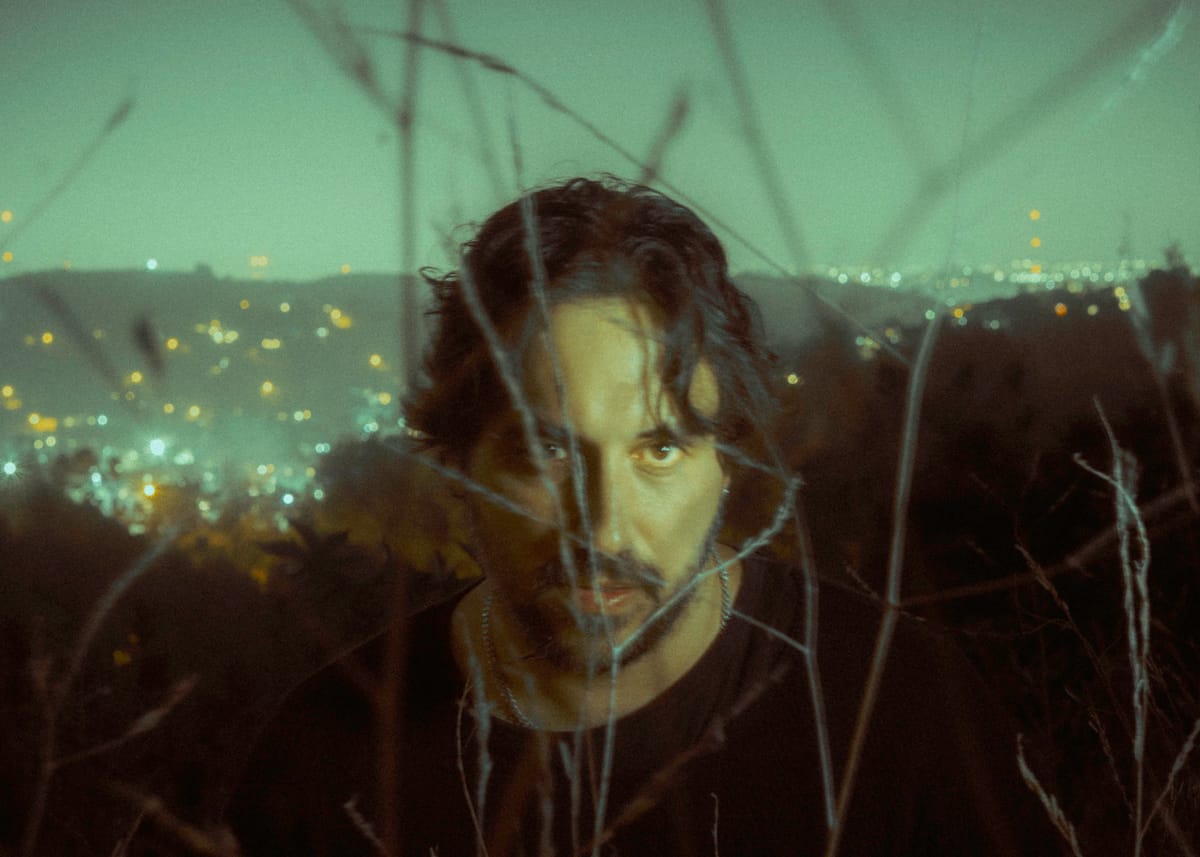
This is a free post from Larry Fitzmaurice's Last Donut of the Night newsletter. Paid subscribers get one or two email-only Baker's Dozens every week featuring music I've been listening to and some critical observations around it.
Aaaaaand we're in the FINAL WEEK of the holiday subscription sale, which will play out right up through New Years Day. It's 50% off monthly and annual subscriptions, as good of a deal as any. You can grab the monthly sale here, and the annual sale here. It's a great way to support a 100% independent publication.
OK, let's get into things: I've been a huge fan of Bobby Krlic's work since he was making pitch-black soundscapes as the Haxan Cloak, and I've had the pleasure of talking to him twice across his career already—once for Pitchfork back in 2013, and again for his scoring work on Ari Aster's Midsommar back in 2019. Bobby's Midsommar score marked a serious turning point in his career, and it's crazy to consider that in the past six years his work has gotten even more expansive and alluring; along with his continued partnership with Aster on Beau Is Afraid and Eddington, his score for Ronen Day-Lewis' Anemone from this year honestly blew me away on multiple levels, making for one of the best film scores of the year no question.
So I naturally jumped at the chance to chat with Bobby last month about all he's accomplished thus far, and to have a more in-depth convo than previous opportunities allowed. We had a very chummy and insightful chat that I'm happy to pass along to you for your reading pleasure. Check it out:
I saw on Instagram that you were hanging out with Incubus yesterday.
Yeah, that's a funny one. I did the score for Beef, and there was an Incubus cover in there, so through that I got to know them a bit. They invited me to come and listen to some of the new record they're doing, which is actually really great.
I believe it. They're a bit underrated to me, they've got some interesting deep cuts.
I was obsessed with them when I was a kid. I saw them so many times whenever they came to England. They've been a band for probably 30-plus years—which, I commend anybody that still makes music together after that amount of time. They've also just done so much on their own.
Mike Einziger was playing with the Roots at one point!
Yeah, he's the person that I connected with. He was telling me that he has a room at like Hans Zimmer's scoring studio and they've done tons of work together over the past 10 years, which I didn't know. He's done loads of cool stuff.
The last time we talked was around the Midsommar score, and since then you've continued to do really impressive work in the field. Your score for Anemone is one of the best of the year, unquestionably. Talk to me about pulling that one together.
I met with Ronan around this time last year. They'd sent the script through to my agent for me to read, and I loved it—and when you see Daniel Day-Lewis written on something, you're going to give it a read. I was really intrigued. I have a few friends who are in the painting world, so I actually knew Ronan's work and really liked it, and I was really intrigued by what he would do as a director—and then I was doubly intrigued by the father-son aspects of the movie.
We met on Zoom and talked about the film, and he's such a sweet guy and had really interesting thoughts. The film's actually set in Sheffield, which is about 20 miles away from where I grew up. I went to see a director's cut of the film, and it really touched me in so many ways. I know those people. I've grown up with people like that, and i know what that part of the world feels like, seeing friends and peers of mine, men, growing up in that part of the world—which is it has its own set of difficulties.
We started talking about music, and he'd made this 24-hour playlist of stuff which was just so many interesting things. There was a lot of shoegaze originally as needle drops in the film, and and I was like, "Well, it feels to me like the score could live in that space. I wonder what that would feel like." I don't know if I've really heard anybody do a shoegaze score—not that the score ended up being completely that, because it does do a lot of other stuff. But this felt like an opportunity to me, especially with it being set somewhere that I grew up. It felt appropriate for me to tap into that side of myself, so I approached the score in a way that I've never done before.
There's almost no MIDI on it. Even the strings were re-recorded by good players. I was playing violins and weird string instruments myself, and all the guitars were done to tape and 4-tracks. I almost made the score like I would've done when I was 13 or 14, just starting out to make music myself.
In terms of that age, what were you drawn to as a listener?
All sorts of things, to be honest. My parents were really musical. My dad was a guitar player, and my mother used to be a Northern Soul DJ. Even my brother played bass guitar—he's seven or eight years older than me, and all the music he brought home was really interesting. It was like a real melting pot of stuff, from house music that my parents would like to my dad being into, like, Steve Vai. Thee was the Britpop indie stuff from the '90s, with some shoegaze-adjacent stuff like Primal Scream. That's when I knew about Kevin Shields. because he worked on XTRMNTR. At the same time, I was still listening to nü-metal, which was really happening in England at that time.
With regards to nü-metal, I feel like it's always perceived that it was a distinctly American thing. But to this day, when I look at those massive Euro metal festival lineups, it seems like nü-metal was not only big over there, but endured in a way that it didn't in the US. Am I off the mark there?
No, it was absolutely huge. I was from a small, working-class town in the north of England, so that kind of thing just got so exotic to me and all my friends. We dressed like Americans, it was huge.
Even when I hear a band like Loathe, it's clear that it's carried on in a way that people who don't have the cultural understanding miss.
Well,not to theologize it too much, but I do think it was a really ripe time for that to hit a bunch of kids in England. British people are quite buttoned up, and they find it hard to express themselves in a way that Americans sort of don't, is my experience of living in both countries. That kind of music gave me and all my friends like a license to feel that we could express something we didn't really know how to.
One thing the Anemone score reminded me of was Mogwai. Were they an influence here?
You know, I feel rude saying this, but they weren't. It was more all the Constellation stuff, like Godspeed and A Silver Mt. Zion. I heard Mogwai after I'd heard that, so it didn't really hit me in the same way. But the big influences on this score was the first Godspeed and Silver Mt. Zion records, and Grouper as well—I've always loved her.
Aside from my Haxan Cloak stuff, I've always made so much different music that's never really made it out, just because it didn't fit those records. Doing film scores allows me to express all these things that I've always loved, and this score is definitely a culmination of lots of things I've enjoyed making over the years that I've not been able to find an outlet for.
Let's talk more about your career in film scoring. It was very instructive that we talked right before COVID, because since COVID, I've talked to several people about how scoring—for movies and TV, and commercials as well—is the only way to make money now. You're somebody who's been doing it for quite a while now, anx you've built a career on doing it in a reputational way beyond the notion of financial necessity. I'll be candid—there's people who do scores where I'm like,
"Okay, you did a score, that's nice," and then there's people who do scores where I'm actively looking forward to hearing the work. You are very much in the latter camp! Your first big break was with Atticus Ross on Blackhat.
That's true. Film has always been as as important as music to me. When I was a kid, funnily enough, it was more important and shaped me way more than music. From being really little, I was obsessed with movies. I used to get the Time Out Film Bible for Christmas every year and I'd go through and circle which movies sounded interesting to me. My parents made the mistake, when I was 10 or 11, of buying me a VCR—TV combo for my bedroom, so even if they tried to police what I was watching—which they did, but not not too intensely—I could go through the TV guide and be like, "Oh, they're showing this Takashi Miike film at 1 a.m. on Channel 4, I'll just set the video to record it while I'm asleep." I'd wake up two hours early before school to watch these movies by myself. It was this awesome private little time I got to myself—digging into stuff that was a little too mature for me, but really formative.
That was also a time when the auteur movement was massive, with Tarantino and Rodriguez and that crew. That was really inspiring as a kid. I'd sit and write little scripts by myself. We had a home video camera, and I'd try and make little short movies. It to the point where I thought I wanted to be a film director, and I still do want to make a film one day. But I remember saying to my dad when I was a teenager, "Well, the New York Film Academy does a summer program," and he looked at the cost and was like, "Yeah, we're not doing that."
I was making music at the same time, and I did study sound art at university, so music did take over at some point. But even the first Haxon Cloak record, a lot of that was made at my home in Wakefield. It feels pretty trite now, but I was 18 or 19—maybe a bit younger—when I first started making it. So I'd put Herzog movies on with the sound turned off. I wasn't soundtracking it, but I always wanted visuals to put me in a mood—and that carried on through the second record. Those records themselves were me expressing something visual through music, and there's a narrative to both records. They tell, to me, a story.
When Atticus came knocking at the door and I went to L.A. to meet him, all I could think was, "Fuck, this is amazing." I didn't know anybody in the film world, so it felt like this thing that I couldn't access at all. I had no idea why he was asking to meet me, and I'd never been to America before, so the whole thing was mind-blowing. He said that he had didn't really work with anybody outside of his brother Leo, his wife Claude, and Trent. He was like, "I don't feel like I'd have to explain too much to you in terms of writing for picture and tone. Would you want to help me on some projects?" I couldn't believe it. I went back to England, and a couple of weeks later, he was like, "Well, I've got this Michael Mann movie, if you want to help me on it." I felt like all my Christmases had come at once. I couldn't believe he was asking me to do this thing.
I recently had Jerskin Fendrix on the newsletter to talk about his work with Yorgos Lanthimos, and he was talking about how Yorgos gives him a lot of freedom in terms of scoring—which is not always what people have, experience-wise, with regards to scoring. How's that worked out for you?
Work in this field is a big learning curve. I didn't study music for film, so there's probably certain things one would learn that would prepare you a little bit—but I'm kind of glad that I didn't. After working with Atticus, I did a lot of television. I've probably done over 100 episodes of TV. So that was really good training, in a way. I learned a lot from that.
Something really interesting happened with Atticus when when he asked me to work on Blackhat. He sent me some stuff from the film and some music he was doing, and he said, "Hey, can you make me seven to ten short pieces of music, 60 to 90 seconds long, that you feel are in the spirit of the movie?"I sent them to him, and he sent me an email back that said, "Bobby, respectfully I feel like you're making me what you think film music should be. I want you to make me your music for film, which is a different thing." That was so cool, to have somebody empower me to be myself.
What I've learned through doing this a lot, is there is a fine line between having a perspective and having an ego. They're not the same thing. All I'm trying to do is listen to the director, the producer, the writer, or whoever's giving me direction and help them tell whatever story they need to tell. Hopefully, within that process, I can filter it through my own sensibilities and have my own point of view, which is hopefully why they've hired me. But I've definitely had friends who want to get into it, and the first thing I say to them is that it's wildly different. You're not just making tracks for pictures—and I love that, because I've always wanted to be a filmmaker. The more that you can adapt to that mindset, the more you're actually part of the filmmaking process.
Let's talk what you've seen recently in the movies realm.
Like everybody, I loved One Battle After Another. I saw Die, My Love last week.
What'd you think?
I thought it was mind-blowing.
Yeah, I thought it was great.
I'm such a fan of everything she's done, and this felt like a real culmination of her career to date in a really amazing way. I thought the score was awesome, too. My friend who's a director took me a couple of nights ago to see this old Japanese movie from the '80s called Angel's Egg.
I've been meaning to see that, actually.
It's amazing. It's so cool. There's about five lines of dialogue in the whole movie. It's like Tarkovsky crossed with anime or something. It was so cool. What an amazing year for cinema we've had this year.
It's been a good one, yeah. Did you see Megalopolis last year?
You know, I didn't. I really wanted to, and I never made it to the cinema.
I just watched the documentary on it last night.
I'm excited for that. There was a night when I could have seen Megalopolis or The Shrouds, and I picked Cronenberg.
I mean, look, I saw The Shrouds twice. I think you made the right call.
Honestly, I think that film's a masterpiece. It's amazing.
I completely agree. I would go as far to say that I think it might be his best 21st century film.
I left the cinema thinking the same thing. It felt very self-aware, in a way that I typically wouldn't like from a director. But it felt like a real home run for me. I loved Crimes of the Future as well. But this was something else.
Both times I saw it, I was a little taken aback at how quickly it ends.
It doesn't et you up in any way. It keeps you getting the whole way through and then just pulls the rug in a way that I thought was really cool. Also, man,
Howard Shore is still killing it. He's amazing. Both of them, at this stage in their career, are still doing top-tier work. It's kind of insane.
Something I've wanted to talk to you about for a while is the score for Returnal. I played the shit out of that game.
Well, you kind of have to, because it's so difficult.
I have friends who tapped out but I did end up beating it. You did something really interesting with that score, capturing the literal sound of plummeting towards failure and death. Talk to me about how that one came about.
I loved working with those guys. As much as I can be, with work and everything else, I've been very into gaming over the years, particularly with PC games. I don't know if you ever did this, but there was sometimes a hack where you could take the game CD, put it in your CD player, and play all the music from it. I used to try to do that a lot with games when I was a kid.
We'd had some meetings, and then the meat of the game was done in 2020. Obviously, COVID was a horrible time, and there was so much going on that it's a really interesting time to look back on. Health issues and stuff aside, the idea of being locked in the house, I was like, "Well, I've fucking trained my entire life for this. I'm fine." Me and my wife we just bought our house in November of 2019, and I was setting up the studio downstairs, so by March, that was all getting dialed in. I was like, "Well, I guess I'm just going to make a ton of music." Then the game started kicking off.
In a way, for me, making the music for that game was so much escapism. I'd make a coffee in the morning, go downstairs, and be like, "Well, there's nothing else to do. I can't go out, and there's all these things I want to express." I'd just bought a load of new stuff for the studio, so it came at a strangely fortuitous time for me where I could really dig into it. The concept was really interesting. I've always loved sci-fi since I was a kid—obviously, Blade Runner, but even things like Event Horizon and movies that talk about death in space. [Returnal director Harry Kreuger] is really into doom and black metal, so we talked a lot about trying to imbue that with electronics through the game. It's actually one of my favorite scores I've made, because it sounds like nothing else I've done. I tried to make a sci-fi score without it sounding like Vangelis, basically.
What's your taste in games been like recently?
There's a ton of stuff I want to get into, but I just haven't had time. When we did the game, they very graciously sent me a PS5 so I could test it—and, believe me, most of it was me asking them for cheat codes so I could press through the levels,
because it was too hard for me. I've been playing the remastered Metal Gear Solid 2 a bunch because that's probably my favorite game of all time. My memory of playing it when I was younger was so still burned in my head that I was like, "I feel like I haven't quite forgotten this enough yet"—but I'll come back to it.
I really loved your work on Eddington and Beau Is Afraid. In general, I've become one of the very passionate Beau Is Afraid defenders.
I think it's a work of genius. That film is going to get a major re-evaluation in 5-to-10 years.
Scorsese made this comparison in terms of the reception, but I think that even in narrative form and approach it's very much a modern Barry Lyndon.
100%. I'm sure this is probably annoying to Ari because I always use comparatives when I talk about things, but I remember telling him that it felt like Barry Lyndon crossed with After Hours.
You two have a very well-established working relationship at this point, and I've gotten the impression that he's somebody people generally like to work with, even though he can be pretty exacting in terms of what he's looking for. Tell me about that experience for you.
With Midsommar, we met because he'd written the script while listening to one of my records. I really liked him. In terms of humor, I really connect to Todd Solondz and the Coen brothers—anything that has a dark, satirical sense of humor is right up my street, and he's kind of the same. We really connected through that and made each other laugh a lot.
Midsommar was this lightning in a bottle thing that was so awesome, because I really wanted to score something on my own, as much as i was grateful to Atticus. I wanted to see what it was like to just do something by myself, and that was the first one. I felt like I had all these things I wanted to say, and I'd never gotten to work with an orchestra before by myself.
When we were making Midsommar, Hereditary hadn't come out, so no one really knew what kind of filmmaker he was. Even watching Eddington, I cannot believe that's somebody's fourth movie. His level of craft astounds me. I really do think he's a generational talent—a genius, one in a million. So when Beau came around, I was really excited to work with him again. They'd set up a screening for me to go and see his first cut of it, which I think at that point was three and a half hours. I went to this strange medical building in Beverly Hills that had some kind of screening room in the top of it at nine o'clock in the morning and I watched it by myself. It was a really bizarre ride home, because I was like, "How the fuck do I find a musical through line for this movie?"
The great thing about Ari is that he's somebody that really speaks emotively and not technically. The way that we've ended up working—and this was true on Beau and even more so on Eddington—he'll come to L.A. for one or two-week stints and sit in the studio with me, and the score will pretty much get built from scratch with him there, which is a moderately unusual way of working. But, you know, everybody's different. It was quite difficult for me to begin with, and it had nothing to do with him. It was really me just not being comfortable with being so vulnerable in front of someone. I remember saying to him, "Dude, imagine I'm sat behind you and there's a giant whiteboard and I can see every word you're typing. That's how I feel right now." But it's great, and we have a lot of fun.
Beau was very difficult. It took us both a long time of sitting, experimenting, and trying to find what the sound of that film was and how to carry it through. When we got it, it was really satisfying, but even he will say—and I'm sure he has said—that it wasn't the easiest process. Not in terms of his and my relationship, but in terms of the film itself and what a beast it was. With Eddington, we had so much fun. He'd sit behind me on the couch, and there were some cues that didn't even make it in the movie where we were singing stuff together and making up weird chants for the electoral campaigns. I was going off and buying all these instruments I didn't know how to play and learning to play them for the movie.
I really think that film is genius. I was really blessed to be working on it, and it feels like such an important film for America, and where we are socially and politically. Musically, we spoke a lot about Aaron Copland, because that's the music that people think of, in inverted commas, as music of the Americas. It was interesting to be referencing thatmand looking at Westerns—Sergio Leone and Morricone—and trying to find a way to modernize that and have our own language for it. But it was also interesting in terms of looking at that for a film that is about where we are in America right now, and the past of the Americas—really examining how far have we come and where we need to go.
What is the state of the Haxan Cloak at this point as a project?
It's something that's still very dear to me. I always remind myself that it's the thing that got me to this point of doing all these things I really love and having this career I enjoy. It's not something I take for granted at all. With film scoring, I really enjoy it, and it's something that I'm still learning a lot about. But I'm sort of at a point now where I've got the working studio aspect of it dialed in in a way that I really needed to do. I've been chipping away at Haxan stuff at any opportunity I can get.
It's funny you should say, because I'm not really doing any scoring for the next few months, and my studio is now is set up, so I've been going in every day and I've got a bunch of demos that I'm really happy with, so I'm hoping at some point in the next six to nine months of that, there's going to be some new stuff. I have my own label now to release things through, which is really fun—and I'm exploring visual stuff myself, with film and photography. In a way, it's actually quite nice to be able to have it become even more so its own universe now than it used to be. It's a really nice place to go and live again.