Black Rave Culture on DJ'ing, Damon Wayans, and Passing the Torch
This is a free post from Larry Fitzmaurice's Last Donut of the Night newsletter. Paid subscribers get one or two email-only Baker's Dozens every week featuring music I've been listening to and some critical observations around it, along with a Screen Memories column every one or two weeks where I write about stuff I watched lately.
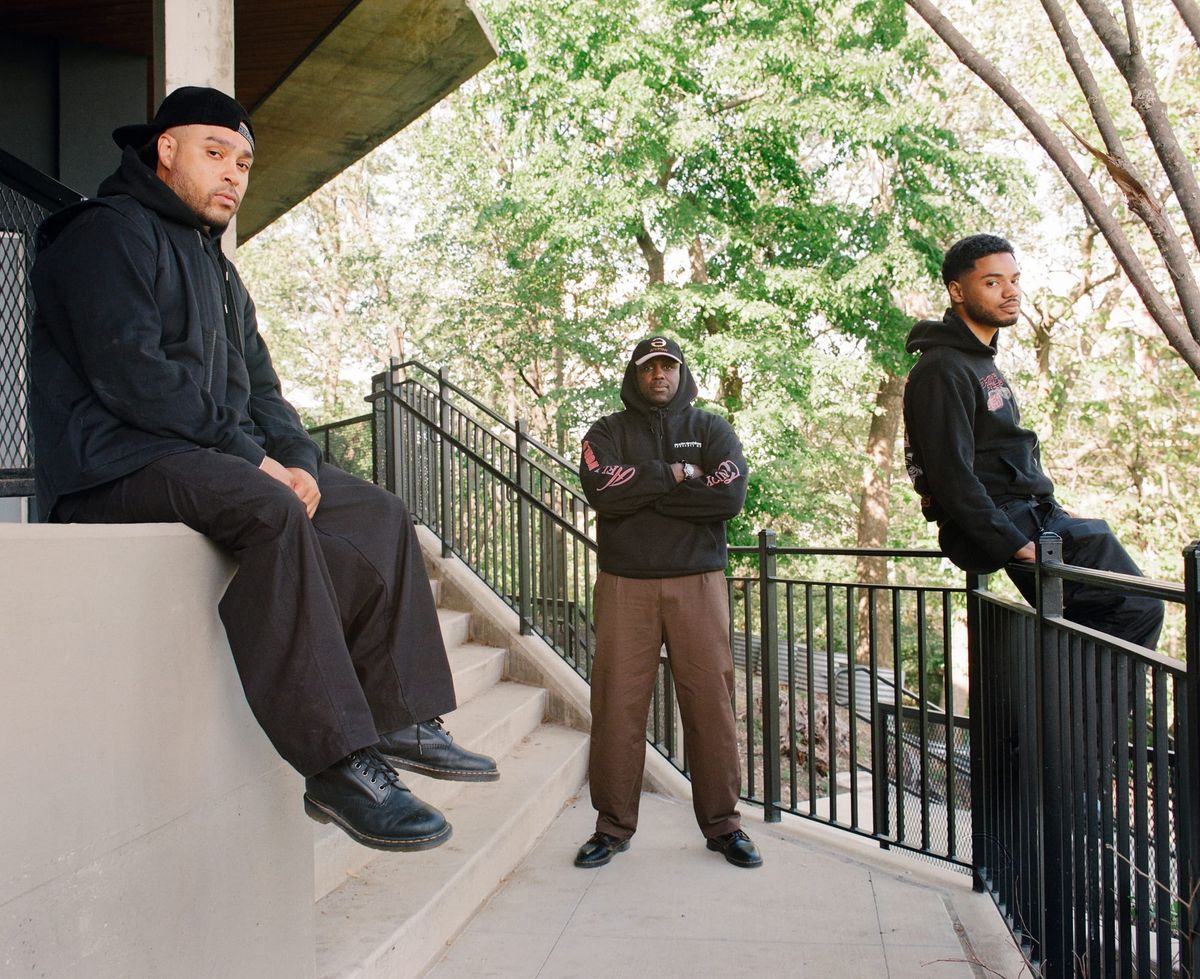
To my free subscribers: Welcome back after a brief break on my end. I'll be taking another break near the end of October most likely, which is a ways away, so let's not dwell on it too much. Anyway, here's what is going on today: Huge fan of James Bangura, DJ NativeSun, and Amal's work as Black Rave Culture, over the last five years they've been absurdly consistent when it comes to pumping the dancefloor jams and their latest record Vol. 4, which saw release last month, just might be their strongest collection of tunes yet. The guys hopped on a call with me last month to talk all things their impressive career thus far, and we had a lot of fun chopping it up—and I think you'll have fun reading this insightful chat as well. Check it out:
This new record is excellent. Tell me how it came together.
James: It started in 2024. There was no real intention in the sense of actively saying, "Hey, we're going to write another record." We were at ADE and feeding off the energy of certain communities. We'd just finished playing an amazing show and were in our Airbnb, and the first track that really started coming together was "Herengracht," because that literally was the street we were staying on. A lot of times, it's so impromptu. What are we feeling at the moment? A lot of this record was the result of feeling certain things. Even "Fried Behavior" was a track that we finished in our Airbnb. It's an amalgamation of the environment in where we're staying and who we're interacting with
Nativesun: We get inspired right there, and then we're like, "Alright, let's cook up." It's always been like that from the jump. We've never been like, "We're going to make an album." It's just us hanging out and making music, and then we look up and we've already got six tracks finished. That's how we create, and we love it. It's natural you're not thinking too much about it—it's just flowing.
Do you guys find it easy to demo and create on the road in general?
Nativesun: Amal and [James] can start making a track anywhere. We're in an airport, and I'll see these dudes crack open a track and start working. Me and Tim went on a run today, and I come upstairs and Tim is sitting on the floor, just like making some techno. I was like, "Dang, they can do it anywhere."
James: It's a testament to how we got into this. Me and Amal didn't have gear like when we first started producing. In this day and age, just having access to certain types of software and a laptop like gives you the ease of creativity—whereas older generations, or people that had access to gear, needed a full-on studio to feel that juice to want to create. Having a laptop and software, and then putting yourself in different environments—that builds the ecosystem for you to really want to do something. I wrote a track for a compilation that got a lot of momentum in the early 2020s called New York Dance Music. It was called "LAX," and I literally wrote it in LAX. It really is about having those environments and being able to catch an idea in that moment. The best ideas come out like that.
Nativesun: On Vol. 3, we have a track called "Amtrak." We were headed to a show from Chicago to Detroit, and our flight literally in the air turned around because of a snowstorm, and we had to go back to Chicago and figure out a way to get to Detroit. We tried to rent a car, we tried looking at the bus—but the only option was the Amtrak. We had to take a nine-hour train ride, so while we're on the train, we crack open the laptop and me and them all start cranking out "Amtrak." We're on the road, we just start cooking up.
Two things I'm gathering during this conversation is that the three of you seem to enjoy being on the road, and you also seem to enjoy being on the road together—which is not always a guarantee. Let's talk about the touring life.
Nativesun: This is something we talk about a lot. We always tell people they see the glitz and glamour of touring, but this shit is not built for the weak: Late-night shows, early mornings, flights, being in sync, having energy, and being low on energy and trying to do stuff. I tour solo a lot, but I prefer touring with these guys, because it's always cool to have homies with you, you know?
James: Another thing that we've been doing as of late is staying sober for the most part. This tour and this last tour, like we've kept away from the alcohol and stuff like that. This past weekend, we played at Tresor in Berlin, and we literally had to leave two hours after we played. If we'd been getting after it and been drinking and stuff—when you feel hungover, it's hard to feel good or feel happy. [Being sober on the road] has lent itself to us being able to continue to move and not have these different frustrations. Also, we're all different age groups with different experiences, so that's also helped in itself. If we were all around the same age and younger, it'd be a little bit more difficult, to be honest.
Let's talk about the moment in which the three of you as individuals became immersed in the culture of dance music.
James: My mom was a radio DJ and really into house music early on—which is funny, because as a kid, I didn't like house music as much. I always looked at it as, "Oh, that's my mom's music." My first year of high school, I found a DJ Craze sampler CD in a dollar bin in Newark, and I ran that the entire year. It gravitated to me. My point of getting into dance music heavy on my own terms was through jungle. Even when I was in high school, I was like, "Man, I'm a junglist." I'm 39 years of age, so back then it was a lot different than it is now. A lot of this music wasn't widely accepted, especially in the States. You found pockets of it. From there, I found about DJs like DJ Dan, Simply Jeff, Donald Glaude, Doc Martin, DJ Irene, DJ Bam Bam—all this different music. That was also when a lot of the downloading services were coming up, so it was no holds barred from there. Another avenue I went down was magazines. There was Urb, which was compensating for underground culture in general—underground hip-hop, underground dance music. I'd make notes, go to record stores and look for these artists and buy their stuff.
Amal: I really got into it in the pandemic. I'm 29 and I come from rap music mostly, so my first love in dance music was footwork. The closest thing that I could tie to that was Chicago—the Chief Keef stuff—which was similar Once I found a lot of the Teklife stuff, I could relate to it a lot more. Meeting these guys, as well as a bunch of other homies like AceMo, MoMa Ready put me in the right direction. Coming out of the pandemic, I had to learn on the job because I didn't go to the raves. So I learned the ropes, and I feel like I'm still learning as we go—but it's what keeps it so exciting for me, along with being able to tie it back to my mom's West African background. I lived in Africa for a while, so I had these little spurts of dance music from all over in the back of my head—a weird, eclectic taste of music. But being in it allows me to tie those things together and understand the map of it all.
NativeSun: For me, it's rooted in my family. I grew up around a lot of music. My mom sang in the choir, my sister played the piano, my brother was a singer and rapper, dad was a DJ—heavy on the funk and disco shit. But I didn't really appreciate dance music until I got older. I played in a go-go band growing up, and so, you know, I was a dancer as well. I used to battle in the go-go dances, which opened me up to more dance music. I started traveling more after I left the band, hearing different sounds and shit, so I got into dance music through that as well as through a mentor and homie of mine, DJ Underdog. He really put me on to more dance music, and it became a thing where I kind of got engulfed by it and started going to go see local legends playing out on Sunday nights. I got hooked.
Black Rave Culture was borne out of having a lot of free time during the pandemic. There's plenty of instances where people have had a hard time continuing to work on pandemic-era projects, but you guys have kept pushing things further. Talk to me about adjusting from lockdown to blowing it up in the real world when everything opened up again.
NativeSun: It was something that we did out of a brotherhood. We were hanging out and cooking up, and it's something that we all needed—a space to let off some steam because of everything going on in the world at the time. But we also realized how important this movement we created was for a lot of people, especially young Black kids. We played some of these shows and realized how we motivate and inspire a lot of them. This one time, we were playing in D.C., and this girl that came from more of an EDM background came to James and was like, "Yo, you made me love techno tonight." Shit like that is awesome. We played in Tennessee, and this kid came to me and was like, "Yo, I've been listening to your mixes since I was in high school"—and I was like, "What?" I never thought about shit like that. We have a certain responsibility with this shit. It's something that we enjoy doing, it's ingrained in us—but, also, we realize that we kind of have a mission with this shit a little bit.
James: When it comes to the music industry, there's still the issue of representation, and we do find a responsibility to set an example for younger Black and brown kids that are trying to find their space in the world. When I was growing up, it wasn't cool to be a Black kid and into dance music. You got clowned on for that. Now, people are relearning that this is something that came from the Black community, and a level of persecution. Theo Parrish talks about this all the time: In the early days, you did not see white people at dance events, especially with house and techno. It was mainly Black people. Now, it's almost so far away from where it was rooted in, that we're doing this is to remind people, "Hey, this is where the roots are from. This is inherently you, and there's no issue celebrating that." When we're writing these records, we're thinking about the celebration aspect as well as the perseverance.
Let's talk more about the audience aspect of live performance. I had a crazy experience at Paragon recently, where I went to see Galcher Lustwerk and an open-format DJ was playing beforehand. She had the floor full, and when Galcher started doing his thing, I watched the floor clear, which was astonishing to me. But it also reminded me of the phenomenon attached to going out in general where I'm not always sure the audience is there for the music, so to speak.
NativeSun: Before I was doing BRC, I was in the electronic world solo, but I also, I'm also a DJ too. I do open-format, and I still play gigs like that every now and then. I see it on so many different spectrums, and not just in electronic music. It's changed so much. A lot of people don't even dance no more. Places that were known for people to come and dance—it's like people forgot how to dance, or they're too cool to dance. It's different, man. Yo, for instance, we were in Paris two weeks ago, and we were going in, and the dance floor kind of cleared. We had to reset the room, so we slowed it back down with some house and met them halfway, and the house started speaking to them and we had the floor back. You never know what you're going to get on a dance floor nowadays. Our crates, the way we dig, we're into so much different dance music, so we can reel them back in sometimes. But sometimes, yo, you never know what you're going to get.
Amal: I also do want to say, we are a "DJ's DJ" first and foremost. We can adapt to crowds and respond to the crowd's energy instead of just being like, "We're going to do our thing." Us doing our thing is feeding off of the crowd and adapting. We don't really plan out these sets too heavily. Sometimes, we don't even have a playlist for the set. It's just about feeling where the crowd's going, and we're very vocal with each other. It reminds me of being on a basketball team, where you're constantly communicating—like, "Okay, let's switch it up," or, "I'm gonna slow it down." For me personally, watching how these two navigate that kind of thing taught me how to get a feel for reading the crowd. One of the first things they said to me that like really stuck with me was, "Bro, look up." I'd just DJ with my head down because I was so focused on trying to understand CDJs—and then you realize how many people don't actually even look up while they're DJ'ing.
We're in a time where there's a lot of overlap between the internet and social media aspect of nightlife culture, and there's a little bit of a friction there. We're all trying to figure out what makes sense. You're starting to see certain clubs be like, "No phones." A lot of people, especially people my age and younger, are also just not used to being perceived and don't know how to go to parties and let go and not care. It's a constant conversation of, "How do we get them there?" I've also found that like edits have become heavy because people are still in an early stage of understanding the scope of dance music. So when you give them something that's halfway there, we can get them in—and then we'll take you a little deeper.
NativeSun: That's why we prefer longer sets. An hour set for us is just five songs each.
James: Another thing I'll say is that when it comes down to crowds now—bro, the pandemic, what's going on in the world now, that also affects how they respond on the floor. So when you come to a PRC set, we want you to feel like you're in a house party. People love to watch DJs now versus interacting with the music, so we try to set the environment where they're interacting into the music in conjunction with us. When you come to our shows, it's cookout energy for real.
NativeSun: We always try to find fun in it, man. One thing we're gonna do is find a way to enjoy it, whether it's five people or 5,000 people—we go.
Amal: It's always fun to crack a crowd. That's one thing that keeps us so excited on tours. If it was easy every time, then we would be bored to all hell. You have that time, especially in an extended set, where you're like, "Oh man, the club stuff isn't working. Maybe I gotta try this." We're nerds, man. For us, it's fun to figure out what works where.
That adaptability obviously extends to your guys' catalog so far. Collectively, you're pretty much capable of doing any type of sound in terms of the language of dance music, which is rare. Walk me through how you guys perceive your own sonic evolution at this point.
Amal: What's stayed the same throughout the releases is the raw playfulness. It's always going to feel fun, because the way we make music is fun. Sonically, we've always tried to capture the whole scope of things. But people are resonating with [Vol. 4] because, like, man, we done tried it four times—and the fourth time is where it's really starting to make sense for us. Our own personal growth as artists is showing in that we always take risks. We've always did this brain dump of where we've been at, and this one is solid, smooth-feeling, and instantly recognizable. Everybody's been like, "I got it on the first listen," and I don't think that's always been the case for us.
NativeSun: We focus more on our mixdowns and mastering—the technical stuff. [James] would be like, "Yo, let's clean this up a little bit." Also, after the fourth time, you know, we just hear things a little different. We want it to sound a certain type of way, but we don't take it too serious, because we want people to know that this is still us and our sound.
Amal: And, honestly, we didn't rush this one. The other ones, I wouldn't even say rushed it too much, but we were fighting against the clock. With this one we gave ourselves time to grow with it and let it marinate. We started this in 2024, and half of the tracks we made on the road on the last tour in Europe. "South London," we made that the day after our show in Brixton the last time we were here. Our global impact has also helped a lot, because a lot of this [record] is tying together different places and communities we've been to. Me and James have also been super anal about the mixing on this one, and [NativeSun] can instantly recognize what's going to work and what isn't in a DJ set. We've figured out a healthy balance of something you can vibe out to and can also work in a set for four-to-five minutes. We let these tracks be long, too. We're not even playing the streaming game with this, but we're getting a lot of love on the streams here, which is ironic.
James: We've touched more on the musicality on this record specifically. We wanted to make sure that we showed a level of well-roundedness. We can make the clubby tracks, but also these tracks that you can listen to in your car while you're working in the office.
The press release for this record mentioned you guys wanting to enter a "new curatorial realm." Talk to me about what that means.
James: We want Black Rave Culture to be bigger than just us. We were literally sitting at a coffee shop earlier, talking about how we could make this more of an event by bringing in other artists that are coming from the same ethos and trying to be this extension of the next generation of Black artists that are really pushing the realm of creativity.
Amal: I feel like what messed up dance music in the States was a big generational divide in the 2000s to 2010s, so now you got a bunch of kids that are coming out with no reference point—me included. I didn't even know dance music was Black until I met all these guys that were telling me that. There's got to be a bajillion me's out there thinking the same thing, with a bunch of great ideas that they might not even know. So one thing we were harping on was making sure that it feels inclusive to people so they can have a sense of identity in it—because this is inherently just as much theirs as it is ours. You can't do it without them, and vice versa. I always look at Underground Resistance in that way, where it was a movement. You knew the shirts, the imagery, and the ethos behind it more than you even knew the people in it. That's where we're trying to take it next, so we can keep the momentum going with other collectives and other people coming up.
NativeSun: To go back to the pandemic, I saw how we were losing a lot of the greats. We took an L in dance music within those years. You got the older homies passing away, the OGs passing away. Going to Movement, I noticed how a lot of the OGs show so much love and pour so much knowledge into us. It's like a passing of the torch to us and a lot of our peers. We get music all the time from younger homies that are just as talented as us, and I feel like they need to be showcased and put on a platform. We try to find ways to do that. We get inspired by a lot of our homies as well, and we look at it like friendly competition. We'll be like, "This is fire," and the next week, we're in the studio motivated by that. It's just all a big movement that we're trying to push.
You guys like movies?
NativeSun: I love movies.
What have you guys watched lately that you like?
NativeSun: I was on my comedy shit, man. Vampire in Brooklyn, Eddie Murphy. I watched Head of State recently with Chris Rock.
James: I just watched The Death of Robin Hood. It's wild, man. It puts Robin Hood in a different light. Be prepared, it's violent. The first scene, he slits this girl's throat. Instead of Robin Hood being painted as his hero, he's seen as a mercenary. He's killed a lot of people, and he's got a lot of families that want to kill him.
You know, a '90s comedic actor who doesn't get his due enough but was really cooking throughout the decade was Damon Wayans.
NativeSun: Oh, bro, Damon Wayans, man. In Living Color, you know what I'm saying?
Blankman, Major Payne—he's incredible in both of those movies.
NativeSun: Yo, he paved the way for a lot of actors. Major Payne was a classic too. I used to have that joint on VHS. My mom was infamous for dubbing Blockbuster tapes on VHS. I used to rewatch Major Payne religiously. It's a classic.