Black Marble on Touring During COVID, Bad Pitchfork Reviews, and Dodging the Clout-Chasers
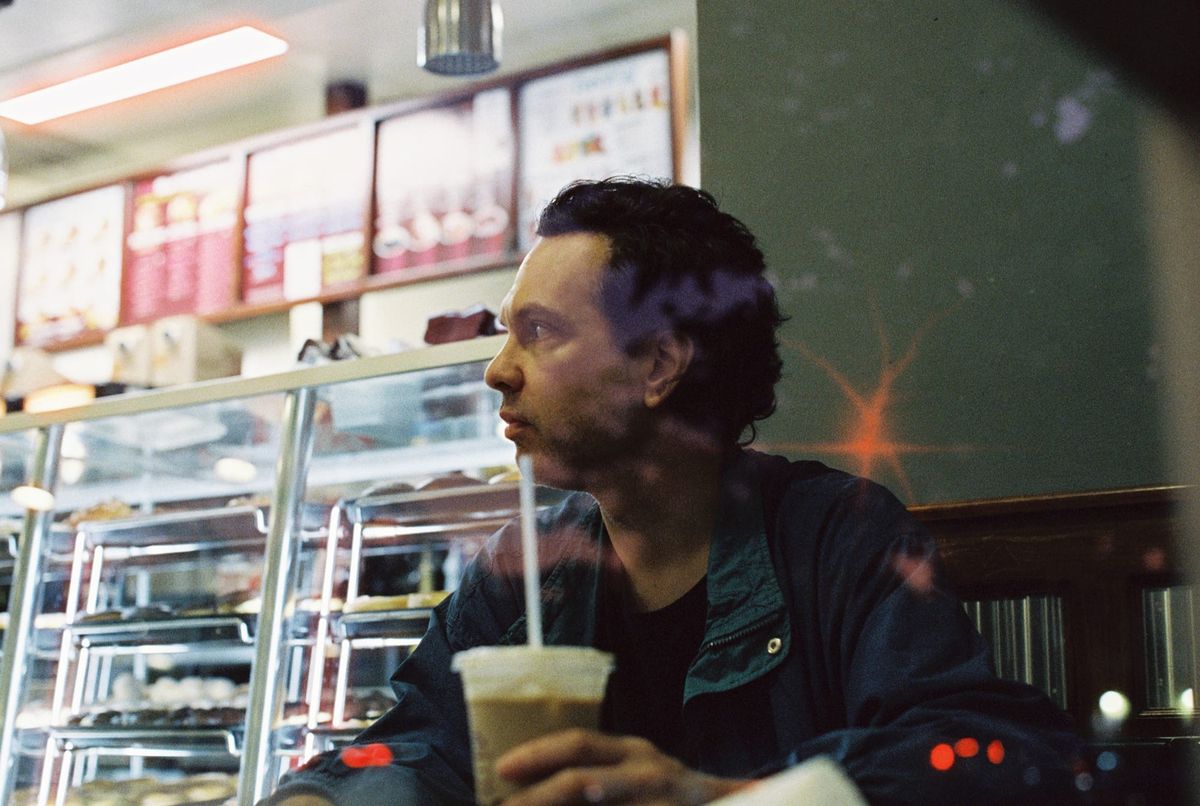
This is a free post from Larry Fitzmaurice's Last Donut of the Night newsletter. Paid subscribers get one or two email-only Baker's Dozens every week featuring music I've been listening to and some critical observations around it, along with a Screen Memories column every one or two weeks where I write about stuff I watched lately.
And there's just one week left for the "birthday layoff" sale I'm running (because it was recently my birthday, and I was recently laid off). This month-long sale is something I won't be doing again for a while, both in length and in discount, so you gotta take advantage of it while it lasts! We're talking 39% off the first six months of a monthly subscription, or the same discount off of a year of the annual subscription. You can grab the monthly sale ($1.83/month) here, and the annual sale ($18.30) here. You won't regret it, and you'll be keeping this 100% independent publication alive and well, too.
Here's what's cooking today: I've been a fan of what Chris Stewart has done as the leader of dark-pop project Black Marble since he started releasing music, and his latest record Life in Small Spaces—which just saw release last Friday on the always-reliable institution Sacred Bones—represents a full refinement of the sound he's known for, with a few new melodic twists that'll undoubtedly surprise those who have also been following along over the last 15-plus-years. I hopped on the phone with Chris at the end of last month to talk about what he's weathered during his career tus far as well as what went into making the new album, and it was a fascinating and discursive conversation that I'm more than happy to bring to you today. Check it out:
This is the longest you've taken between Black Marble records. Walk me through the gestational period here.
The last one came out like during the pandemic, which was strange because you couldn't really tour, and touring is such a big part of visibility for bands that are on whatever level this band is. A lot of the visibility comes from me touring, posting about it, and building up the excitement from my own physical labor. So it was an odd duck, because we couldn't really tour—and we still tried to. Without drudging up that whole time too much, it was a difficult time to try to be a touring artist for a lot of obvious logistical reasons, and we were one of the ones that tried to limp along and make it work within all the protocols.
If I had it to do over again...I feel like I was a wounded football player out on the turf, and the coach should've just taken us out for a year. A lot of people, after the pandemic cleared up, came out with a lot of good momentum—and we were left a bit muddy and bloody after the whole thing. It took a while to get my bearings and start thinking about what the next record was going to look like. Also, my process was a little different. I started demoing songs on a four-track, which I didn't used to do, so I had to learn my way around that. The four-track itself isn't a complicated thing, but it was more like, "How am I going to use this to demo songs?" Once I had 10 or 15 songs, I started thinking about properly recording them.
It sounds like such a crazy amount of time, especially when people talk about the Beatles writing entire records in a van on the road on one tour. Part of it was, I intentionally wanted to make more of a guitar record, and something about writing with a four-track made me want to write more guitar songs. Because I wasn't just using the well-worn formulas that I built up to that point, it took me longer to collect a grip of songs that I thought were worth presenting.
Part of the reason why it took a while between records is because, a song that would've been on an earlier Black Marble record, there was no point to put it on this record—because if you wanted to hear that song, you could just go back and listen to one of the old records. I didn't want to just make another record I'd already made. I'd made four of those. I needed to hear something different in the demos when I'd play them the next day, and it took longer to hear what I needed to hear, I guess.
Let's talk more about the challenges of touring during COVID, as well as post-COVID.
During COVID, we tried to differentiate ourselves by being like, "Well, we're more foolhardy than your average person." You know what they say in art: Lean into what makes you different—and we have less sense than your average person, so let's lean into it. So, we were like, "Well, let's tour safely, given the protocols that we need to put in place. Let's try to do it." And most bands really weren't trying to do it.
We realized how much you're on your own as an artist in this business, because we weren't getting any support. It was just like, "Do what you want." If you want to try to play at such-and-such venue, the venue owner is running out of money, so they'll go ahead and turn the lights on for you—but if everybody in there catches COVID, they're not going to take responsibility for it. You're the band—and maybe rightly so—who's going to bear the brunt of the societal pitchforks coming for you. Then we started to realize that there were so many different opinions about it. We had bands opening for us that were emailing us, where you could tell that they didn't want to do it so they were trying to get out of it and laying down all these stipulations—"You need to tell everybody that they have to wear a mask, nobody's allowed in the venue if they're not wearing one." It was a bit intense.
We'd show up for a show, and the entire crew that worked at the venue would have their vaccination cards ready, wearing masks as proof that we were all ready to work together, unencumbered by COVID. Then, we'd drive five hours to the next place and no one cared. So then we were like, "Well, if we actually contract like COVID here, what's our responsibility?" Do we have to cancel the rest of the tour? Do we lose tens of thousands of dollars? What's the right way? It was so stressful, and it really took a toll.
Also, to be perfectly honest, the day that we dropped down in London to do this tour, the Pitchfork review of our new record came out. The person who reviewed it didn't seem like they really listened to it. It didn't seem like they really took us that seriously or understood it, and they clearly didn't like it that much. So we had all these end caps at Rough Trade that our record was on, and we show up to Rough Trade to play this show, and it's mostly empty because people are afraid to commingle, the review that could help us drops, and it's like, "This record's mid." Then we had to do 25 days of jumping through all these weird hoops, going from country to country. It was so stressful, and it took the wind out of our sails a little bit, honestly.
Comparatively, we haven't really toured that much since then. We recently did do a nine-day tour in the mid-South—Texas, Louisiana, Arkansas, Tennessee—and it was cool, but those are pretty small markets, so its hard to judge how things are going to go. I haven't done a big tour since COVID, and the last time I was in New York, we flew from London after that UK tour directly to New York to do two nights, either at Bowery Ballroom or Music Hall of Williamsburg. The first night was almost sold out, but the second night had hardly any tickets sold, so we were worried about that.
Then, to fly back to the States, they had this protocol in place where you had to go to this weird house in London, and they swabbed you to make sure you didn't have COVID. But then literally all three of us felt like we got COVID from that house, because they took everybody from England that wanted to fly to the U.S., put them all in this house, and tested them—so maybe that wasn't such a great idea. So we get to New York and none of us feel that great, but we don't know if it's psychosomatic. It was crazy.
We're playing at Webster Hall in August, and, I'm hoping for the best, because it's been a while since we toured. But the vibe that I get is that some bands were helped by COVID, because they didn't do anything during COVID, and for a lot of bands, it seemed like COVID stopped them—and I feel like the tale is yet to be written about which one of those we are. We'll have to see how it goes. I mean, I like the record that I made, so, in a way, that's what matters.
But in terms of how well it gets received, I was talking to my booking agent while she was booking New York, and I was like, "Ooh, that looks kind of big. How do we feel about that?" And she was like, "Oh, but you sold this many tickets last time." And I was like, "Yeah, but that was during COVID, and that was five years ago. A lot of those people probably don't even live in New York anymore." I went back to New York recently, and it's a totally different place filled with totally different kinds of people. I mean, you've lived there the whole time. Maybe you haven't noticed the difference, but I was hearing people saying things that you never would've heard people saying before—people being scared of a mouse, stuff like that. It was weird.
I feel like New York's always changing, so I'm always like, "How much of this is me getting older, and how much of it is actual culture shifts?" I do feel like the rebound in terms of people going out has been pretty substantial. New York scene stuff is always kind of slippery, but I do feel like there's still a healthy interest in indie rock and left-field music here in general.
Yeah, I feel like electronic music is a lot more popular with the kids nowadays. I wonder about this kind of music [I make], which is kind of in between worlds. It's sort of electronic, but I sing and play guitar. Are the younger people that are there now still down for that—and the older people that are more down for that, are they still going out? Or is this new generation just going to raves? Since I'm not there, it's hard for me to really judge what's going on.
I will say that Slide Away, the shoegaze festival that Hum reunited at this year, was extremely well-attended.
Yeah, shoegaze, right? What the hell? That TAGABOW band is, like, humongous.
I would not have predicted that.
The press materials said this record is, lyrically, addressing your experiences with the music industry in general. Talk to me about that.
One of the things that dawned on me is that the music business forces artists to be complicit in creating an image of the music industry as a place that other artists should want to aspire to—and that other people who are not currently artists should want to go to Guitar Center and purchase a guitar and try to become a part of. Before I was in the music business, if I saw a billboard of a new artist while driving down Sunset Boulevard, I would've been like, "They're doing well. It seems like that's working for them." I assume that they can probably pay their rent and are probably living in a place that has air conditioning.
As it turns out, a lot of that is not true. A lot of bands are renting notoriety from the music business on a short-term basis, and the music business is structured to turn those people over every three-to-five years. Even contractually, most record contracts try to get you on a three-record deal, because they put out one, see how it does, and then they either put more money into the second one and the third one if it does well—and by the third one, they're sick of you, you're sick of them, and it's on to the next thing. If you go back and look at flyers from Pitchfork Fest six or seven years ago, you look at all those names and you're like, "I remember all these bands, but I'd forgotten about all of them."
It's like a way station. The artists come and go, and the people that work in the business—and I'm not saying it's great or anything—but they have their office job and health care, they can pay their rent and have some sense of stability. They might have a boss that tells them to do shit that they think is stupid, so that's where I benefit. But the music business takes care of itself first and gives what's left to the artists that make it function. So when you look up at that billboard, once you've been inside it, you don't see these people who are doing well anymore. Now I'm like, "Oh, another group of broke kids."
When I was thinking about this record, I was like, "Okay, what do I want to say?" What I wanted to say was that, knowing that it's the way things are, you can still eke out a space for yourself in the music business. You can fight it to a draw, but you have to make a lot of sacrifices. Then I started to think about the idea of sacrifice, and how everybody does that, even if you're not in a band. People live where they don't want to so they can raise a family. They make all kinds of sacrifices in their lives in order to live the lives they want to live, and artists are no different.
The thing that's messed up is, because of how people are brainwashed by capitalism in this country, they think if you're not super financially successful that you're trying to skirt adulthood or something. They're like, "When are they going to grow up and get a real job?" Well, you made a sacrifice to go live in some shitty suburb so that you could have a family, because that's what was important to you. I could judge you for that, or I could say that those are the sacrifices you made in order to live the life that you wanted. I sacrificed financial stability so that I could be a working artist, because that's what I was put here to do. I'm not trying to escape anything, and I'm not trying to use music as something that's going to take me somewhere. This is what I genuinely believe in, believe it or not, and I've made sacrifices in order to be this person—and I'm okay with that. Life in Small Spaces is me trying to own being that person.
Being in a band, I've traveled a lot more, and I've started to see things particular to the United States. It's a bit weird to me that we have this attitude about the arts where, if you haven't "made it" or you're not rich, there's some level of immaturity or denial in what you're doing. There's so much more money for the arts in Europe in general, and the general attitude of the public is, "This is something that's important, and we need to protect these people and let them do their thing. It's important for them and our society." They're an important piece like a bus driver is an important piece. We value money so much here that it clouds people's judgment of the value of some of these vocations where, if money is paramount, you might be frustrated.
Talk to me about the 2010s for you in general when it comes to the music industry, it was definitely a different time for indie than it is now.
It was a bit hard to gauge because, as this is all happening, I'm also getting older, so my relationship to this world is naturally going to change. Some of my bandmates are younger than me, and they're in a noise band that makes zero money, they drive around the country in a van that's always on the verge of breaking, they drag a 15,000-watt PA that they drag around with them, they make friends with a bunch of other young noise kids, and they're having a great time the way that we were having a great time.
The difference is, in those days, the underground music world was being discovered in that you could make a lot of money off of shining a light on it. That's where Pitchfork came from, and all these other institutions that were originally documenting something that was happening. The shift was when some people would say—just using Pitchfork being bought by Condé Nast as an example—I know you worked there, and for me, when these institutions went from documenting something and trying to make money off of something that already existed—which, more power to them—to deciding that like they were going to be the arbiters of what people thought was cool, that they were now going to drive the conversation—that was a shift.
When I look back on the early crop of bands that people got excited about, it felt like those bands were generating excitement within the underground music scene first, playing places like Glasslands and 285 Kent. Word of mouth spreads, they get the good review, and blah blah blah blah blah. Now, it feels like these institutions are receiving pitches from Pitch Perfect or whoever, scrolling through them and being like, "Does this person seem like they fit the bill of what we want to talk about?" It's like collecting baseball cards now.
Do you agree with that? Because like you know more about this than me, honestly. I'm just on the outside, but it doesn't seem like there's as many stories of bands starting in a little local scene building regional excitement before the indie machine picks it up. I know that Geese thing was an example of astroturfing fame from fake comments.
You know, a lot of people bring up Geese to me regarding this subject recently.
That stuff existed, it's not like they invented that shit. I thought it was a little weird the way people were so pearl-clutch-y about it. Dde, you think people don't do that?
I think the Geese thing is really tough. Something that was notable to me was that the initial article was written by a young musician, and I do think that an increasingly familiar sensation across all artistic and even occupational disciplines is people being like, "Well, why them? Why not me?" Because we're living in the age of conspiracy—thanks to COVID, Epstein, and everything else—then it's like, "Well, someone must be behind this"—which, fair, because someone is usually behind something.
And they're usually the people that have more money than you.
But I actually left Pitchfork a year before they sold to Condé Nast.
Oh, really? When did you start working there?
I was there from 2010 to 2014. If I'm being totally candid, one of the reasons why I left was because I noticed that we started falling behind on the occasional payments to our freelancers. I was like, "Uh oh, I don't think the money here is very good right now."
So that person who panned my record didn't even get paid well to do it. Is that what you're telling me?
Pitchfork has, historically, paid fairly low rates in relation to the word count. I can say that, when I was there, there was this sensation of, "Oh, I can post something today, and, everybody is going to write about it later on." For me, that was surprising, and also a little disturbing. I got into this because I really like music, so if I'd write about a band in the Tracks section and then I'd find out that they got signed to a label because I posted about them, I was like, "Uh oh, what have I done..." But I do think that the music writer space shifted in the mid-2010s, especially in regards to a lot of my millennial peers. I don't know how much they actually liked music. I feel like a lot of them were just like, "Maybe I'll get to write about Kanye. Maybe I'll get to meet Kanye!" And after that burned off, what did you have?
It's kind of like what I was saying about being an artist. There's artists for whom music is just a vehicle to take them somewhere. They don't believe in it for its own sake.
I'm obviously still very much invested in doing this the same way I always have been, because I really like listening to music. But I'm also not surprised that a lot of my peers have moved on to doing different things.
If nobody's getting paid very well, it doesn't help, either.
It doesn't. Also, music writing was a very good stepping stone for people interested in media careers, because everybody likes to be like, "This song is good." But there's obviously a little more to it than that. I do find that a lot of younger music writers now actually like music and really care deeply about it. They're definitely more into seeking out stuff that's under-heard. Also, a lot of their critical faculties can be really harsh. When you start getting a bunch of 26-year-olds saying that Boards of Canada is the worst band of all time, you're like, "Alright, let's chill out a little bit and get some perspective." But mostly, with the music press, I've found that the more things change, the more things stay the same. I think the 2010s was definitely a period of opulence as far as, things happened, the money ran out, and then they didn't happen anymore.
As an artist, you have these relationships, and they really do help guide where your future is. You have your booking agent, which you think is a perfunctory relationship: If you do a good job playing shows, they'll do a good job booking shows. But there's all this politics involved, and a lot of people in this business are trying to run back high school so that they can be cooler, so you have to be super aware of that stuff, which I was not so good at doing at first. I come from a military family, so I was like, "If I write the best song, everyone will like it." And it's like, "No dude, if you kiss everybody's ass, they'll let you in on the power game that they're playing." Pitchfork is maybe the most mysterious relationship.
There's ways to influence these other relationships in your life, but from the outside, this Pitchfork thing that has—maybe not as much as it used to—so much ability to help or nerf you, you had no way to influence it. I was always like, "Fuck, dude, I want to go undercover and work there." It had so much power over your life. My first record got some track reviews—which, I think you actually were the person that reviewed it. Then I didn't get a review for that record, which would've been good if I did, because—not to toot my own horn—people think that one is good, and it survived all this time. Then my second one didn't get reviewed, and by the time my third one came out, I was like, "As soon as these people start reviewing my records, it's going to be good for me," because I thought they were good, and I'd only ever seen other people think they were good. People that hate my music don't come to my shows.
Then, it dawned on me that they could review one of my records and be like, "This isn't that great." And when my third record came out and that's kind of what happened, I was like, "Oh, fuck"—and then the last one was the same thing. It's just so bizarre, as an artist, to have these institutions that have a lot of control over your possible trajectory. You have no ability to influence them, and it seems like a lot of them don't seem to care about music that much. It's weird, man.
To bring it back to this record, there's so many things in the music world that you can't control that have power over you, which is super frustrating. I worked in advertising before I went off and did music as a solo thing where I don't have a normal job anymore. In that world, like there's KPIs—key performance indicators—where it's like, "Okay, we're going to do this campaign, and at the end, we're going to go back and talk about the things we wanted to get out of the campaign—and if we didn't get those things out of the campaign, somebody's in trouble." But there are no KPIs. Your label tells you that they're going to try to blow your band up, and you'll get emails that's like, "We talked to blah blah at Pitchfork and they're very excited." Everybody's bullshitting you all day long, and then you get like a mediocre review and it's like, "Hey, what did you say about that again?" It's all just games.
I don't disagree. It can feel like a game on both sides of the aisle, honestly.
Really? I mean, that's why I was interested to talk to you, because I've never talked to anybody that worked at Pitchfork. Because I have no ability to influence it, I don't know anybody that works there. It's just this monolithic thing that can affect people. I've always wondered what goes on over there. [Rene Ricard], who worked at Art Forum and put Basquiat on, in his memoirs, he said that he started writing about Basquiat because he wanted to find a young artist that he could write about over the course of their career. It makes sense—the artists are hoping to get good press, and the press people are hoping to keep their job, so they want to get somebody at the start and follow them.
I would see that a lot [with music writing], and not just with Pitchfork. They'll say the second one's good because they said the first one was good, and then they'll say the third one was good because they said the first and second one was good—and after that, they don't care. It's almost like surfing. You're trying to surf art and make money off of it. I guess it's a simple way to look at it, but as an artist, I'm probably not the only one that sees it that way.
I do think that something that is underrated about a place like Pitchfork is that the makeup of the contributor base is changing all the time. That has a pretty strong effect on establishing a canon, so to speak. For there's something that was considered out of vogue maybe five years ago—or even five months ago—if there's a new wave of contributors that come in during a period of time and they like that thing, then that's the new thing. Conversely if people decide that they're not really into R.E.M. anymore, then they're not into R.E.M. anymore.
As an artist, it just feels very obviously political, in the way that politics is riding a wave of sentiment. For me personally, when I read my last review that wasn't that great, I was like, "I feel like this was just the wrong person to review it. This particular person doesn't get this kind of music or doesn't like this kind of music all that much." There was also a long period of time when electronic music that was very popular in Europe wouldn't get reviewed that well here. Any kind of synthesizer music was pigeonholed as an '80s throwback, as if that's the only period of time when synthesizers existed. That felt like a weirdly American thing. Maybe there was other shit that the people were liking, but just not mine. I don't know. The band that's doing well right now from that world—they're on Sub Pop—
Nation of Language.
Yeah—like, even they can barely break a seven, Because it's like, "This just isn't our thing."
Well, with Nation of Language specifically, because they are very surprisingly big, I think some critics are like, "Well, I don't have to have an opinion on this. It doesn't even fucking matter."
True. And you think that's a big part of criticism—wanting to have control over the stream where the salmon are swimming.
It can be a function of publications. I will say that, after reading Pitchfork as a kid and wanting to work there for so long, I had my own preconceived notions of what it would be like, and it was like simultaneously more boring and weirder than I actually expected. You've put out a few records on Sacred Bones at this point, and your music fits really well in terms of what they the aura they've cultivated. Talk to me about what's made Sacred Bones a great label home for you over the years.
When I was considering Sacred Bones as a label and they were considering me, I was just thinking about the notion of doing something for its own sake, not as a vehicle to take you somewhere. If Sacred Bones was a label that was just trying to clout-chase, they'd probably be putting out different music—but it's clear that it's a label owned and run by old music heads, and that's why everything they put out is pretty good. They have good taste, and a lot of the bands on it are pretty different, even as it tends towards darker music. They're like a mixtape you'd give somebody, where it's not one specific genre, but everything works together. There's labels that I had an opportunity to work with where I felt like, "You're signing bands that are this, but what's your label going to look like in five years?" I feel like Sacred Bones is like the antithesis of a flash-in-the-pan label.